Regional Communities Test New National Emergency Alert System Ahead of July Rollout
By Neha · Published 20 Jun 2026 · Updated 20 Jun 2026
Launceston, TAS · Tasmania News
Safety note: Admin approval is an initial review, not a guarantee that every detail is correct. Check important or urgent claims with official sources and report anything inaccurate or unsafe.
Source and credit: Contributor's own report
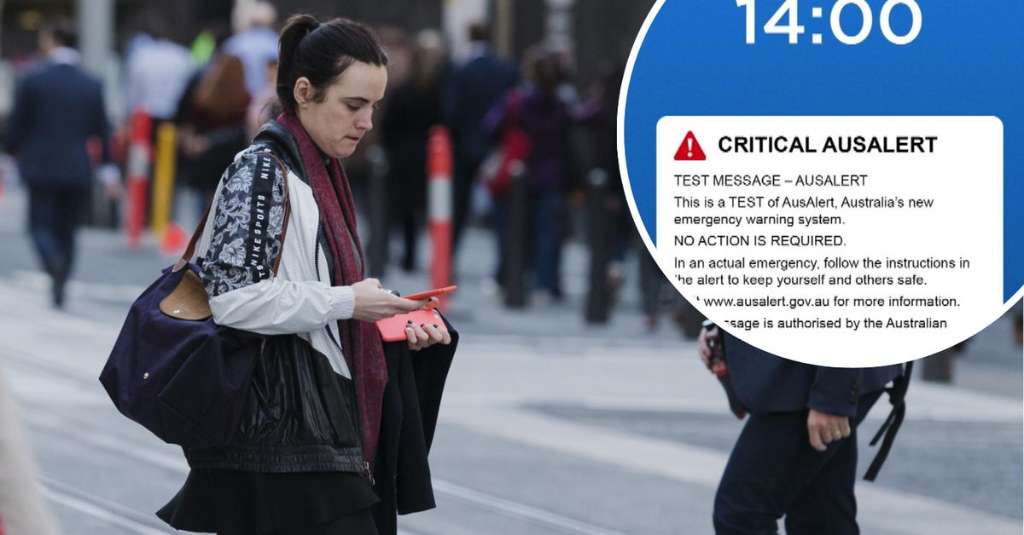
A mobile phone displaying an emergency alert notification.
Smart summary
Residents in regional Australia have participated in initial testing of a new national emergency alert system, featuring loud phone notifications and text messages, ahead of a planned nationwide trial this July.
A new mobile-based emergency warning system known as Aus Alert is being trialled across regional Australia, with early testing already carried out in several towns including Geelong, Launceston, Tennant Creek, and Goomalling.
The system is designed to send geographically targeted emergency warnings directly to mobile phones in affected areas. Messages appear on screens and are accompanied by a loud siren-like sound and vibration lasting around 10 seconds, ensuring the alert is noticed even if a phone is on silent.
Officials say Aus Alert will be used during major emergencies such as floods, bushfires, cyclones, biosecurity threats, or other urgent public safety situations. The system uses geolocation technology and is intended to work across all major mobile providers, meaning users should receive alerts regardless of their network, as long as they have mobile coverage.
In the latest round of testing, residents in Goomalling in Western Australia’s Wheatbelt region were among the first to experience the alert. At midday local time, phones across the town simultaneously received a test notification, prompting curiosity and, in some cases, confusion among locals.
Some residents described the experience as “anticlimactic,” while others said they were caught off guard by the sudden alarm. A few users reported not receiving the alert at all, highlighting early concerns about inconsistent mobile coverage in regional areas.
Local businesses noted the mixed reactions. Staff at cafes and shops said customers were uncertain at first, while others had been pre-warned about the test. The inconsistency in reception has raised questions about how reliably the system will function in remote and regional communities where mobile service can already be patchy.
Officials involved in emergency management say the system is a critical addition to Australia’s disaster preparedness toolkit. Assistant Minister for Emergency Management Josh Wilson said Aus Alert will help ensure timely warnings reach people in dangerous situations, allowing them to respond quickly and appropriately.
However, community leaders have emphasised that mobile coverage limitations remain a concern. Local officials in the Wheatbelt noted that “black spots” in service could reduce the effectiveness of emergency alerts during real disasters, particularly if networks are disrupted during extreme weather events.
Despite these concerns, further testing is planned across additional locations before a nationwide trial scheduled for July 27. The system is expected to be formally rolled out in October ahead of Australia’s peak emergency season, when bushfires and severe weather events are most common.
Emergency agencies hope Aus Alert will significantly improve public safety by providing rapid, location-based warnings. Still, the early trials suggest that infrastructure reliability and network coverage will be key factors in its success.
AlertEmergencySystemMobileWill
A new mobile-based emergency warning system known as Aus Alert is being trialled across regional Australia, with early testing already carried out in several towns including Geelong, Launceston, Tennant Creek, and Goomalling.
The system is designed to send geographically targeted emergency warnings directly to mobile phones in affected areas. Messages appear on screens and are accompanied by a loud siren-like sound and vibration lasting around 10 seconds, ensuring the alert is noticed even if a phone is on silent.
Officials say Aus Alert will be used during major emergencies such as floods, bushfires, cyclones, biosecurity threats, or other urgent public safety situations. The system uses geolocation technology and is intended to work across all major mobile providers, meaning users should receive alerts regardless of their network, as long as they have mobile coverage.
In the latest round of testing, residents in Goomalling in Western Australia’s Wheatbelt region were among the first to experience the alert. At midday local time, phones across the town simultaneously received a test notification, prompting curiosity and, in some cases, confusion among locals.
Some residents described the experience as “anticlimactic,” while others said they were caught off guard by the sudden alarm. A few users reported not receiving the alert at all, highlighting early concerns about inconsistent mobile coverage in regional areas.
Local businesses noted the mixed reactions. Staff at cafes and shops said customers were uncertain at first, while others had been pre-warned about the test. The inconsistency in reception has raised questions about how reliably the system will function in remote and regional communities where mobile service can already be patchy.
Officials involved in emergency management say the system is a critical addition to Australia’s disaster preparedness toolkit. Assistant Minister for Emergency Management Josh Wilson said Aus Alert will help ensure timely warnings reach people in dangerous situations, allowing them to respond quickly and appropriately.
However, community leaders have emphasised that mobile coverage limitations remain a concern. Local officials in the Wheatbelt noted that “black spots” in service could reduce the effectiveness of emergency alerts during real disasters, particularly if networks are disrupted during extreme weather events.
Despite these concerns, further testing is planned across additional locations before a nationwide trial scheduled for July 27. The system is expected to be formally rolled out in October ahead of Australia’s peak emergency season, when bushfires and severe weather events are most common.
Emergency agencies hope Aus Alert will significantly improve public safety by providing rapid, location-based warnings. Still, the early trials suggest that infrastructure reliability and network coverage will be key factors in its success.
Central Coast New South Wales · Emergency News · 18 Sep 2026
Rural Fire Service brigades across the Central Coast are preparing for the upcoming bushfire season and encouraging local residents to take practical steps before the arrival of...
Queensland firefighters spent several hours monitoring a significant grass fire at Mary Kinross Park in Bargara, near Bundaberg, after the blaze broke out on Wednesday evening....
Paramedics responding to an emergency in Alice Springs were forced to use a stretcher as a barricade after an armed and allegedly intoxicated group beca...
New figures have renewed concerns about emergency department delays at Royal Hobart Hospital, with the health system facing questions over patient waiti...
Darwin Northern Territory · Crime News · 18 Sep 2026
Northern Territory Police are investigating the death of a 28-year-old woman at a home in Malak, Darwin, with a 25-year-old man charged in connection with alleged assaults and b...
Central Coast New South Wales · Business News · 18 Sep 2026
More than 130 oyster-lease operators on the Central Coast are set to benefit from reforms announced by the NSW Government, with the changes designed to provide greater certainty...
Central Coast New South Wales · Crime News · 18 Sep 2026
A man has been charged following a police investigation into alleged detaining and assault offences on the Central Coast, according to a report published by Coast Community News...
Central Coast New South Wales · Emergency News · 18 Sep 2026
Rural Fire Service brigades across the Central Coast are preparing for the upcoming bushfire season and encouraging local residents to take practical steps before the arrival of...