Safety note: Admin approval is an initial review, not a guarantee that every detail is correct. Check important or urgent claims with official sources and report anything inaccurate or unsafe.
A review of employment arrangements within the CFMEU has raised concerns that some union officials holding multiple positions could expose the organisation to a significant tax liability.
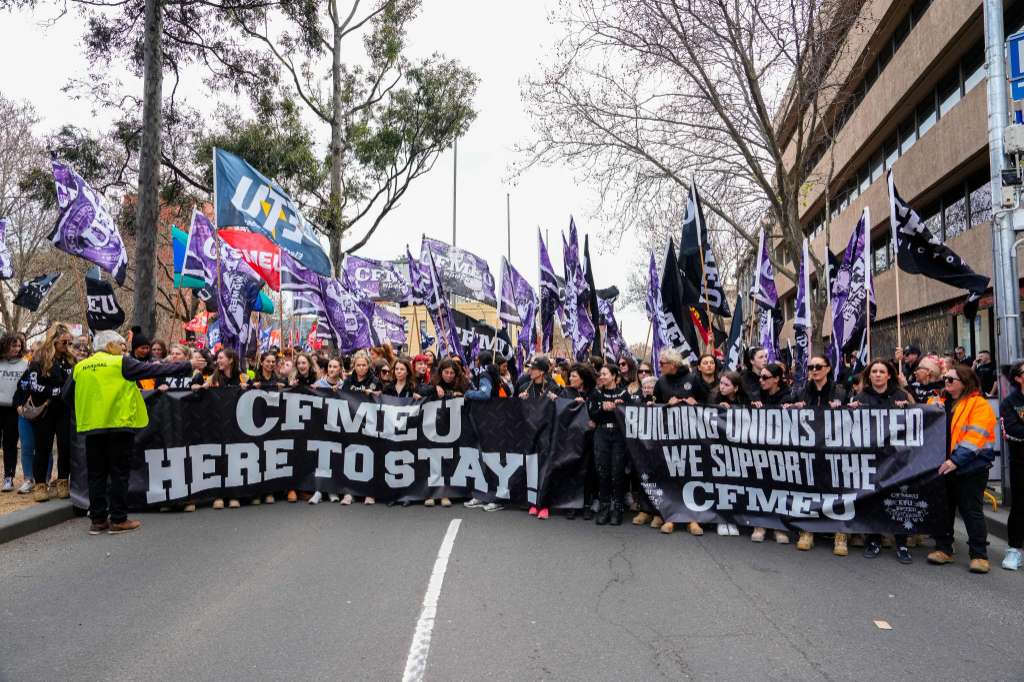
The Construction, Forestry, Maritime, Mining and Energy Union (CFMEU) is facing renewed scrutiny after questions emerged about officials who allegedly held overlapping roles across different parts of the organisation, potentially creating taxation and governance issues.
The concerns were highlighted during ongoing examinations of the union's financial and administrative practices. Reports indicate that some officials may have simultaneously occupied positions within separate union entities, raising questions about remuneration structures, employment arrangements and potential tax obligations.
Experts familiar with workplace and taxation law say organisations can face compliance challenges when employees or office holders perform duties across multiple related entities. Such arrangements can create complexities involving payroll taxation, fringe benefits, superannuation obligations and reporting requirements.
The issue comes at a time when the CFMEU remains under intense regulatory and political scrutiny. Federal authorities have undertaken extensive reviews of the union's governance, financial management and workplace practices following a series of allegations and investigations over the past two years.
According to reports, the latest concerns centre on whether overlapping positions may have resulted in payments or benefits being structured in a manner that could attract additional taxation liabilities. While no final determination has been made, experts note that regulators may examine whether all relevant obligations were correctly reported and paid.
The union has maintained that it is cooperating with reviews and regulatory inquiries. Any potential tax liability would depend on detailed assessments of employment contracts, payroll records and the specific responsibilities attached to individual roles.
Tax specialists note that large organisations operating through multiple entities often face complicated compliance requirements. When employees perform duties for more than one entity, employers must ensure wages, benefits and related payments are allocated correctly under Australian taxation law.
The CFMEU is one of Australia's largest and most influential trade unions, representing workers across the construction, mining, forestry, maritime and energy sectors. The organisation has played a major role in workplace bargaining and industrial relations debates for decades.
Recent reforms and investigations involving the union have led to increased oversight by government agencies and administrators. Officials examining governance arrangements have emphasised the importance of transparency, accountability and compliance with financial reporting obligations.
Workplace relations analysts say the outcome of any taxation review could have broader implications for other unions and organisations that utilise complex employment structures. Similar compliance issues can arise in corporations, not-for-profit organisations and associations that operate across multiple legal entities.
At this stage, no final findings regarding tax liabilities have been announced. Authorities continue to assess relevant documentation and employment arrangements as part of ongoing reviews.
The matter highlights the growing focus on governance standards within major organisations and the importance of maintaining clear employment and remuneration structures to meet regulatory requirements.
TaxationUnionEmploymentOrganisationsAcross
The Construction, Forestry, Maritime, Mining and Energy Union (CFMEU) is facing renewed scrutiny after questions emerged about officials who allegedly held overlapping roles across different parts of the organisation, potentially creating taxation and governance issues.
The concerns were highlighted during ongoing examinations of the union's financial and administrative practices. Reports indicate that some officials may have simultaneously occupied positions within separate union entities, raising questions about remuneration structures, employment arrangements and potential tax obligations.
Experts familiar with workplace and taxation law say organisations can face compliance challenges when employees or office holders perform duties across multiple related entities. Such arrangements can create complexities involving payroll taxation, fringe benefits, superannuation obligations and reporting requirements.
The issue comes at a time when the CFMEU remains under intense regulatory and political scrutiny. Federal authorities have undertaken extensive reviews of the union's governance, financial management and workplace practices following a series of allegations and investigations over the past two years.
According to reports, the latest concerns centre on whether overlapping positions may have resulted in payments or benefits being structured in a manner that could attract additional taxation liabilities. While no final determination has been made, experts note that regulators may examine whether all relevant obligations were correctly reported and paid.
The union has maintained that it is cooperating with reviews and regulatory inquiries. Any potential tax liability would depend on detailed assessments of employment contracts, payroll records and the specific responsibilities attached to individual roles.
Tax specialists note that large organisations operating through multiple entities often face complicated compliance requirements. When employees perform duties for more than one entity, employers must ensure wages, benefits and related payments are allocated correctly under Australian taxation law.
The CFMEU is one of Australia's largest and most influential trade unions, representing workers across the construction, mining, forestry, maritime and energy sectors. The organisation has played a major role in workplace bargaining and industrial relations debates for decades.
Recent reforms and investigations involving the union have led to increased oversight by government agencies and administrators. Officials examining governance arrangements have emphasised the importance of transparency, accountability and compliance with financial reporting obligations.
Workplace relations analysts say the outcome of any taxation review could have broader implications for other unions and organisations that utilise complex employment structures. Similar compliance issues can arise in corporations, not-for-profit organisations and associations that operate across multiple legal entities.
At this stage, no final findings regarding tax liabilities have been announced. Authorities continue to assess relevant documentation and employment arrangements as part of ongoing reviews.
The matter highlights the growing focus on governance standards within major organisations and the importance of maintaining clear employment and remuneration structures to meet regulatory requirements.
A vehicle has crashed into a house in Albury, prompting police attendance at a residential property near the intersection of Mate and North streets. The incident was reported to...
A high-profile athlete has returned to court and told the hearing that an alleged unwanted kiss by former broadcaster Alan Jones remained difficult to f...
Work on the $150 million Sydney Town Hall Square project has been paused after the NSW Planning Minister referred the development for review by the Inde...
Queensland's emerging football prospects are coming together for a three-day Brisbane Lions State Academy showcase, giving young players an opportunity...
A Wavell Heights enrolled nurse has been charged with four counts of alleged sexual assault and one count of wilful exposure, with his professional regi...
A 24-year-old Carina Heights man has been charged with 36 offences following an investigation into alleged break-ins, vehicle offences and other propert...
Cairns Regional Council has unanimously voted to seek $400,000 in Queensland Government funding for a program designed to connect local businesses with the region’s growing film...
An automated external defibrillator and memorial plaque have been installed at Ellery Creek Big Hole following the death of disability advocate Ellen Fr...
Queensland firefighters spent several hours monitoring a significant grass fire at Mary Kinross Park in Bargara, near Bundaberg, after the blaze broke out on Wednesday evening....