Safety note: Admin approval is an initial review, not a guarantee that every detail is correct. Check important or urgent claims with official sources and report anything inaccurate or unsafe.
Source and credit: Contributor's own report
Council Split Over How to Tackle Hooning Problem on Key Yeppoon Tourist Street - Rockhampton, Queensland
Smart summary
Livingstone Shire councillors are divided on the best solution to ongoing hooning complaints along Adelaide Street in Yeppoon, where residents and tourism operators say dangerous driving is disrupting the popular coas...
A growing hooning problem on one of Yeppoon's most prominent tourist streets has sparked debate within the Livingstone Shire Council, with councillors disagreeing on whether stronger infrastructure changes are needed to improve safety.
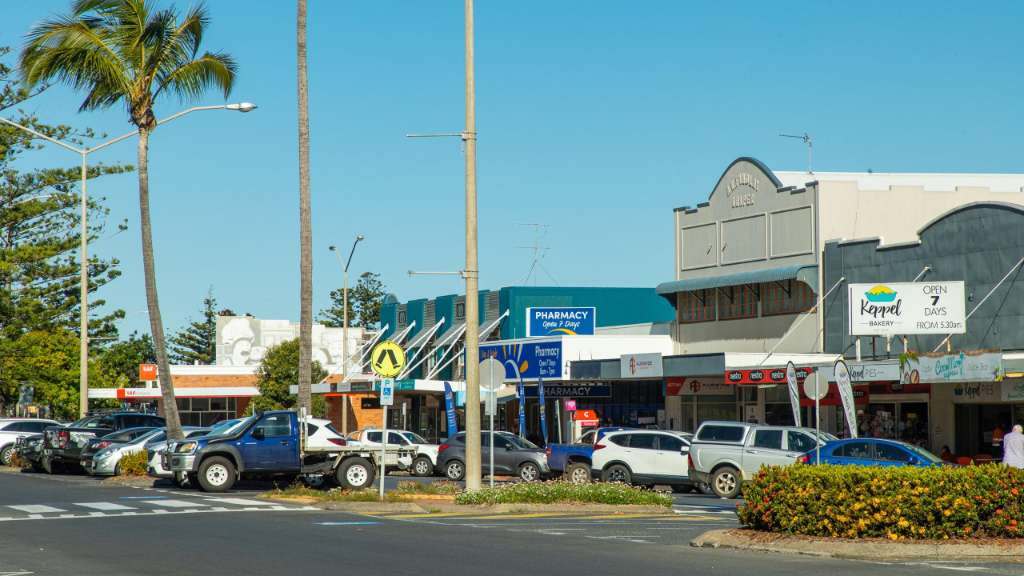
The controversy centres on Adelaide Street, a coastal road overlooking Yeppoon's beachfront accommodation and tourism precinct. Residents and business operators have reported ongoing issues involving vehicles allegedly racing, performing burnouts, revving engines and creating excessive noise, particularly during evenings and weekends.
Locals claim the street has effectively become a "race track", with some accommodation providers reporting that guests have cut short their stays because of the constant disturbances. Residents have also expressed fears that a serious crash could occur if the behaviour continues unchecked.
The council previously agreed to seek a review of the speed limit, proposing a reduction from 50km/h to 40km/h while also introducing additional signage and line marking aimed at slowing traffic. Traffic monitoring equipment has since been installed to gather data for the review process.
However, some councillors believe those measures do not go far enough. Councillor Glenda Mather recently proposed that council engineers investigate redesigning part of Adelaide Street, particularly around a sharp U-turn section at the northern end where dangerous driving has been reported. She argued that line marking alone would not fully address the issue and that more substantial road design changes should be considered.
Supporters of stronger action say the problem is affecting both local residents and visitors to the Capricorn Coast. They argue that the area's reputation as a tourism destination could suffer if anti-social driving behaviour continues to dominate the beachfront precinct.
Other councillors disagreed, arguing that existing measures should be allowed time to work before committing to more expensive infrastructure projects. They maintained that council engineers already have the authority to investigate and implement appropriate traffic-control measures if required. As a result, the proposal for a redesign was ultimately voted down.
The debate highlights a broader challenge facing local governments across Queensland as they seek to balance enforcement, infrastructure improvements and community expectations when dealing with hooning and dangerous driving. Previous discussions have also included suggestions for increased police patrols and surveillance measures.
For now, the speed review and traffic-management measures remain the council's primary response. Residents hope these steps will reduce speeding, noise and reckless driving while improving safety for locals, visitors and businesses along the popular coastal route.
CouncilMeasuresDrivingResidentsStreet
A growing hooning problem on one of Yeppoon's most prominent tourist streets has sparked debate within the Livingstone Shire Council, with councillors disagreeing on whether stronger infrastructure changes are needed to improve safety.
The controversy centres on Adelaide Street, a coastal road overlooking Yeppoon's beachfront accommodation and tourism precinct. Residents and business operators have reported ongoing issues involving vehicles allegedly racing, performing burnouts, revving engines and creating excessive noise, particularly during evenings and weekends.
Locals claim the street has effectively become a "race track", with some accommodation providers reporting that guests have cut short their stays because of the constant disturbances. Residents have also expressed fears that a serious crash could occur if the behaviour continues unchecked.
The council previously agreed to seek a review of the speed limit, proposing a reduction from 50km/h to 40km/h while also introducing additional signage and line marking aimed at slowing traffic. Traffic monitoring equipment has since been installed to gather data for the review process.
However, some councillors believe those measures do not go far enough. Councillor Glenda Mather recently proposed that council engineers investigate redesigning part of Adelaide Street, particularly around a sharp U-turn section at the northern end where dangerous driving has been reported. She argued that line marking alone would not fully address the issue and that more substantial road design changes should be considered.
Supporters of stronger action say the problem is affecting both local residents and visitors to the Capricorn Coast. They argue that the area's reputation as a tourism destination could suffer if anti-social driving behaviour continues to dominate the beachfront precinct.
Other councillors disagreed, arguing that existing measures should be allowed time to work before committing to more expensive infrastructure projects. They maintained that council engineers already have the authority to investigate and implement appropriate traffic-control measures if required. As a result, the proposal for a redesign was ultimately voted down.
The debate highlights a broader challenge facing local governments across Queensland as they seek to balance enforcement, infrastructure improvements and community expectations when dealing with hooning and dangerous driving. Previous discussions have also included suggestions for increased police patrols and surveillance measures.
For now, the speed review and traffic-management measures remain the council's primary response. Residents hope these steps will reduce speeding, noise and reckless driving while improving safety for locals, visitors and businesses along the popular coastal route.
A vehicle has crashed into a house in Albury, prompting police attendance at a residential property near the intersection of Mate and North streets. The incident was reported to...
A high-profile athlete has returned to court and told the hearing that an alleged unwanted kiss by former broadcaster Alan Jones remained difficult to f...
Work on the $150 million Sydney Town Hall Square project has been paused after the NSW Planning Minister referred the development for review by the Inde...
Queensland's emerging football prospects are coming together for a three-day Brisbane Lions State Academy showcase, giving young players an opportunity...
A Wavell Heights enrolled nurse has been charged with four counts of alleged sexual assault and one count of wilful exposure, with his professional regi...
A 24-year-old Carina Heights man has been charged with 36 offences following an investigation into alleged break-ins, vehicle offences and other propert...
Cairns Regional Council has unanimously voted to seek $400,000 in Queensland Government funding for a program designed to connect local businesses with the region’s growing film...
An automated external defibrillator and memorial plaque have been installed at Ellery Creek Big Hole following the death of disability advocate Ellen Fr...
Queensland firefighters spent several hours monitoring a significant grass fire at Mary Kinross Park in Bargara, near Bundaberg, after the blaze broke out on Wednesday evening....