Safety note: Admin approval is an initial review, not a guarantee that every detail is correct. Check important or urgent claims with official sources and report anything inaccurate or unsafe.
Source and credit: Contributor's own report
Major Banks Cut Fixed Home Loan Rates Ahead of RBA Interest Rate Decision - Sydney, NSW
Smart summary
Several major Australian lenders have reduced fixed-rate home loans ahead of the Reserve Bank of Australia's next policy meeting, signalling growing confidence that the interest rate cycle may be nearing its peak.
Several of Australia's largest banks have surprised borrowers by cutting fixed home loan interest rates ahead of the Reserve Bank of Australia's (RBA) next monetary policy meeting, offering fresh competition in the mortgage market despite uncertainty over future official interest rate movements.
According to new market analysis, 21 lenders have reduced fixed-rate mortgage products in recent weeks, including major institutions such as NAB, ANZ, and Macquarie Bank. The changes come before the RBA's next interest rate decision, scheduled for 11 August 2026, and reflect expectations that official rates may be close to their highest point.
Among the latest changes, National Australia Bank (NAB) lowered its two-year fixed home loan rate to 6.34 per cent, while Macquarie Bank reduced selected fixed-rate products to 6.09 per cent. Several smaller lenders are now advertising fixed mortgage rates below 6 per cent, increasing competition for new borrowers and homeowners considering refinancing.
Financial comparison group Canstar said the reductions indicate lenders believe future interest rate increases may be limited, even though the RBA has continued to warn that additional tightening remains possible if inflation remains above target. Mortgage providers often adjust fixed-rate products based on future market expectations rather than waiting for official cash rate decisions.
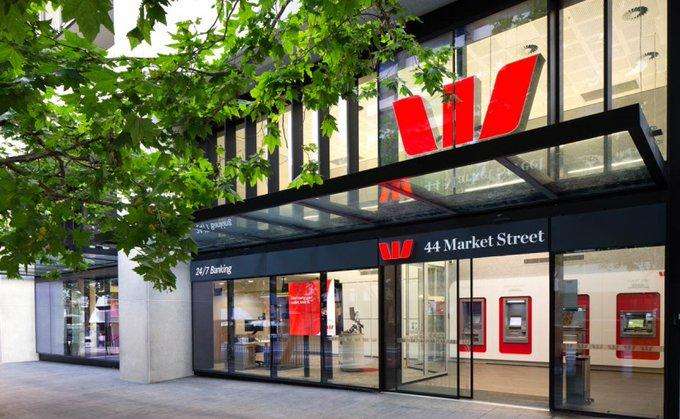
Despite the reductions, economists caution that borrowers should not assume official interest rate cuts are imminent. Of Australia's four major banks, Westpac remains the only one forecasting another RBA rate increase in August, while financial markets currently place only a relatively low probability on another immediate rise. Upcoming inflation and labour market data are expected to play a crucial role in determining the RBA's decision.
Borrowers considering switching from a variable-rate mortgage to a fixed-rate loan are being encouraged to compare products carefully. Fixed-rate loans provide repayment certainty but may become less attractive if official interest rates begin to fall in future years. Variable-rate borrowers, meanwhile, remain exposed to any future RBA decisions.
Analysts say the current wave of fixed-rate reductions is also designed to attract new customers as banks compete for market share in a slower housing finance market. Refinancing activity has increased as homeowners search for lower repayments amid ongoing cost-of-living pressures.
Although lenders appear more optimistic about the long-term outlook, they continue to price loans cautiously because inflation remains above the RBA's target range. The central bank has repeatedly stated it will make future decisions based on incoming economic data rather than following a predetermined path.
For households with mortgages, the latest fixed-rate reductions may provide an opportunity to review their existing loans and compare available offers. Financial experts recommend considering comparison rates, break costs, loan flexibility and future repayment plans before locking in a fixed interest rate.
While the recent cuts may provide some relief for borrowers, the RBA's upcoming decision and future inflation data will continue to influence Australia's mortgage market over the coming months.
RateFutureInterestFixed-RateMarket
Several of Australia's largest banks have surprised borrowers by cutting fixed home loan interest rates ahead of the Reserve Bank of Australia's (RBA) next monetary policy meeting, offering fresh competition in the mortgage market despite uncertainty over future official interest rate movements.
According to new market analysis, 21 lenders have reduced fixed-rate mortgage products in recent weeks, including major institutions such as NAB, ANZ, and Macquarie Bank. The changes come before the RBA's next interest rate decision, scheduled for 11 August 2026, and reflect expectations that official rates may be close to their highest point.
Among the latest changes, National Australia Bank (NAB) lowered its two-year fixed home loan rate to 6.34 per cent, while Macquarie Bank reduced selected fixed-rate products to 6.09 per cent. Several smaller lenders are now advertising fixed mortgage rates below 6 per cent, increasing competition for new borrowers and homeowners considering refinancing.
Financial comparison group Canstar said the reductions indicate lenders believe future interest rate increases may be limited, even though the RBA has continued to warn that additional tightening remains possible if inflation remains above target. Mortgage providers often adjust fixed-rate products based on future market expectations rather than waiting for official cash rate decisions.
Despite the reductions, economists caution that borrowers should not assume official interest rate cuts are imminent. Of Australia's four major banks, Westpac remains the only one forecasting another RBA rate increase in August, while financial markets currently place only a relatively low probability on another immediate rise. Upcoming inflation and labour market data are expected to play a crucial role in determining the RBA's decision.
Borrowers considering switching from a variable-rate mortgage to a fixed-rate loan are being encouraged to compare products carefully. Fixed-rate loans provide repayment certainty but may become less attractive if official interest rates begin to fall in future years. Variable-rate borrowers, meanwhile, remain exposed to any future RBA decisions.
Analysts say the current wave of fixed-rate reductions is also designed to attract new customers as banks compete for market share in a slower housing finance market. Refinancing activity has increased as homeowners search for lower repayments amid ongoing cost-of-living pressures.
Although lenders appear more optimistic about the long-term outlook, they continue to price loans cautiously because inflation remains above the RBA's target range. The central bank has repeatedly stated it will make future decisions based on incoming economic data rather than following a predetermined path.
For households with mortgages, the latest fixed-rate reductions may provide an opportunity to review their existing loans and compare available offers. Financial experts recommend considering comparison rates, break costs, loan flexibility and future repayment plans before locking in a fixed interest rate.
While the recent cuts may provide some relief for borrowers, the RBA's upcoming decision and future inflation data will continue to influence Australia's mortgage market over the coming months.
Cairns Regional Council has unanimously voted to seek $400,000 in Queensland Government funding for a program designed to connect local businesses with the region’s growing film...
Albury New South Wales · Business News · 17 Sep 2026
An Australian artificial intelligence company has purchased the former Visy paper mill site at Ettamogah, north of Albury, in a significant local business The company, Sharon AI...
A new multi-million-dollar poultry-processing facility has officially opened near Tamworth, bringing major investment and new employment opportunities t...
A 36-year-old man has been charged after investigators allegedly found fraudulent identification documents, cloned number plates, cash and drug-manufact...
A Sydney court has heard that a man sent 249 messages to a former partner within 24 hours, with the messages treated as a single alleged breach of an ap...
A high-profile athlete has returned to court and told the hearing that an alleged unwanted kiss by former broadcaster Alan Jones remained difficult to f...
Work on the $150 million Sydney Town Hall Square project has been paused after the NSW Planning Minister referred the development for review by the Inde...
Cairns Regional Council has unanimously voted to seek $400,000 in Queensland Government funding for a program designed to connect local businesses with the region’s growing film...
An automated external defibrillator and memorial plaque have been installed at Ellery Creek Big Hole following the death of disability advocate Ellen Fr...
Queensland firefighters spent several hours monitoring a significant grass fire at Mary Kinross Park in Bargara, near Bundaberg, after the blaze broke out on Wednesday evening....