Safety note: Admin approval is an initial review, not a guarantee that every detail is correct. Check important or urgent claims with official sources and report anything inaccurate or unsafe.
Source and credit: Contributor's own report
Pertame Immersive Language School Brings Endangered Language Back to Life in Alice Springs - Alice Springs, NT
Smart summary
A unique “language nest” in Alice Springs is teaching young children and parents entirely in Pertame, aiming to revive one of Central Australia’s most endangered Indigenous languages.
In Alice Springs, an innovative education program is helping breathe new life into the Indigenous language revival movement, with a full-immersion approach designed to create new fluent speakers of Pertame (Southern Arrernte).
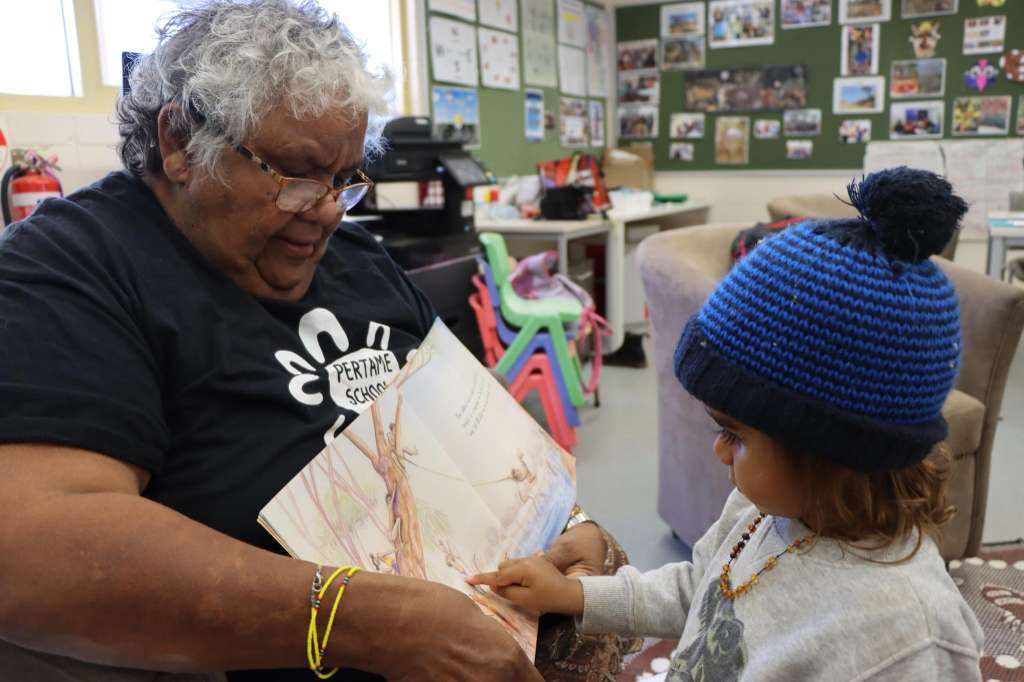
The initiative, based at the Pertame School, operates as a “language nest” where children aged from infancy to early primary years, along with their parents, are immersed entirely in the Pertame language during learning sessions.
Unlike traditional classrooms where Indigenous languages are taught as subjects, this program uses full immersion — meaning English is not used during activities. Children learn through conversation, storytelling, play, music, and routine interaction, with the goal of making Pertame a natural living language in daily use.
Pertame is one of Central Australia’s most endangered languages, with fewer than 30–30+ fluent speakers remaining, most of whom are elderly. It is traditionally spoken on country south of Alice Springs, around the Finke River region. Community leaders warn that without urgent action, the language could disappear within a generation.
The language nest model draws inspiration from successful Indigenous language revival programs overseas, particularly in North America and New Zealand, where immersion schooling has helped reverse language decline. The Alice Springs program adapts these methods to local cultural and community needs.
Educators involved in the initiative say the focus is not just on vocabulary or grammar, but on rebuilding everyday use of the language within families. Parents participate alongside their children so that learning continues at home, not just in the classroom.
The school environment is designed to feel informal and community-led, often resembling a playgroup rather than a conventional classroom. Activities include songs, storytelling, flashcards, and group interaction — all conducted in Pertame.
Language workers involved in the program say the goal is to create the first new generation of fluent speakers in decades. With most fluent elders now in older age groups, urgency is a major factor driving the program’s expansion.
The initiative is part of a broader national movement to preserve and revive Indigenous languages across Australia, many of which were disrupted or suppressed through colonisation and past government policies. Advocates say revitalising language is also closely linked to cultural identity, mental wellbeing, and community healing.
Community members have also expressed long-term hopes of building a dedicated classroom on-country, so that learning can take place in the traditional homelands of the Pertame people, strengthening cultural connection alongside language education.
Despite challenges such as limited fluent teachers and resource constraints, the program has been praised for its innovative approach and its potential to create sustainable intergenerational language transmission.
For participants, the experience is deeply personal — not just about learning words, but reconnecting with identity, ancestry, and belonging through language.
LanguagePertameProgramFluentAlice
In Alice Springs, an innovative education program is helping breathe new life into the Indigenous language revival movement, with a full-immersion approach designed to create new fluent speakers of Pertame (Southern Arrernte).
The initiative, based at the Pertame School, operates as a “language nest” where children aged from infancy to early primary years, along with their parents, are immersed entirely in the Pertame language during learning sessions.
Unlike traditional classrooms where Indigenous languages are taught as subjects, this program uses full immersion — meaning English is not used during activities. Children learn through conversation, storytelling, play, music, and routine interaction, with the goal of making Pertame a natural living language in daily use.
Pertame is one of Central Australia’s most endangered languages, with fewer than 30–30+ fluent speakers remaining, most of whom are elderly. It is traditionally spoken on country south of Alice Springs, around the Finke River region. Community leaders warn that without urgent action, the language could disappear within a generation.
The language nest model draws inspiration from successful Indigenous language revival programs overseas, particularly in North America and New Zealand, where immersion schooling has helped reverse language decline. The Alice Springs program adapts these methods to local cultural and community needs.
Educators involved in the initiative say the focus is not just on vocabulary or grammar, but on rebuilding everyday use of the language within families. Parents participate alongside their children so that learning continues at home, not just in the classroom.
The school environment is designed to feel informal and community-led, often resembling a playgroup rather than a conventional classroom. Activities include songs, storytelling, flashcards, and group interaction — all conducted in Pertame.
Language workers involved in the program say the goal is to create the first new generation of fluent speakers in decades. With most fluent elders now in older age groups, urgency is a major factor driving the program’s expansion.
The initiative is part of a broader national movement to preserve and revive Indigenous languages across Australia, many of which were disrupted or suppressed through colonisation and past government policies. Advocates say revitalising language is also closely linked to cultural identity, mental wellbeing, and community healing.
Community members have also expressed long-term hopes of building a dedicated classroom on-country, so that learning can take place in the traditional homelands of the Pertame people, strengthening cultural connection alongside language education.
Despite challenges such as limited fluent teachers and resource constraints, the program has been praised for its innovative approach and its potential to create sustainable intergenerational language transmission.
For participants, the experience is deeply personal — not just about learning words, but reconnecting with identity, ancestry, and belonging through language.
An investigation has raised questions about what happened after NSW's building regulator disciplined a major developer and prepared a public statement a...
A vehicle has crashed into a house in Albury, prompting police attendance at a residential property near the intersection of Mate and North streets. The incident was reported to...
A high-profile athlete has returned to court and told the hearing that an alleged unwanted kiss by former broadcaster Alan Jones remained difficult to f...
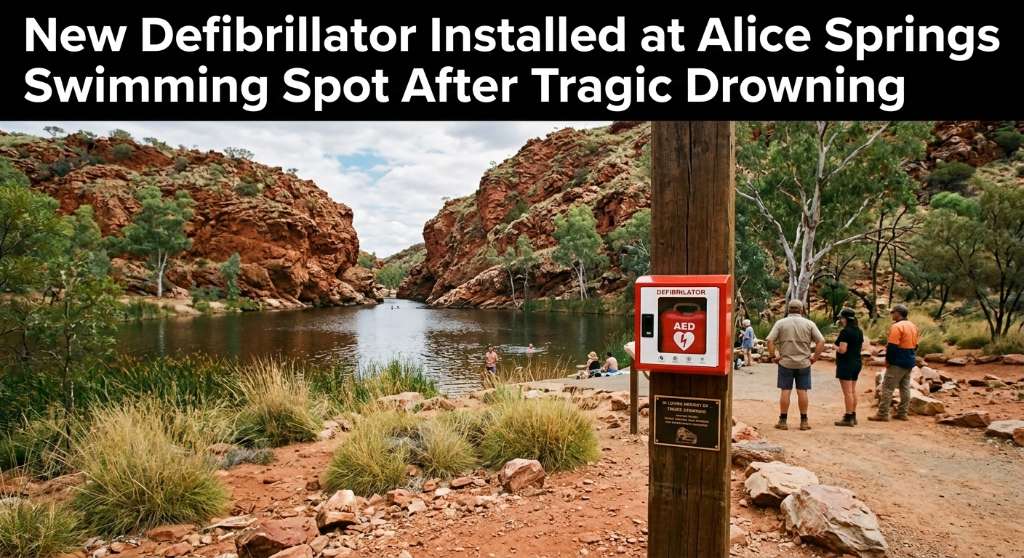
An automated external defibrillator and memorial plaque have been installed at Ellery Creek Big Hole following the death of disability advocate Ellen Fr...
Paramedics responding to an emergency in Alice Springs were forced to use a stretcher as a barricade after an armed and allegedly intoxicated group beca...
Darwin Northern Territory · Crime News · 18 Sep 2026
Northern Territory Police are investigating the death of a 28-year-old woman at a home in Malak, Darwin, with a 25-year-old man charged in connection with alleged assaults and b...
Central Coast New South Wales · Business News · 18 Sep 2026
More than 130 oyster-lease operators on the Central Coast are set to benefit from reforms announced by the NSW Government, with the changes designed to provide greater certainty...
Central Coast New South Wales · Crime News · 18 Sep 2026
A man has been charged following a police investigation into alleged detaining and assault offences on the Central Coast, according to a report published by Coast Community News...
Central Coast New South Wales · Emergency News · 18 Sep 2026
Rural Fire Service brigades across the Central Coast are preparing for the upcoming bushfire season and encouraging local residents to take practical steps before the arrival of...