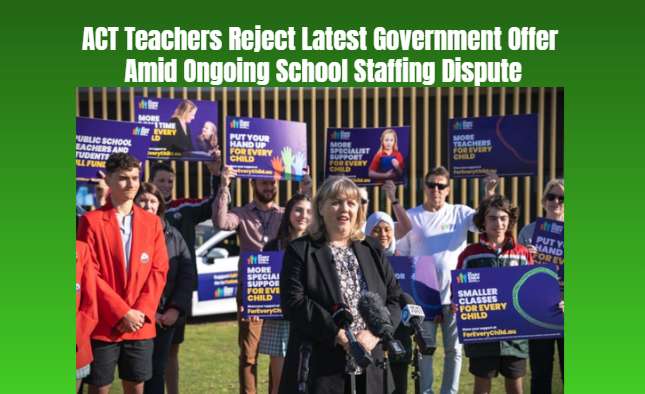
ACT Teachers Reject Latest Government Offer Amid Ongoing School Staffing Dispute
By Chloe · Published 16 Nov 2026 · Updated 16 Nov 2026
Canberra, ACT · ACT News
Safety note: Admin approval is an initial review, not a guarantee that every detail is correct. Check important or urgent claims with official sources and report anything inaccurate or unsafe.
Source and credit: Contributor's own report
ACT Teachers Reject Latest Government Offer Amid Ongoing School Staffing Dispute - Canberra, ACT
Smart summary
Public school teachers in the Australian Capital Territory have rejected another government offer, keeping concerns over classroom arrangements and teacher workloads at the centre of an ongoing dispute.
Public school teachers in the Australian Capital Territory have rejected the latest employment offer presented to them, extending an ongoing dispute between educators and the ACT government over working conditions and classroom arrangements.
The decision was reported on Monday, November 16, following discussions about a proposed agreement intended to address concerns raised by teachers and their union. Although the latest offer included a key demand relating to classroom splitting, it was not enough to secure the support of teachers.
Class splitting generally occurs when students from different year levels or classes are combined, often because of staffing shortages, teacher absences or school organisation requirements. Teachers have raised concerns about the impact these arrangements can have on classroom management, lesson planning and students' learning experiences.
The rejection highlights the challenges facing public education systems as schools attempt to balance staffing requirements, teacher workloads and the needs of students. Educators have increasingly called for arrangements that allow them to focus on teaching rather than managing additional administrative and operational pressures.
The ACT government has been negotiating with the teaching workforce over employment conditions and changes intended to improve the public school system. The latest proposal was expected to address at least some of the concerns that had prevented an agreement from being reached.
However, the rejection demonstrates that significant differences remain between the government and teachers. The issue of classroom splitting has been particularly important in negotiations, as educators want greater certainty about how classes are organised and how staffing decisions affect students.
For teachers, combining classes can create additional demands, particularly when students have different educational needs or are studying different stages of the curriculum. Educators must often adapt lesson plans and provide individual attention to students while managing larger or more varied groups.
Parents and students can also be affected by these arrangements. Changes to classroom structures may influence learning continuity, student support and the amount of individual attention available during lessons.
The dispute comes at a time when education systems across Australia are facing broader discussions about teacher recruitment, retention, workplace conditions and the long-term sustainability of public schools. Attracting experienced teachers and supporting early-career educators remain important challenges for education authorities.
In Canberra, the latest rejection means negotiations will need to continue if the government and teaching representatives are to reach an agreement acceptable to both sides.
The outcome also highlights the importance of consultation between education authorities and the people working directly in classrooms. Teachers play a central role in delivering education, and their feedback is an important part of decisions affecting school operations.
Further discussions are expected as the ACT government and teaching representatives consider the next steps. Until an agreement is reached, questions surrounding classroom arrangements and employment conditions are likely to remain a major issue for the territory's public education sector.
The development is being closely watched by teachers, families and school communities across Canberra, as any eventual agreement could influence working conditions and classroom experiences throughout the ACT public school system.
TeachersClassroomSchoolStudentsEducation
Public school teachers in the Australian Capital Territory have rejected the latest employment offer presented to them, extending an ongoing dispute between educators and the ACT government over working conditions and classroom arrangements.
The decision was reported on Monday, November 16, following discussions about a proposed agreement intended to address concerns raised by teachers and their union. Although the latest offer included a key demand relating to classroom splitting, it was not enough to secure the support of teachers.
Class splitting generally occurs when students from different year levels or classes are combined, often because of staffing shortages, teacher absences or school organisation requirements. Teachers have raised concerns about the impact these arrangements can have on classroom management, lesson planning and students' learning experiences.
The rejection highlights the challenges facing public education systems as schools attempt to balance staffing requirements, teacher workloads and the needs of students. Educators have increasingly called for arrangements that allow them to focus on teaching rather than managing additional administrative and operational pressures.
The ACT government has been negotiating with the teaching workforce over employment conditions and changes intended to improve the public school system. The latest proposal was expected to address at least some of the concerns that had prevented an agreement from being reached.
However, the rejection demonstrates that significant differences remain between the government and teachers. The issue of classroom splitting has been particularly important in negotiations, as educators want greater certainty about how classes are organised and how staffing decisions affect students.
For teachers, combining classes can create additional demands, particularly when students have different educational needs or are studying different stages of the curriculum. Educators must often adapt lesson plans and provide individual attention to students while managing larger or more varied groups.
Parents and students can also be affected by these arrangements. Changes to classroom structures may influence learning continuity, student support and the amount of individual attention available during lessons.
The dispute comes at a time when education systems across Australia are facing broader discussions about teacher recruitment, retention, workplace conditions and the long-term sustainability of public schools. Attracting experienced teachers and supporting early-career educators remain important challenges for education authorities.
In Canberra, the latest rejection means negotiations will need to continue if the government and teaching representatives are to reach an agreement acceptable to both sides.
The outcome also highlights the importance of consultation between education authorities and the people working directly in classrooms. Teachers play a central role in delivering education, and their feedback is an important part of decisions affecting school operations.
Further discussions are expected as the ACT government and teaching representatives consider the next steps. Until an agreement is reached, questions surrounding classroom arrangements and employment conditions are likely to remain a major issue for the territory's public education sector.
The development is being closely watched by teachers, families and school communities across Canberra, as any eventual agreement could influence working conditions and classroom experiences throughout the ACT public school system.
Prime Minister Anthony Albanese is meeting Philippine President Ferdinand Marcos Jr in Manila following a new defence cooperation agreement focused on m...
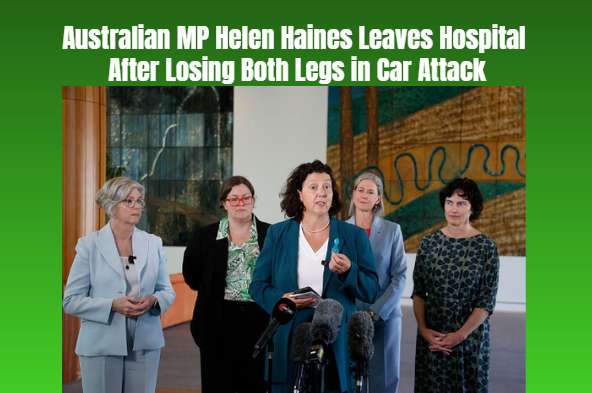
Independent federal MP Helen Haines has begun rehabilitation after being discharged from a Melbourne hospital, weeks after a vehicle attack outside her...
Independent federal MP Helen Haines has begun rehabilitation after being discharged from a Melbourne hospital, weeks after a vehicle attack outside her...
A private conversation between the two leaders was accidentally recorded during a break at the international climate summit in Türkiye, prompting widesp...
More than 200 Australian Defence Force Academy participants took part in a 42-hour remembrance march, recognising fallen service members and supporting...
Prime Minister Anthony Albanese is meeting Philippine President Ferdinand Marcos Jr in Manila following a new defence cooperation agreement focused on m...
The ACT Government has released early designs for a major hospital expansion in Bruce, featuring new clinical facilities, additional beds, an emergency...
A new national online threat centre has opened to help identify dangerous extremist content, tackle online radicalisation and strengthen Australia's res...
NSW patient survey findings highlight safety concerns in several major hospitals, as the state government commits additional security staff to emergency...
Police are investigating a daylight theft after three valuable trophies belonging to Australia's legendary racehorse were taken from an exhibition displ...
Operation Amarok 15 resulted in 1,594 charges, hundreds of apprehended domestic violence order breaches identified and dozens of firearms seized across...