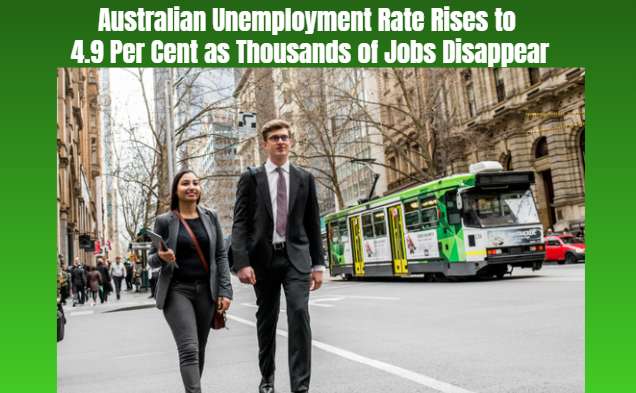
Australian Unemployment Rate Rises to 4.9 Per Cent as Thousands of Jobs Disappear
By Chloe · Published 19 Nov 2026 · Updated 19 Nov 2026
National, ACT
Safety note: Admin approval is an initial review, not a guarantee that every detail is correct. Check important or urgent claims with official sources and report anything inaccurate or unsafe.
Source and credit: Contributor's own report
Australian Unemployment Rate Rises to 4.9 Per Cent as Thousands of Jobs Disappear - National, ACT
Smart summary
Australia's unemployment rate unexpectedly increased to 4.9 per cent in October, with employment falling by 43,500 people, raising fresh concerns about the country's labour market.
Australia's labour market has experienced a significant setback after the latest employment figures revealed that the national unemployment rate increased to 4.9 per cent in October 2026.
The Australian Bureau of Statistics (ABS) figures, reported on Thursday, 19 November, show that unemployment increased from 4.7 per cent in September to 4.9 per cent in October. The increase was larger than many economic analysts had anticipated.
The data also revealed that the number of employed people fell by 43,500 during October. At the same time, the number of officially unemployed Australians increased by 17,800 on a seasonally adjusted basis.
The latest figures represent the highest unemployment rate in Australia since the COVID-19 pandemic period. The development has raised concerns about the strength of the economy and the availability of employment opportunities.
The Reserve Bank of Australia has been increasing interest rates in an effort to control inflation. It has raised interest rates five times during 2026, placing additional financial pressure on households and businesses.
However, the October employment figures were recorded before the latest interest rate increase earlier this month. This means the most recent rate decision cannot explain the employment decline recorded in October.
Economists are particularly concerned about the speed at which unemployment is increasing. The Reserve Bank's previous forecasts suggested that unemployment could reach 5.1 per cent by the end of 2028.
The latest increase indicates that the labour market may be weakening faster than previously expected.
A rising unemployment rate can have consequences for households across the country. People who lose their jobs may face difficulties paying rent, mortgages, utility bills and everyday living expenses. Families may also reduce spending when their income becomes uncertain.
Young people entering the workforce could face additional challenges if businesses reduce recruitment or delay hiring decisions. Workers in retail, hospitality, construction and other industries may also experience greater competition for available positions.
The employment figures have also created uncertainty for businesses. Companies facing higher borrowing costs and weaker consumer demand may become more cautious about expanding their operations or recruiting additional staff.
The Reserve Bank now faces a difficult economic situation. It must balance the need to control inflation against the risk of weakening employment and economic activity.
A sustained increase in unemployment could also influence future interest rate decisions, although inflation and other economic indicators will remain important considerations.
The latest figures do not establish that Australia has entered a recession. However, they demonstrate that the country's employment market is facing increasing pressure.
Government agencies, employers and economic analysts will be closely monitoring upcoming employment reports to determine whether the deterioration continues.
For Australian workers and job seekers, the latest figures highlight the importance of employment stability as the economy moves towards the end of 2026.
EmploymentUnemploymentFiguresRateLatest
Australia's labour market has experienced a significant setback after the latest employment figures revealed that the national unemployment rate increased to 4.9 per cent in October 2026.
The Australian Bureau of Statistics (ABS) figures, reported on Thursday, 19 November, show that unemployment increased from 4.7 per cent in September to 4.9 per cent in October. The increase was larger than many economic analysts had anticipated.
The data also revealed that the number of employed people fell by 43,500 during October. At the same time, the number of officially unemployed Australians increased by 17,800 on a seasonally adjusted basis.
The latest figures represent the highest unemployment rate in Australia since the COVID-19 pandemic period. The development has raised concerns about the strength of the economy and the availability of employment opportunities.
The Reserve Bank of Australia has been increasing interest rates in an effort to control inflation. It has raised interest rates five times during 2026, placing additional financial pressure on households and businesses.
However, the October employment figures were recorded before the latest interest rate increase earlier this month. This means the most recent rate decision cannot explain the employment decline recorded in October.
Economists are particularly concerned about the speed at which unemployment is increasing. The Reserve Bank's previous forecasts suggested that unemployment could reach 5.1 per cent by the end of 2028.
The latest increase indicates that the labour market may be weakening faster than previously expected.
A rising unemployment rate can have consequences for households across the country. People who lose their jobs may face difficulties paying rent, mortgages, utility bills and everyday living expenses. Families may also reduce spending when their income becomes uncertain.
Young people entering the workforce could face additional challenges if businesses reduce recruitment or delay hiring decisions. Workers in retail, hospitality, construction and other industries may also experience greater competition for available positions.
The employment figures have also created uncertainty for businesses. Companies facing higher borrowing costs and weaker consumer demand may become more cautious about expanding their operations or recruiting additional staff.
The Reserve Bank now faces a difficult economic situation. It must balance the need to control inflation against the risk of weakening employment and economic activity.
A sustained increase in unemployment could also influence future interest rate decisions, although inflation and other economic indicators will remain important considerations.
The latest figures do not establish that Australia has entered a recession. However, they demonstrate that the country's employment market is facing increasing pressure.
Government agencies, employers and economic analysts will be closely monitoring upcoming employment reports to determine whether the deterioration continues.
For Australian workers and job seekers, the latest figures highlight the importance of employment stability as the economy moves towards the end of 2026.
Rising operating costs and uncertainty over regulations are putting pressure on Australia’s cruise tourism industry, with fewer ships visiting the count...
Tasmania's well-known cheese and chocolate producer has entered voluntary administration, raising concerns about its future operations and the impact on...
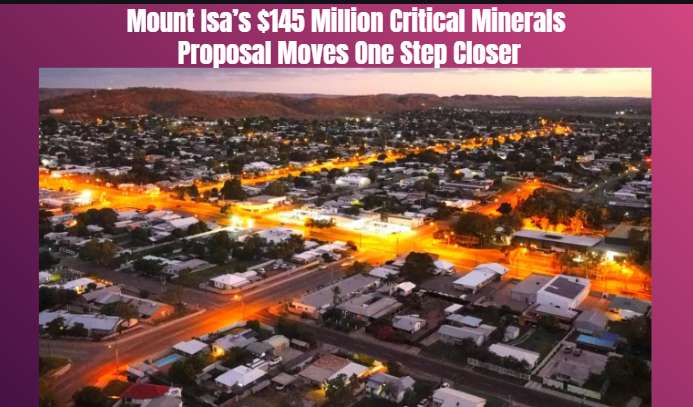
Government support brings fresh hope to Mount Isa’s plan for a research facility aimed at attracting investment and creating new opportunities in Queens...
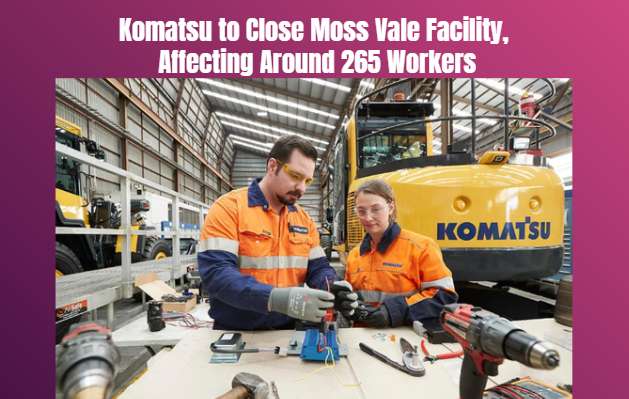
Komatsu Mining plans to shut its Moss Vale facility by 2030, with approximately 265 workers expected to be affected as operations gradually move to othe...
A 15-year-old boy has been left in critical condition after being shot with an arrow in Kempsey, while police investigate reports involving people alleg...
Two teenage boys have suffered stab wounds during a violent confrontation at Castle Towers Shopping Centre in Sydney's north-west, prompting an emergenc...
Rising operating costs and uncertainty over regulations are putting pressure on Australia’s cruise tourism industry, with fewer ships visiting the count...
A South Australian farmer is facing an estimated $100,000 loss after a fire destroyed harvesting equipment near Sedan. Firefighters prevented the blaze...
Victorian detectives have arrested a teenager following an investigation into alleged organised crime attacks targeting bars, clubs and restaurants acro...
South Australian police have arrested a man and a woman after allegedly discovering 910 alkaloid poppy plants growing at a residential property in Brahm...
A 15-year-old boy has been left in critical condition after being shot with an arrow in Kempsey, while police investigate reports involving people alleg...
Two teenage boys have suffered stab wounds during a violent confrontation at Castle Towers Shopping Centre in Sydney's north-west, prompting an emergenc...