Safety note: Admin approval is an initial review, not a guarantee that every detail is correct. Check important or urgent claims with official sources and report anything inaccurate or unsafe.
Source and credit: Contributor's own report
Central Coast Heritage Grants Remain Unfunded Despite Council's Return - Central Coast, NSW
Smart summary
Heritage advocates are calling on the Central Coast Council to reinstate its heritage grants program, arguing the lack of funding is leaving historic buildings and conservation projects without vital financial support.
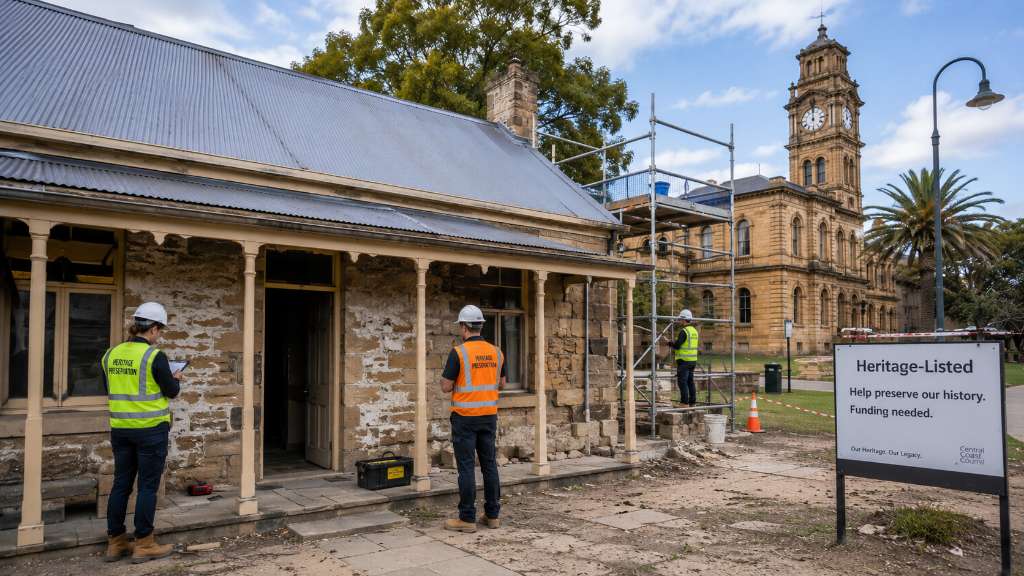
Concerns are growing across the Central Coast after heritage grants remain unavailable several years after they were suspended during the period when Central Coast Council was under administration. Heritage organisations, property owners and local historians say the continued absence of the grants is placing increasing pressure on efforts to preserve some of the region's most significant historic buildings and cultural landmarks.
The heritage grants program was suspended in 2021 while the council was under administration following significant financial difficulties. Although the council has since returned to elected governance, the funding program has not been reinstated, disappointing many community members who had hoped support for conservation projects would resume as part of the council's recovery. Heritage advocates argue that many owners of heritage-listed properties rely on small grants to help fund specialist repairs, conservation work and maintenance that can often be significantly more expensive than standard building work.
Supporters of the program say heritage grants not only protect important buildings but also contribute to tourism, local identity and community pride. The Central Coast contains numerous heritage-listed homes, public buildings, churches and historic sites that reflect the region's development over more than a century. Without financial assistance, some owners may delay necessary maintenance, potentially allowing deterioration that becomes more costly to repair in the future.
Heritage specialists note that conservation work often requires traditional building materials, specialist tradespeople and strict compliance with heritage regulations. These requirements can substantially increase project costs, making grant programs an important incentive for owners to undertake restoration rather than postpone repairs. Community groups say many councils across New South Wales continue to provide heritage assistance because preserving historic buildings delivers long-term economic, cultural and environmental benefits.
Residents have questioned why the grants have not returned despite improvements in the council's financial position. Some believe even a modest funding allocation would encourage property owners to invest in conservation projects while helping protect local history for future generations. Heritage organisations have urged councillors to consider including funding for the program in future budgets, describing it as an investment in the Central Coast's cultural identity rather than simply another council expense.
Council has previously acknowledged competing budget priorities as it continues rebuilding its financial position following years of fiscal challenges. However, advocates argue that delaying heritage funding for too long risks the gradual loss of historically significant buildings through neglect and deferred maintenance. They say preventative conservation is often far less expensive than major restoration work required after buildings deteriorate.
As discussions over future budgets continue, heritage supporters hope the issue will receive renewed attention from councillors and the broader community. They believe reinstating the grants would demonstrate a commitment to protecting the Central Coast's architectural history while supporting local property owners who take on the responsibility of maintaining heritage-listed places. For now, however, the region remains without a dedicated council heritage grants program, leaving many conservation projects waiting for financial assistance to return.
HeritageCouncilGrantsBuildingsCentral
Concerns are growing across the Central Coast after heritage grants remain unavailable several years after they were suspended during the period when Central Coast Council was under administration. Heritage organisations, property owners and local historians say the continued absence of the grants is placing increasing pressure on efforts to preserve some of the region's most significant historic buildings and cultural landmarks.
The heritage grants program was suspended in 2021 while the council was under administration following significant financial difficulties. Although the council has since returned to elected governance, the funding program has not been reinstated, disappointing many community members who had hoped support for conservation projects would resume as part of the council's recovery. Heritage advocates argue that many owners of heritage-listed properties rely on small grants to help fund specialist repairs, conservation work and maintenance that can often be significantly more expensive than standard building work.
Supporters of the program say heritage grants not only protect important buildings but also contribute to tourism, local identity and community pride. The Central Coast contains numerous heritage-listed homes, public buildings, churches and historic sites that reflect the region's development over more than a century. Without financial assistance, some owners may delay necessary maintenance, potentially allowing deterioration that becomes more costly to repair in the future.
Heritage specialists note that conservation work often requires traditional building materials, specialist tradespeople and strict compliance with heritage regulations. These requirements can substantially increase project costs, making grant programs an important incentive for owners to undertake restoration rather than postpone repairs. Community groups say many councils across New South Wales continue to provide heritage assistance because preserving historic buildings delivers long-term economic, cultural and environmental benefits.
Residents have questioned why the grants have not returned despite improvements in the council's financial position. Some believe even a modest funding allocation would encourage property owners to invest in conservation projects while helping protect local history for future generations. Heritage organisations have urged councillors to consider including funding for the program in future budgets, describing it as an investment in the Central Coast's cultural identity rather than simply another council expense.
Council has previously acknowledged competing budget priorities as it continues rebuilding its financial position following years of fiscal challenges. However, advocates argue that delaying heritage funding for too long risks the gradual loss of historically significant buildings through neglect and deferred maintenance. They say preventative conservation is often far less expensive than major restoration work required after buildings deteriorate.
As discussions over future budgets continue, heritage supporters hope the issue will receive renewed attention from councillors and the broader community. They believe reinstating the grants would demonstrate a commitment to protecting the Central Coast's architectural history while supporting local property owners who take on the responsibility of maintaining heritage-listed places. For now, however, the region remains without a dedicated council heritage grants program, leaving many conservation projects waiting for financial assistance to return.
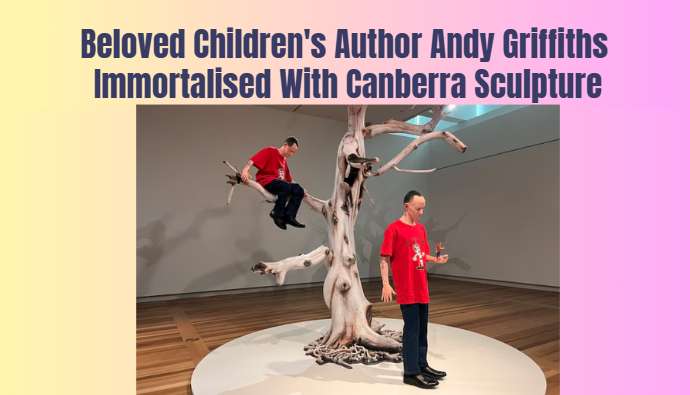
A four-metre-high 3D-printed sculpture celebrating Australian children's author Andy Griffiths has gone on display at Canberra's National Portrait Gallery.
After losing two sons, Melbourne father Nick Olney has established a charity helping grieving parents preserve memories of their babies and access suppo...
A fire damaged the Moama Football and Netball Club's social rooms during Saturday's grand final, forcing about 1,000 people to leave the building becaus...
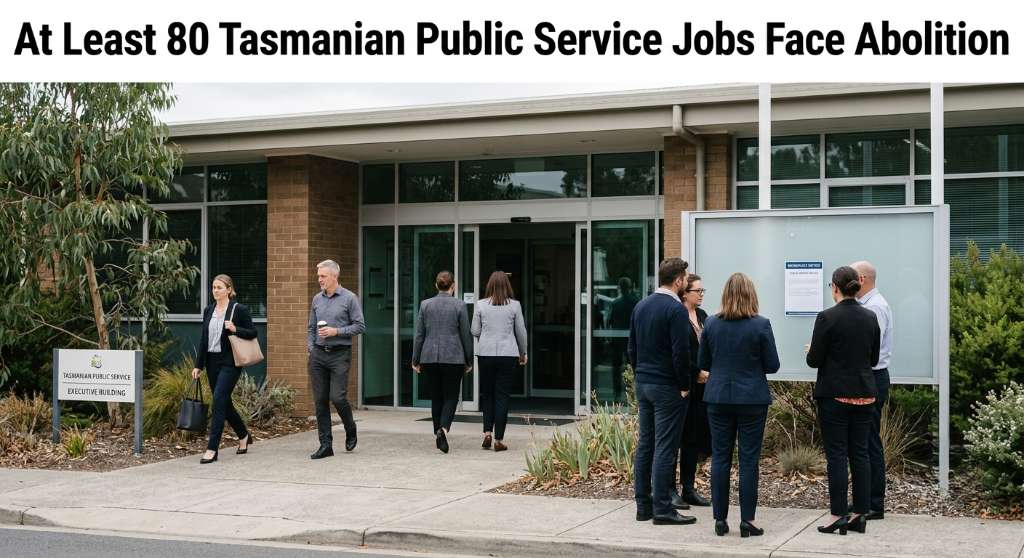
At least 80 positions have been identified for abolition as Tasmania restructures parts of its public service and works toward a broader reduction in go...
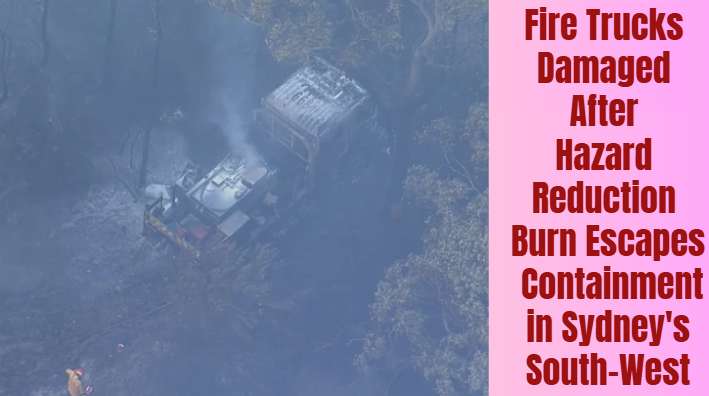
Multiple Rural Fire Service trucks were damaged after a planned hazard reduction burn at Wedderburn in Sydney's south-west escaped containment on Saturday.
Recent domestic violence-related deaths in New South Wales have highlighted concerns about gaps in identifying alleged perpetrators before serious viole...
Australian health experts are warning that cat bites and scratches can cause severe infections, with hospitalisations from cat-related injuries nearly t...
A parliamentary petition calling for specialist endometriosis education in NSW public high schools has attracted more than 1,700 signatures, as health a...
A 50-year-old man has died after being struck by a vehicle in Fernvale, west of Brisbane, with police launching a homicide investigation and arresting a...
Multiple Rural Fire Service trucks were damaged after a planned hazard reduction burn at Wedderburn in Sydney's south-west escaped containment on Saturday.
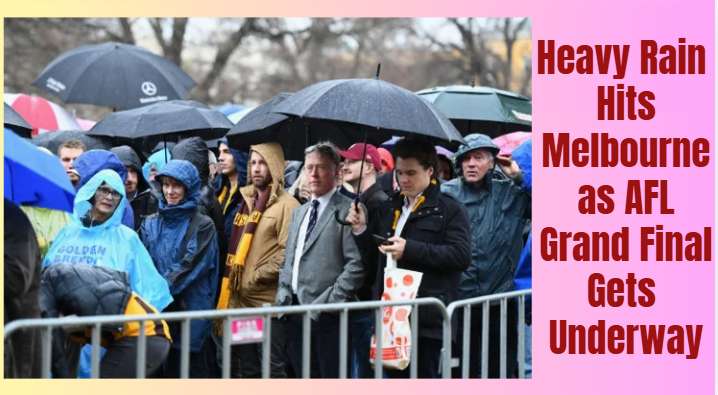
Wet conditions at the Melbourne Cricket Ground are creating difficult conditions for the AFL Grand Final, while poor weather has also disrupted flights...
Amateur astronomers are using new telescope technology to photograph the Moon, planets and distant galaxies from Brisbane homes, showing that city skies...