Safety note: Admin approval is an initial review, not a guarantee that every detail is correct. Check important or urgent claims with official sources and report anything inaccurate or unsafe.
Source and credit: Contributor's own report
Cruise ships proposed to help Brisbane solve 2032 Olympic accommodation shortage - Brisbane, QLD
Smart summary
Queensland’s tourism industry is considering cruise ships as a temporary way to provide thousands of additional rooms during the Brisbane Olympics.
Queensland tourism leaders are proposing an unusual solution to Brisbane’s expected accommodation shortage during the 2032 Olympic and Paralympic Games: using cruise ships as floating hotels.
The proposal has emerged from concerns that Brisbane and southeast Queensland may not have enough conventional hotel rooms to accommodate the huge number of visitors expected for the Games. Tourism industry representatives say cruise ships could potentially provide thousands of additional rooms while reducing pressure on existing hotels.
The concept is not intended to replace long-term hotel construction. Instead, cruise ships could provide temporary accommodation during the peak Olympic period, when demand is expected to be exceptionally high. Similar approaches have been considered or used around major international sporting events where conventional accommodation capacity has been insufficient.
The proposal comes as Brisbane continues preparing for the 2032 Games. Accommodation is one of the major infrastructure challenges facing the city, alongside transport, sporting venues and public spaces.
Queensland Tourism Industry Council chief executive Natassia Wheeler has promoted the idea as a practical short-term solution. According to reporting, cruise ships could potentially add around 7,000 rooms if deployed for the event.
The proposal also highlights the economic opportunities associated with Brisbane 2032. While the Olympics are expected to bring major tourism benefits, the city must manage the enormous temporary increase in visitors without creating excessive pressure on residents and existing infrastructure.
For Brisbane, the accommodation question is becoming increasingly important as preparations move forward. Building permanent hotels can take years, while temporary accommodation options can potentially be arranged closer to the Games.
The cruise-ship proposal therefore provides Queensland with another option for handling peak demand. Whether it ultimately becomes part of the official accommodation strategy remains to be seen, but tourism leaders are already looking for creative ways to ensure visitors have somewhere to stay in 2032.
AccommodationBrisbaneCruiseShipsTourism
Queensland tourism leaders are proposing an unusual solution to Brisbane’s expected accommodation shortage during the 2032 Olympic and Paralympic Games: using cruise ships as floating hotels.
The proposal has emerged from concerns that Brisbane and southeast Queensland may not have enough conventional hotel rooms to accommodate the huge number of visitors expected for the Games. Tourism industry representatives say cruise ships could potentially provide thousands of additional rooms while reducing pressure on existing hotels.
The concept is not intended to replace long-term hotel construction. Instead, cruise ships could provide temporary accommodation during the peak Olympic period, when demand is expected to be exceptionally high. Similar approaches have been considered or used around major international sporting events where conventional accommodation capacity has been insufficient.
The proposal comes as Brisbane continues preparing for the 2032 Games. Accommodation is one of the major infrastructure challenges facing the city, alongside transport, sporting venues and public spaces.
Queensland Tourism Industry Council chief executive Natassia Wheeler has promoted the idea as a practical short-term solution. According to reporting, cruise ships could potentially add around 7,000 rooms if deployed for the event.
The proposal also highlights the economic opportunities associated with Brisbane 2032. While the Olympics are expected to bring major tourism benefits, the city must manage the enormous temporary increase in visitors without creating excessive pressure on residents and existing infrastructure.
For Brisbane, the accommodation question is becoming increasingly important as preparations move forward. Building permanent hotels can take years, while temporary accommodation options can potentially be arranged closer to the Games.
The cruise-ship proposal therefore provides Queensland with another option for handling peak demand. Whether it ultimately becomes part of the official accommodation strategy remains to be seen, but tourism leaders are already looking for creative ways to ensure visitors have somewhere to stay in 2032.
Queensland's emerging football prospects are coming together for a three-day Brisbane Lions State Academy showcase, giving young players an opportunity...
Twenty leading NPL Queensland players have been selected for two upcoming matches against Brisbane Roar as part of the 2026 Mitre Festival of Football.
Queensland's emerging football prospects are coming together for a three-day Brisbane Lions State Academy showcase, giving young players an opportunity...
A Wavell Heights enrolled nurse has been charged with four counts of alleged sexual assault and one count of wilful exposure, with his professional regi...
A 24-year-old Carina Heights man has been charged with 36 offences following an investigation into alleged break-ins, vehicle offences and other propert...
Cairns Regional Council has unanimously voted to seek $400,000 in Queensland Government funding for a program designed to connect local businesses with the region’s growing film...
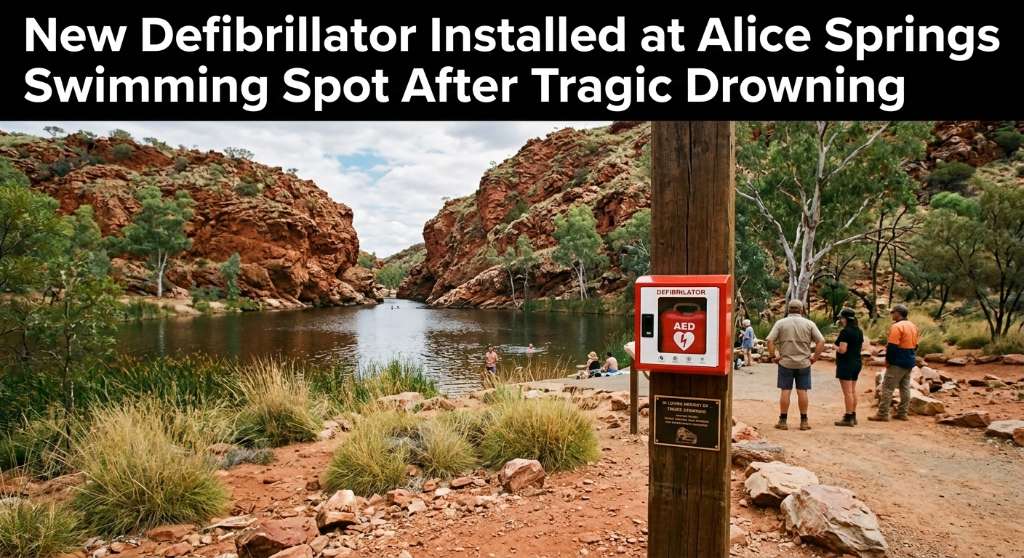
An automated external defibrillator and memorial plaque have been installed at Ellery Creek Big Hole following the death of disability advocate Ellen Fr...
Queensland firefighters spent several hours monitoring a significant grass fire at Mary Kinross Park in Bargara, near Bundaberg, after the blaze broke out on Wednesday evening....