Safety note: Admin approval is an initial review, not a guarantee that every detail is correct. Check important or urgent claims with official sources and report anything inaccurate or unsafe.
Source and credit: Contributor's own report
Decade-Long Fight for Clean Drinking Water Continues in Remote Kimberley Community - Broome, WA
Smart summary
Residents of Pandanus Park say years of concerns over nitrate-contaminated water have left families worried about health risks as they wait for long-promised infrastructure upgrades.
For the residents of Pandanus Park, a remote Aboriginal community in Western Australia's Kimberley region, access to safe drinking water remains a daily challenge despite more than a decade of advocacy and appeals for action. Community members say concerns about nitrate contamination in their water supply have persisted for years, raising fears about potential health impacts and highlighting broader issues faced by remote communities across the state.
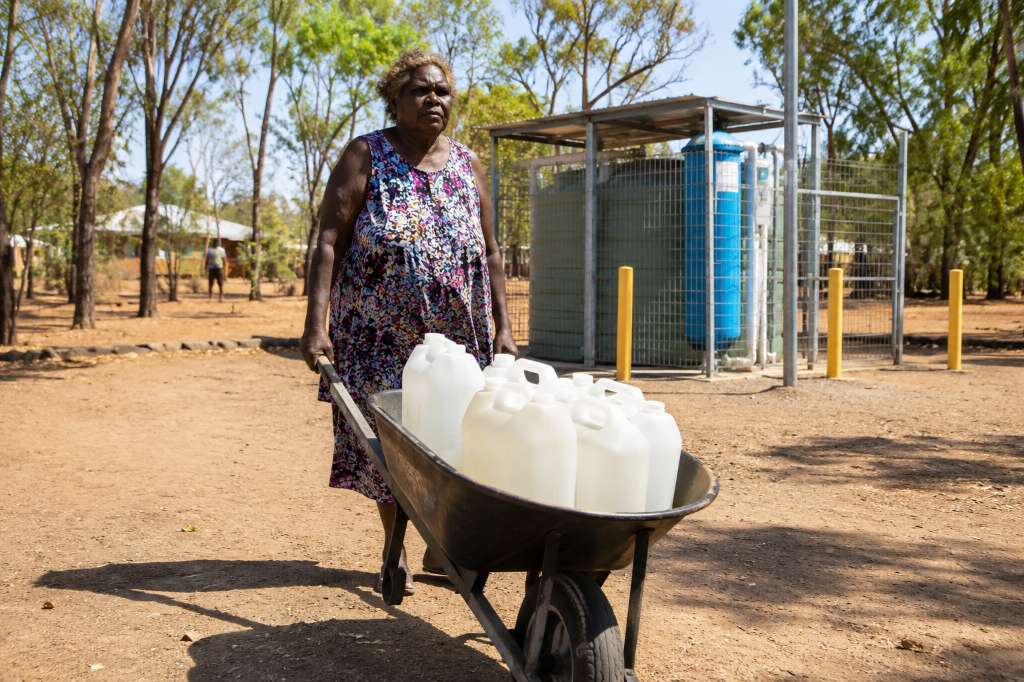
Located about 170 kilometres east of Broome and roughly 2,300 kilometres north of Perth, Pandanus Park is home to around 100 residents. Many families continue to rely on a community filtration system rather than water directly from household taps. Residents regularly transport containers of filtered water to their homes, a task made more difficult by the region's extreme heat and remote conditions.
The primary concern is nitrate contamination in groundwater supplies. Nitrates occur naturally in parts of the Kimberley as vegetation breaks down and seeps into underground aquifers. While current Australian Drinking Water Guidelines consider the water safe for most adults, nitrate levels in Pandanus Park have repeatedly exceeded recommended limits for infants under three months old. Elevated nitrate exposure in infants can cause methaemoglobinaemia, commonly known as "blue baby syndrome," a potentially life-threatening condition that affects the blood's ability to carry oxygen.
Community leaders, including chairperson Patricia Riley, have campaigned for years to secure a long-term solution. Residents have questioned whether ongoing health problems, including kidney disease and cancer, may be linked to water quality concerns, although direct causal links have not been established. Health experts have also called for a review of national nitrate guidelines, arguing that emerging research suggests risks may exist at lower concentrations than previously believed.
A filtration station donated by the Yaru Foundation in 2017 has provided an interim source of safe drinking water, but community members say it was never intended to be a permanent solution. The system requires residents to travel to a central location to collect water, creating challenges for elderly people, families with young children, and those with health conditions.
The issue extends beyond Pandanus Park. Previous audits found that multiple remote Aboriginal communities across Western Australia experienced water quality concerns, prompting calls for greater investment in infrastructure and stronger protections for vulnerable populations. Advocates argue that clean drinking water should be treated as a fundamental service regardless of a community's size or location.
There is some progress on the horizon. Water Corporation, which is now responsible for servicing Pandanus Park and numerous other remote communities, says infrastructure upgrades are scheduled to begin in 2027. Until those improvements are completed, residents remain hopeful that their long struggle for safe, reliable drinking water will finally come to an end.
WaterCommunityDrinkingRemoteResidents
For the residents of Pandanus Park, a remote Aboriginal community in Western Australia's Kimberley region, access to safe drinking water remains a daily challenge despite more than a decade of advocacy and appeals for action. Community members say concerns about nitrate contamination in their water supply have persisted for years, raising fears about potential health impacts and highlighting broader issues faced by remote communities across the state.
Located about 170 kilometres east of Broome and roughly 2,300 kilometres north of Perth, Pandanus Park is home to around 100 residents. Many families continue to rely on a community filtration system rather than water directly from household taps. Residents regularly transport containers of filtered water to their homes, a task made more difficult by the region's extreme heat and remote conditions.
The primary concern is nitrate contamination in groundwater supplies. Nitrates occur naturally in parts of the Kimberley as vegetation breaks down and seeps into underground aquifers. While current Australian Drinking Water Guidelines consider the water safe for most adults, nitrate levels in Pandanus Park have repeatedly exceeded recommended limits for infants under three months old. Elevated nitrate exposure in infants can cause methaemoglobinaemia, commonly known as "blue baby syndrome," a potentially life-threatening condition that affects the blood's ability to carry oxygen.
Community leaders, including chairperson Patricia Riley, have campaigned for years to secure a long-term solution. Residents have questioned whether ongoing health problems, including kidney disease and cancer, may be linked to water quality concerns, although direct causal links have not been established. Health experts have also called for a review of national nitrate guidelines, arguing that emerging research suggests risks may exist at lower concentrations than previously believed.
A filtration station donated by the Yaru Foundation in 2017 has provided an interim source of safe drinking water, but community members say it was never intended to be a permanent solution. The system requires residents to travel to a central location to collect water, creating challenges for elderly people, families with young children, and those with health conditions.
The issue extends beyond Pandanus Park. Previous audits found that multiple remote Aboriginal communities across Western Australia experienced water quality concerns, prompting calls for greater investment in infrastructure and stronger protections for vulnerable populations. Advocates argue that clean drinking water should be treated as a fundamental service regardless of a community's size or location.
There is some progress on the horizon. Water Corporation, which is now responsible for servicing Pandanus Park and numerous other remote communities, says infrastructure upgrades are scheduled to begin in 2027. Until those improvements are completed, residents remain hopeful that their long struggle for safe, reliable drinking water will finally come to an end.
Three separate earthquakes were recorded near Port Hedland in Western Australia over the weekend, with more than 100 reports submitted to Geoscience Aus...
Australian tennis player Talia Gibson has reached her first WTA Tour-level singles final at the Singapore Open after Tatiana Prozorova withdrew from the...
Drivers stopping to pick or photograph colourful everlasting wildflowers along Western Australia’s Bussell Highway are being warned about serious road-s...
Three separate earthquakes were recorded near Port Hedland in Western Australia over the weekend, with more than 100 reports submitted to Geoscience Aus...
A growing number of young Australians are taking up birdwatching, bringing fresh interest to the Broome Bird Observatory and the migratory shorebirds of...
A 50-year-old man has died after being struck by a vehicle in Fernvale, west of Brisbane, with police launching a homicide investigation and arresting a...
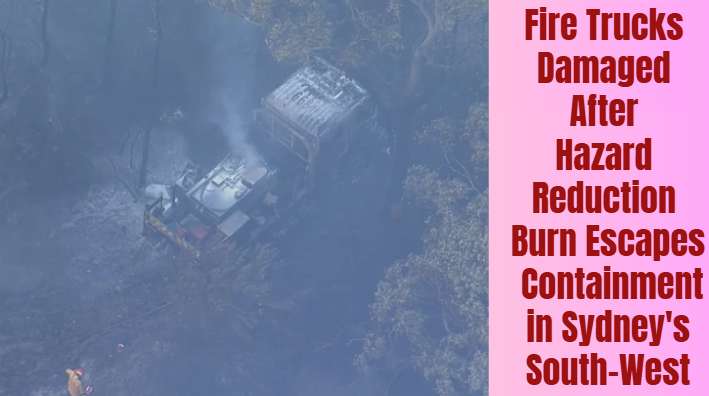
Multiple Rural Fire Service trucks were damaged after a planned hazard reduction burn at Wedderburn in Sydney's south-west escaped containment on Saturday.
Wet conditions at the Melbourne Cricket Ground are creating difficult conditions for the AFL Grand Final, while poor weather has also disrupted flights...
Amateur astronomers are using new telescope technology to photograph the Moon, planets and distant galaxies from Brisbane homes, showing that city skies...