Safety note: Admin approval is an initial review, not a guarantee that every detail is correct. Check important or urgent claims with official sources and report anything inaccurate or unsafe.
Former NSW Police Officer Jailed for High-Range Drink Driving
Smart summary
Former NSW police officer Scott Noel O’Mally has been sentenced to nine months in prison, with a non-parole period of five months, after being convicted of high-range drink driving. The court heard O’Mally recorded a...
Former NSW police officer Scott Noel O’Mally has been sentenced to nine months in prison, with a non-parole period of five months, after being convicted of high-range drink driving.
The court heard O’Mally recorded a blood-alcohol reading of 0.353, more than seven times the NSW legal limit for a fully licensed driver. The incident occurred on March 24, when he lost control of his vehicle on Wyee Road and crashed into a safety railing. He was found unconscious and had suffered serious injuries.
O’Mally, who is from Lake Munmorah on the Central Coast, had previously worked as a NSW police officer. The court also heard about his previous criminal and driving history, including a 2004 conviction for bribery while he was a police officer and earlier drink-driving convictions in 2014 and 2018.
His solicitor told the court that O’Mally had experienced long-standing, undiagnosed post-traumatic stress following traumatic experiences during his police career. The court also heard that he had more recently begun seeking psychological treatment and attempting to address his alcohol dependence.
However, Judge John Arms said O’Mally had previously been given opportunities to address his mental health and alcohol-related problems. The judge considered the extremely high blood-alcohol reading and the danger created by the offending when determining the sentence.
The case highlights the serious consequences of high-range drink driving, particularly when a driver loses control of a vehicle on a public road. A blood-alcohol concentration of 0.353 represents an exceptionally high level of intoxication and significantly increases the risk of serious injury or death.
The incident occurred on Wyee Road and involved a crash into a safety railing. O’Mally was seriously injured in the collision and required emergency assistance. The court proceedings have now resulted in a custodial sentence.
The case also attracted attention because of O’Mally's previous career as a police officer and his earlier convictions. The sentencing demonstrates that former service in law enforcement does not prevent serious driving offences from resulting in imprisonment when the circumstances warrant it.
For the Central Coast community, the case serves as a reminder of the dangers associated with driving after consuming excessive amounts of alcohol. NSW drink-driving laws impose increasingly serious penalties as alcohol concentrations rise, with high-range offences carrying the potential for imprisonment.
MallyDrivingPoliceCourtOfficer
Former NSW police officer Scott Noel O’Mally has been sentenced to nine months in prison, with a non-parole period of five months, after being convicted of high-range drink driving.
The court heard O’Mally recorded a blood-alcohol reading of 0.353, more than seven times the NSW legal limit for a fully licensed driver. The incident occurred on March 24, when he lost control of his vehicle on Wyee Road and crashed into a safety railing. He was found unconscious and had suffered serious injuries.
O’Mally, who is from Lake Munmorah on the Central Coast, had previously worked as a NSW police officer. The court also heard about his previous criminal and driving history, including a 2004 conviction for bribery while he was a police officer and earlier drink-driving convictions in 2014 and 2018.
His solicitor told the court that O’Mally had experienced long-standing, undiagnosed post-traumatic stress following traumatic experiences during his police career. The court also heard that he had more recently begun seeking psychological treatment and attempting to address his alcohol dependence.
However, Judge John Arms said O’Mally had previously been given opportunities to address his mental health and alcohol-related problems. The judge considered the extremely high blood-alcohol reading and the danger created by the offending when determining the sentence.
The case highlights the serious consequences of high-range drink driving, particularly when a driver loses control of a vehicle on a public road. A blood-alcohol concentration of 0.353 represents an exceptionally high level of intoxication and significantly increases the risk of serious injury or death.
The incident occurred on Wyee Road and involved a crash into a safety railing. O’Mally was seriously injured in the collision and required emergency assistance. The court proceedings have now resulted in a custodial sentence.
The case also attracted attention because of O’Mally's previous career as a police officer and his earlier convictions. The sentencing demonstrates that former service in law enforcement does not prevent serious driving offences from resulting in imprisonment when the circumstances warrant it.
For the Central Coast community, the case serves as a reminder of the dangers associated with driving after consuming excessive amounts of alcohol. NSW drink-driving laws impose increasingly serious penalties as alcohol concentrations rise, with high-range offences carrying the potential for imprisonment.
A 21-year-old Bendigo man, Adrian Turnbull, has been sentenced to a maximum of four years and eight months in prison after pleading guilty to a series of offences committed acro...
Wagga Wagga New South Wales · Crime News · 17 Sep 2026
Riverina Police have established a specialised task force in Wagga Wagga to investigate a series of aggravated break-and-enter offences, home invasions and firearm-related incid...
Five-Year Sentence for Albury Police Siege A 36-year-old man, Stephen Bates, has been sentenced to five years in prison following a serious confrontation with police in Lavingto...
A 36-year-old man has been charged after investigators allegedly found fraudulent identification documents, cloned number plates, cash and drug-manufact...
Central Coast New South Wales · Crime News · 15 Sep 2026
A 50-year-old man has been granted bail following allegations that another man was threatened, detained and assaulted at a property in Bateau Bay on the NSW Central Coast. The l...
Central Coast New South Wales · General News · 15 Sep 2026
A teenager accused of negligent driving following a fatal crash on the NSW Central Coast has been refused bail in court today, Tuesday, September 15, 2026. The case follows a se...
Central Coast New South Wales · Health News · 10 Sep 2026
The design for new Key Health Worker Accommodation at Wyong has been released today, with the project aimed at helping address the need for suitable accommodation for healthcare...
Central Coast New South Wales · Crime News · 10 Sep 2026
NSW Police say officers attempted to stop a stolen SUV on the Pacific Highway at Lake Haven shortly after midday on Wednesday, September 9. The driver allegedly failed to stop,...
Bathurst New South Wales · Community News · 17 Sep 2026
Kerry “Pecky” Peck, a long-standing Bathurst radio personality, has been inducted into the Bathurst Business Hall of Fame in recognition of his extensive contribution to the loc...
Orange New South Wales · Community News · 17 Sep 2026
Orange City Council has elected a new Deputy Mayor for the next two years, with the decision announced today, 17 September 2026. The council said the election took place during...
Wagga Wagga New South Wales · Crime News · 17 Sep 2026
Riverina Police have established a specialised task force in Wagga Wagga to investigate a series of aggravated break-and-enter offences, home invasions and firearm-related incid...
Albury New South Wales · Business News · 17 Sep 2026
An Australian artificial intelligence company has purchased the former Visy paper mill site at Ettamogah, north of Albury, in a significant local business The company, Sharon AI...
Cairns Regional Council has unanimously voted to seek $400,000 in Queensland Government funding for a program designed to connect local businesses with the region’s growing film...
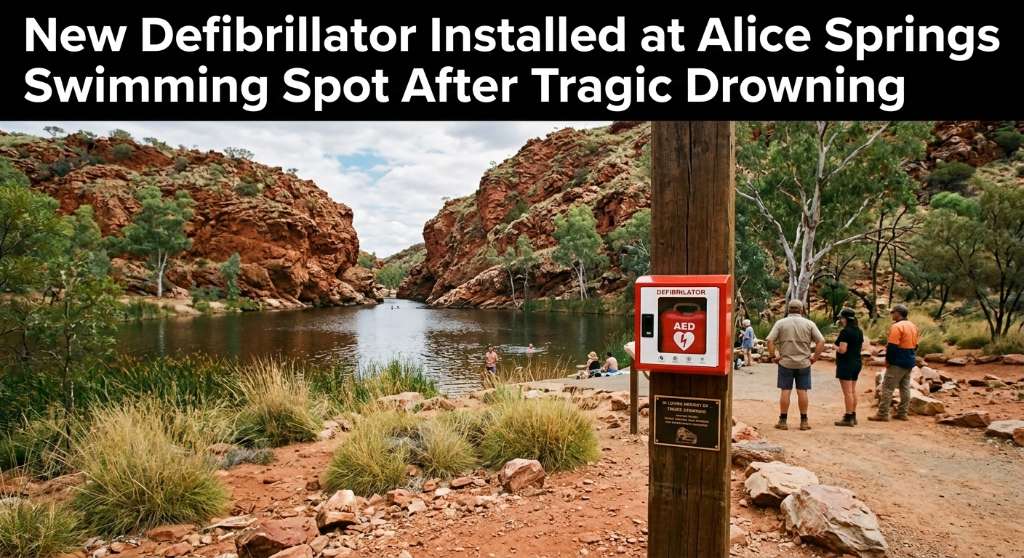
An automated external defibrillator and memorial plaque have been installed at Ellery Creek Big Hole following the death of disability advocate Ellen Fr...
Queensland firefighters spent several hours monitoring a significant grass fire at Mary Kinross Park in Bargara, near Bundaberg, after the blaze broke out on Wednesday evening....