Safety note: Admin approval is an initial review, not a guarantee that every detail is correct. Check important or urgent claims with official sources and report anything inaccurate or unsafe.
Source and credit: Contributor's own report
Historic Mitchell’s Causeway Failure Forces Closure of Great Western Highway - Mitchell’s Causeway, NSW
Smart summary
A structural failure at the nearly 200-year-old Mitchell’s Causeway has shut part of the Great Western Highway, disrupting travel and highlighting concerns about ageing infrastructure.
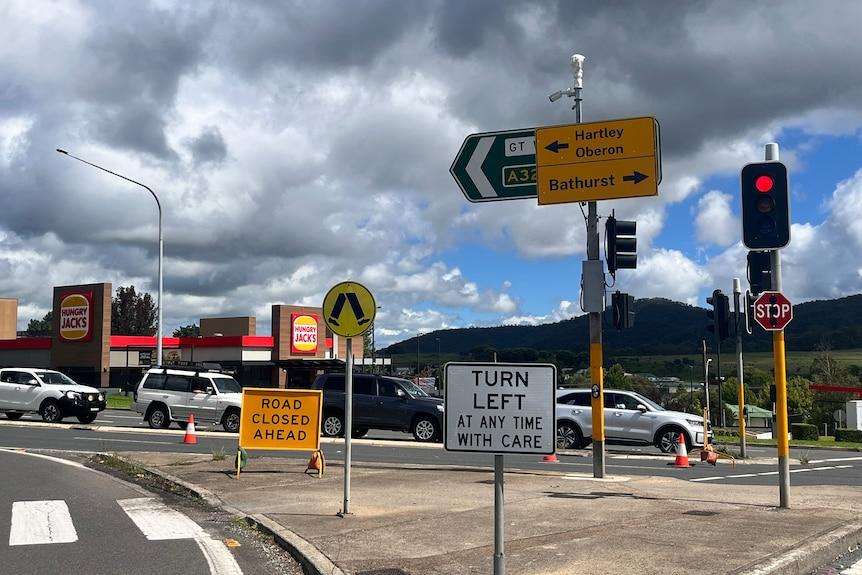
A section of the Great Western Highway in New South Wales was forced to close after a structural failure was discovered at the historic Mitchell’s Causeway, a bridge and causeway system that has served travellers for almost two centuries.
The closure created significant disruptions for motorists, freight operators and local communities that rely on the major transport corridor linking Sydney with the Central West. Authorities moved quickly to assess the damage and implement traffic management measures while engineers examined the condition of the ageing structure.
Originally constructed in the early 1830s under the direction of renowned colonial surveyor Major Sir Thomas Mitchell, Mitchell’s Causeway is regarded as one of the oldest surviving pieces of transport infrastructure on the Great Western Highway. The structure has long been an important crossing point and remains a significant part of New South Wales' engineering and transport history.
Officials reported that the failure involved damage to part of the causeway structure, raising concerns about safety and prompting the immediate closure of the affected section of highway. Engineers determined that continued vehicle access could pose unacceptable risks until detailed inspections and repair planning were completed.
Transport authorities established detours to allow traffic to bypass the damaged area. However, the diversion added travel time for motorists and freight operators, with local businesses also feeling the impact of reduced traffic flow through the region.
The incident renewed debate about the challenges of maintaining historic infrastructure that continues to serve modern transport demands. While structures such as Mitchell’s Causeway possess considerable heritage value, they are also subjected to far heavier traffic volumes and vehicle weights than their original designers could ever have anticipated.
Experts have noted that many historic bridges and causeways across regional Australia require ongoing monitoring and maintenance to ensure they remain safe and functional. Extreme weather events, flooding and natural ageing can accelerate deterioration, particularly in structures approaching two centuries of service.
Local residents expressed concern about the closure but also acknowledged the importance of preserving the historic landmark. Many described Mitchell’s Causeway as a significant part of the region’s heritage and hoped repairs would protect both its historical character and its transport function.
Transport authorities indicated that specialist engineers would conduct detailed assessments before determining the most appropriate repair strategy. The work is expected to involve balancing heritage considerations with modern safety requirements.
The closure also highlighted the strategic importance of the Great Western Highway, one of the state's key road freight and passenger routes. Any disruption along the corridor can have wide-ranging effects on regional communities, tourism operators and businesses that depend on reliable transport connections.
While the exact timeline for repairs depends on engineering assessments, authorities have committed to restoring safe access as quickly as possible. In the meantime, motorists have been urged to follow official detours and allow additional travel time.
The incident serves as a reminder of the ongoing challenges involved in maintaining Australia's historic infrastructure while ensuring it can continue to meet contemporary transport needs.
TransportCausewayHistoricMitchellClosure
A section of the Great Western Highway in New South Wales was forced to close after a structural failure was discovered at the historic Mitchell’s Causeway, a bridge and causeway system that has served travellers for almost two centuries.
The closure created significant disruptions for motorists, freight operators and local communities that rely on the major transport corridor linking Sydney with the Central West. Authorities moved quickly to assess the damage and implement traffic management measures while engineers examined the condition of the ageing structure.
Originally constructed in the early 1830s under the direction of renowned colonial surveyor Major Sir Thomas Mitchell, Mitchell’s Causeway is regarded as one of the oldest surviving pieces of transport infrastructure on the Great Western Highway. The structure has long been an important crossing point and remains a significant part of New South Wales' engineering and transport history.
Officials reported that the failure involved damage to part of the causeway structure, raising concerns about safety and prompting the immediate closure of the affected section of highway. Engineers determined that continued vehicle access could pose unacceptable risks until detailed inspections and repair planning were completed.
Transport authorities established detours to allow traffic to bypass the damaged area. However, the diversion added travel time for motorists and freight operators, with local businesses also feeling the impact of reduced traffic flow through the region.
The incident renewed debate about the challenges of maintaining historic infrastructure that continues to serve modern transport demands. While structures such as Mitchell’s Causeway possess considerable heritage value, they are also subjected to far heavier traffic volumes and vehicle weights than their original designers could ever have anticipated.
Experts have noted that many historic bridges and causeways across regional Australia require ongoing monitoring and maintenance to ensure they remain safe and functional. Extreme weather events, flooding and natural ageing can accelerate deterioration, particularly in structures approaching two centuries of service.
Local residents expressed concern about the closure but also acknowledged the importance of preserving the historic landmark. Many described Mitchell’s Causeway as a significant part of the region’s heritage and hoped repairs would protect both its historical character and its transport function.
Transport authorities indicated that specialist engineers would conduct detailed assessments before determining the most appropriate repair strategy. The work is expected to involve balancing heritage considerations with modern safety requirements.
The closure also highlighted the strategic importance of the Great Western Highway, one of the state's key road freight and passenger routes. Any disruption along the corridor can have wide-ranging effects on regional communities, tourism operators and businesses that depend on reliable transport connections.
While the exact timeline for repairs depends on engineering assessments, authorities have committed to restoring safe access as quickly as possible. In the meantime, motorists have been urged to follow official detours and allow additional travel time.
The incident serves as a reminder of the ongoing challenges involved in maintaining Australia's historic infrastructure while ensuring it can continue to meet contemporary transport needs.
Queensland Police have charged a 24-year-old Coomera man following an alleged stolen-truck incident and hit-and-run crash across the northern Gold Coast. Police say the investig...
A dramatic close call at Brisbane's Howard Smith Wharves has reignited discussions about pedestrian safety, rider responsibility and the use of shared p...
From European-style villages and tropical rainforests to turquoise beaches and dramatic desert landscapes, these Australian locations offer internationa...
The City of Moreton Bay will launch Australia's first next-generation AI traffic light pilot in Petrie, using intelligent sensors and artificial intelli...
Global diesel shortages and disrupted shipping routes are pushing up fuel costs and creating growing risks for Australia’s farmers, miners and wider eco...
A push is underway to expand NSW Police drone technology to Gunnedah, with the equipment proposed for crime response, offender searches and emergencies.
Cairns Regional Council has unanimously voted to seek $400,000 in Queensland Government funding for a program designed to connect local businesses with the region’s growing film...
An automated external defibrillator and memorial plaque have been installed at Ellery Creek Big Hole following the death of disability advocate Ellen Fr...
Queensland firefighters spent several hours monitoring a significant grass fire at Mary Kinross Park in Bargara, near Bundaberg, after the blaze broke out on Wednesday evening....