Safety note: Admin approval is an initial review, not a guarantee that every detail is correct. Check important or urgent claims with official sources and report anything inaccurate or unsafe.
Source and credit: Contributor's own report
Micro Flower Farms Bloom Across Queensland as Growers Tackle Pricing Challenge - Mackay, Queensland
Smart summary
Small-scale flower farms are flourishing across regional Queensland, but growers say finding the right price for locally produced blooms remains one of the industry's biggest hurdles.
A growing number of Australians are turning small parcels of land into thriving flower farms, creating a blossoming industry that is bringing locally grown blooms to communities across regional Queensland and beyond.
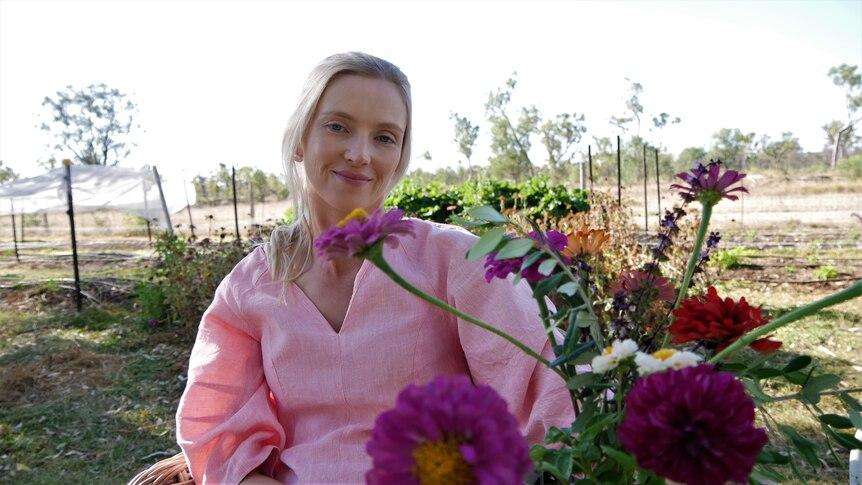
Among them is Bowen grower Wanita Sparr, who, together with her husband Dale McDonnell, has transformed a former crop-dusting airstrip into a chemical-free flower farm. The property now produces thousands of flowers, including cosmos, zinnias, celosia and gomphrena, supplying customers eager to buy locally grown blooms.
The rapid growth of micro flower farming reflects a broader trend within Australia's nursery and floriculture sector. According to industry figures, small businesses with annual turnovers below $200,000 account for a significant share of Queensland's flower and nursery enterprises.
While demand for local flowers is increasing, growers say turning passion into profit can be difficult. One of the biggest challenges is determining how much flowers should cost.
Unlike large-scale commercial producers with established infrastructure and wholesale supply chains, smaller farms often sell directly to consumers, florists and subscription customers. This makes pricing more complex, particularly when growers must account for labour, land preparation, irrigation, seeds and ongoing maintenance.
Industry advocates say many flower growers have historically undervalued their products. To address the issue, The Flower Summit is developing a national grower-led pricing guide designed to help producers establish fair and sustainable prices.
Founder Jessica Eckford-Aguilera said the initiative aims to provide greater confidence and transparency across the industry. The guide is expected to launch later this year and will offer benchmarks for growers and floral designers.
The rise of micro flower farms has also been driven by lifestyle changes. Many growers entering the sector are women transitioning from careers in other industries and seeking more flexible, rewarding work.
In Mackay, former occupational therapist Sonia Gaden left healthcare to focus on flower production full-time. She now cultivates more than 100 flower varieties on her suburban property and sells bouquets through local markets.
Similarly, Ciara Greatz, based in Hideaway Bay, began growing flowers after becoming a parent. What started as a personal project has evolved into a successful business, with demand now exceeding supply.
Growers say customers increasingly value fresh, locally produced flowers, particularly those grown without chemical sprays. The movement also reflects broader consumer interest in supporting regional businesses and sustainable agricultural practices.
Despite challenges surrounding pricing and profitability, many growers describe flower farming as deeply rewarding. Watching plants develop from seeds into vibrant blooms provides both personal satisfaction and a tangible connection to local communities.
As the industry continues to expand, advocates believe better pricing tools and stronger consumer awareness will help ensure micro flower farms remain a sustainable and important part of Australia's agricultural landscape.
FlowerGrowersFarmsFlowersIndustry
A growing number of Australians are turning small parcels of land into thriving flower farms, creating a blossoming industry that is bringing locally grown blooms to communities across regional Queensland and beyond.
Among them is Bowen grower Wanita Sparr, who, together with her husband Dale McDonnell, has transformed a former crop-dusting airstrip into a chemical-free flower farm. The property now produces thousands of flowers, including cosmos, zinnias, celosia and gomphrena, supplying customers eager to buy locally grown blooms.
The rapid growth of micro flower farming reflects a broader trend within Australia's nursery and floriculture sector. According to industry figures, small businesses with annual turnovers below $200,000 account for a significant share of Queensland's flower and nursery enterprises.
While demand for local flowers is increasing, growers say turning passion into profit can be difficult. One of the biggest challenges is determining how much flowers should cost.
Unlike large-scale commercial producers with established infrastructure and wholesale supply chains, smaller farms often sell directly to consumers, florists and subscription customers. This makes pricing more complex, particularly when growers must account for labour, land preparation, irrigation, seeds and ongoing maintenance.
Industry advocates say many flower growers have historically undervalued their products. To address the issue, The Flower Summit is developing a national grower-led pricing guide designed to help producers establish fair and sustainable prices.
Founder Jessica Eckford-Aguilera said the initiative aims to provide greater confidence and transparency across the industry. The guide is expected to launch later this year and will offer benchmarks for growers and floral designers.
The rise of micro flower farms has also been driven by lifestyle changes. Many growers entering the sector are women transitioning from careers in other industries and seeking more flexible, rewarding work.
In Mackay, former occupational therapist Sonia Gaden left healthcare to focus on flower production full-time. She now cultivates more than 100 flower varieties on her suburban property and sells bouquets through local markets.
Similarly, Ciara Greatz, based in Hideaway Bay, began growing flowers after becoming a parent. What started as a personal project has evolved into a successful business, with demand now exceeding supply.
Growers say customers increasingly value fresh, locally produced flowers, particularly those grown without chemical sprays. The movement also reflects broader consumer interest in supporting regional businesses and sustainable agricultural practices.
Despite challenges surrounding pricing and profitability, many growers describe flower farming as deeply rewarding. Watching plants develop from seeds into vibrant blooms provides both personal satisfaction and a tangible connection to local communities.
As the industry continues to expand, advocates believe better pricing tools and stronger consumer awareness will help ensure micro flower farms remain a sustainable and important part of Australia's agricultural landscape.
A Bendigo-based migration agent has raised concerns about proposed changes to Australia’s migration system, saying the federal government’s planned reduction in net migration co...
Bendigo Foodshare is seeking additional volunteers ahead of its annual Spring Book Fair, with multiple shifts still available during the AFL Grand Final long weekend. The local...
An automated external defibrillator and memorial plaque have been installed at Ellery Creek Big Hole following the death of disability advocate Ellen Fr...
Bathurst New South Wales · Community News · 17 Sep 2026
Kerry “Pecky” Peck, a long-standing Bathurst radio personality, has been inducted into the Bathurst Business Hall of Fame in recognition of his extensive contribution to the loc...
A 55-year-old man has been charged after police allegedly seized more than $900,000 worth of drugs, firearms and about $50,000 in cash from a South Bris...
Darwin Northern Territory · Crime News · 18 Sep 2026
Northern Territory Police are appealing for information to help locate Lachlan Burgess, a Territory man reported missing in the Northern Territory.making it a current Darwin-are...
Darwin Northern Territory · Crime News · 18 Sep 2026
Northern Territory Police are investigating the death of a 28-year-old woman at a home in Malak, Darwin, with a 25-year-old man charged in connection with alleged assaults and b...
Central Coast New South Wales · Business News · 18 Sep 2026
More than 130 oyster-lease operators on the Central Coast are set to benefit from reforms announced by the NSW Government, with the changes designed to provide greater certainty...
Central Coast New South Wales · Crime News · 18 Sep 2026
A man has been charged following a police investigation into alleged detaining and assault offences on the Central Coast, according to a report published by Coast Community News...