Safety note: Admin approval is an initial review, not a guarantee that every detail is correct. Check important or urgent claims with official sources and report anything inaccurate or unsafe.
Source and credit: Contributor's own report
Kalgoorlie-Boulder’s Green Shield Continues Protecting City From Dust Storms - Kalgoorlie-Boulder, WA
Smart summary
Decades-old forest restoration project becomes model for environmental recovery
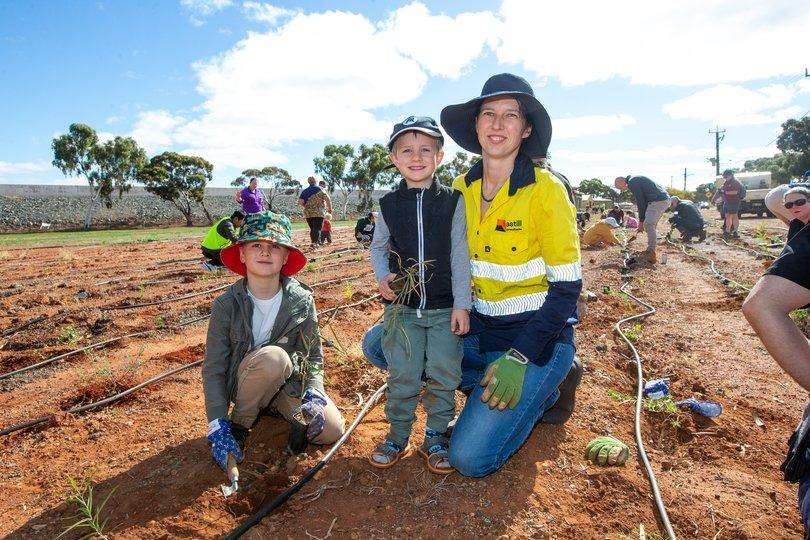
A long-term environmental restoration project in Kalgoorlie-Boulder continues to protect the city from severe dust storms decades after it began. The project transformed areas affected by mining waste and land degradation into a large forested area that now acts as a natural barrier around the Goldfields city.
During the 1970s, Kalgoorlie-Boulder faced serious dust problems caused by exposed mine waste and environmental damage. Strong winds regularly carried dust across the city, affecting daily life and creating challenges for residents. A community-led response focused on planting trees and stabilising damaged land.
The restoration effort began with a small government grant that supported tree planting and rehabilitation work. Over several decades, the project expanded into thousands of hectares of forest surrounding the city. The restored landscape has helped reduce dust impacts and improve environmental conditions for the community.
The success of the project highlights the importance of community involvement in environmental management. Local residents, organisations and government agencies worked together to address a major environmental challenge and create a long-term solution.
Kalgoorlie-Boulder is one of Western Australia’s most important regional centres, with a strong connection to mining and the resources industry. The city’s history is closely linked with gold mining, and environmental management remains an important issue as mining activity continues.
The forest surrounding the city provides multiple benefits beyond dust reduction. It supports biodiversity, improves local landscapes and creates recreational opportunities for residents and visitors.
Environmental projects like this demonstrate how degraded land can be restored through careful planning and ongoing maintenance. Rehabilitation has become an increasingly important focus for mining regions across Australia as communities seek to balance economic activity with environmental responsibility.
The Kalgoorlie-Boulder example is being recognised as a successful case of community-driven environmental recovery. It shows how smaller initiatives can create significant long-term benefits when supported by consistent effort and cooperation.
The project also reflects broader discussions about sustainable development in regional Australia. Mining communities are increasingly exploring ways to protect natural environments while supporting industries that provide employment and economic growth.
For Kalgoorlie-Boulder residents, the surrounding forest has become an important part of the city’s identity. What began as a response to dust problems has developed into a valuable environmental asset.
The ongoing success of the restoration project serves as a reminder that environmental challenges can be addressed through innovation, community commitment and long-term planning.
EnvironmentalCityDustKalgoorlie-BoulderMining
A long-term environmental restoration project in Kalgoorlie-Boulder continues to protect the city from severe dust storms decades after it began. The project transformed areas affected by mining waste and land degradation into a large forested area that now acts as a natural barrier around the Goldfields city.
During the 1970s, Kalgoorlie-Boulder faced serious dust problems caused by exposed mine waste and environmental damage. Strong winds regularly carried dust across the city, affecting daily life and creating challenges for residents. A community-led response focused on planting trees and stabilising damaged land.
The restoration effort began with a small government grant that supported tree planting and rehabilitation work. Over several decades, the project expanded into thousands of hectares of forest surrounding the city. The restored landscape has helped reduce dust impacts and improve environmental conditions for the community.
The success of the project highlights the importance of community involvement in environmental management. Local residents, organisations and government agencies worked together to address a major environmental challenge and create a long-term solution.
Kalgoorlie-Boulder is one of Western Australia’s most important regional centres, with a strong connection to mining and the resources industry. The city’s history is closely linked with gold mining, and environmental management remains an important issue as mining activity continues.
The forest surrounding the city provides multiple benefits beyond dust reduction. It supports biodiversity, improves local landscapes and creates recreational opportunities for residents and visitors.
Environmental projects like this demonstrate how degraded land can be restored through careful planning and ongoing maintenance. Rehabilitation has become an increasingly important focus for mining regions across Australia as communities seek to balance economic activity with environmental responsibility.
The Kalgoorlie-Boulder example is being recognised as a successful case of community-driven environmental recovery. It shows how smaller initiatives can create significant long-term benefits when supported by consistent effort and cooperation.
The project also reflects broader discussions about sustainable development in regional Australia. Mining communities are increasingly exploring ways to protect natural environments while supporting industries that provide employment and economic growth.
For Kalgoorlie-Boulder residents, the surrounding forest has become an important part of the city’s identity. What began as a response to dust problems has developed into a valuable environmental asset.
The ongoing success of the restoration project serves as a reminder that environmental challenges can be addressed through innovation, community commitment and long-term planning.
A Bendigo-based migration agent has raised concerns about proposed changes to Australia’s migration system, saying the federal government’s planned reduction in net migration co...
Bendigo Foodshare is seeking additional volunteers ahead of its annual Spring Book Fair, with multiple shifts still available during the AFL Grand Final long weekend. The local...
An automated external defibrillator and memorial plaque have been installed at Ellery Creek Big Hole following the death of disability advocate Ellen Fr...
Bathurst New South Wales · Community News · 17 Sep 2026
Kerry “Pecky” Peck, a long-standing Bathurst radio personality, has been inducted into the Bathurst Business Hall of Fame in recognition of his extensive contribution to the loc...
Two teenagers have appeared in a Perth court after allegedly breaking into a crocodile enclosure and attacking the 400-kilogram reptile with a metal pole.
Darwin Northern Territory · Crime News · 18 Sep 2026
Northern Territory Police are appealing for information to help locate Lachlan Burgess, a Territory man reported missing in the Northern Territory.making it a current Darwin-are...
Darwin Northern Territory · Crime News · 18 Sep 2026
Northern Territory Police are investigating the death of a 28-year-old woman at a home in Malak, Darwin, with a 25-year-old man charged in connection with alleged assaults and b...
Central Coast New South Wales · Business News · 18 Sep 2026
More than 130 oyster-lease operators on the Central Coast are set to benefit from reforms announced by the NSW Government, with the changes designed to provide greater certainty...
Central Coast New South Wales · Crime News · 18 Sep 2026
A man has been charged following a police investigation into alleged detaining and assault offences on the Central Coast, according to a report published by Coast Community News...