NSW Pushes to Bring Back Handwritten NAPLAN Tests From 2028
By Chloe · Published 02 Nov 2026 · Updated 02 Nov 2026
Sydney, NSW · New South Wales News
Safety note: Admin approval is an initial review, not a guarantee that every detail is correct. Check important or urgent claims with official sources and report anything inaccurate or unsafe.
Source and credit: Contributor's own report
NSW Pushes to Bring Back Handwritten NAPLAN Tests From 2028 - Sydney, NSW
Smart summary
Education experts support New South Wales' proposal to replace computer-based NAPLAN writing tests with traditional pen-and-paper examinations for students in Years 5, 7 and 9 from 2028.
The New South Wales Government is pushing for a major change to Australia's national school assessment system, proposing that students return to handwritten NAPLAN writing examinations from 2028. The proposal is aimed at improving students' writing abilities and addressing concerns about declining literacy standards across the country.
The issue is being raised at a national meeting of education ministers on 2 November 2026. NSW wants the Commonwealth, state and territory governments to consider removing computer-based writing assessments for students in Years 5, 7 and 9 and replacing them with traditional paper examinations.
NAPLAN, the National Assessment Program – Literacy and Numeracy, is conducted annually to assess students' reading, writing, spelling, grammar, punctuation and numeracy skills. The testing system moved towards online assessments in 2018, with the aim of improving assessment accuracy and delivering results more quickly.
Under the current arrangement, Year 3 students complete their writing assessment on paper, while older students generally complete the writing component on computers. The proposed change would bring Years 5, 7 and 9 back to handwritten examinations.
NSW Deputy Premier and Education Minister Prue Car has raised concerns that increasing technology use in schools could be affecting the development of essential writing skills. The government believes students should maintain strong handwriting abilities alongside their digital skills.
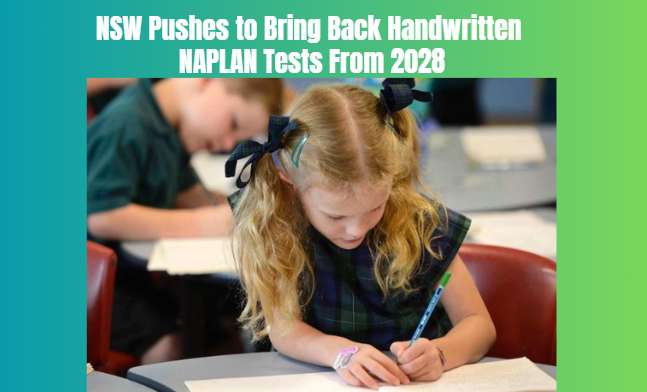
Education experts have welcomed the proposal. Marian Vidal-Fernandez, an associate professor at the University of Sydney, has argued that students should be assessed in the same way they usually complete their classroom work. Many primary school students continue to practise most of their written classroom activities using pens and paper.
Researchers have also highlighted the relationship between handwriting, learning and memory. Edith Cowan University associate professor Anabela Malpique supports the importance of handwriting and believes students need opportunities to develop both traditional writing and computer-based skills.
Another concern is that some students may be more comfortable expressing their ideas by handwriting than typing. Younger students who have not developed strong keyboard skills may find it difficult to complete timed computer-based writing assessments.
However, experts have also identified challenges associated with returning to paper examinations. Marking handwritten assessments could increase administrative costs and require additional time. Technology may help with reading handwritten responses, but human assessment could still be necessary where automated systems cannot interpret writing accurately.
The proposal also raises questions about how schools should balance traditional learning with digital education. Computers remain important tools for research, communication and preparing students for modern workplaces. Education specialists believe students should develop both handwriting and keyboard skills rather than depending entirely on one method.
The NSW Government has also introduced recommendations encouraging public schools to provide at least one hour of daily learning using pen and paper. These measures form part of a broader effort to reduce excessive screen use and strengthen students' foundational learning skills.
The proposal is not yet an approved nationwide policy. It requires agreement from the Commonwealth, states and territories before implementation.
If approved, the change could affect thousands of Australian students and reshape the way writing skills are assessed in schools from 2028.
StudentsWritingSkillsAssessmentEducation
The New South Wales Government is pushing for a major change to Australia's national school assessment system, proposing that students return to handwritten NAPLAN writing examinations from 2028. The proposal is aimed at improving students' writing abilities and addressing concerns about declining literacy standards across the country.
The issue is being raised at a national meeting of education ministers on 2 November 2026. NSW wants the Commonwealth, state and territory governments to consider removing computer-based writing assessments for students in Years 5, 7 and 9 and replacing them with traditional paper examinations.
NAPLAN, the National Assessment Program – Literacy and Numeracy, is conducted annually to assess students' reading, writing, spelling, grammar, punctuation and numeracy skills. The testing system moved towards online assessments in 2018, with the aim of improving assessment accuracy and delivering results more quickly.
Under the current arrangement, Year 3 students complete their writing assessment on paper, while older students generally complete the writing component on computers. The proposed change would bring Years 5, 7 and 9 back to handwritten examinations.
NSW Deputy Premier and Education Minister Prue Car has raised concerns that increasing technology use in schools could be affecting the development of essential writing skills. The government believes students should maintain strong handwriting abilities alongside their digital skills.
Education experts have welcomed the proposal. Marian Vidal-Fernandez, an associate professor at the University of Sydney, has argued that students should be assessed in the same way they usually complete their classroom work. Many primary school students continue to practise most of their written classroom activities using pens and paper.
Researchers have also highlighted the relationship between handwriting, learning and memory. Edith Cowan University associate professor Anabela Malpique supports the importance of handwriting and believes students need opportunities to develop both traditional writing and computer-based skills.
Another concern is that some students may be more comfortable expressing their ideas by handwriting than typing. Younger students who have not developed strong keyboard skills may find it difficult to complete timed computer-based writing assessments.
However, experts have also identified challenges associated with returning to paper examinations. Marking handwritten assessments could increase administrative costs and require additional time. Technology may help with reading handwritten responses, but human assessment could still be necessary where automated systems cannot interpret writing accurately.
The proposal also raises questions about how schools should balance traditional learning with digital education. Computers remain important tools for research, communication and preparing students for modern workplaces. Education specialists believe students should develop both handwriting and keyboard skills rather than depending entirely on one method.
The NSW Government has also introduced recommendations encouraging public schools to provide at least one hour of daily learning using pen and paper. These measures form part of a broader effort to reduce excessive screen use and strengthen students' foundational learning skills.
The proposal is not yet an approved nationwide policy. It requires agreement from the Commonwealth, states and territories before implementation.
If approved, the change could affect thousands of Australian students and reshape the way writing skills are assessed in schools from 2028.
A large crocodile sighting near Rockhampton's proposed Olympic rowing venue has renewed concerns about public safety, wildlife management and the risks...
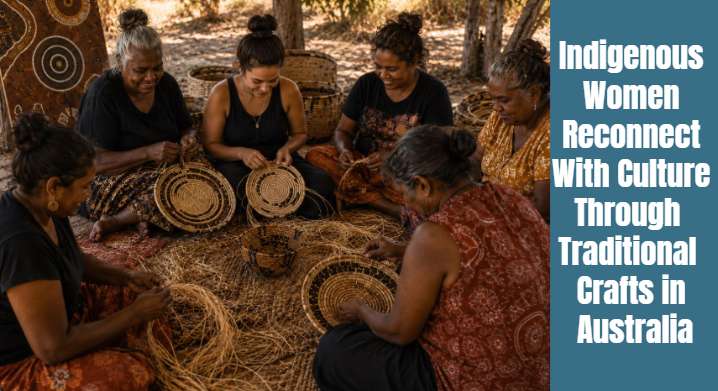
Indigenous women are using traditional weaving and craft-making to strengthen cultural connections, preserve knowledge passed down through generations a...
A pay dispute involving specialist electricity-market workers has escalated, with Australia's energy operator warning that industrial action could creat...
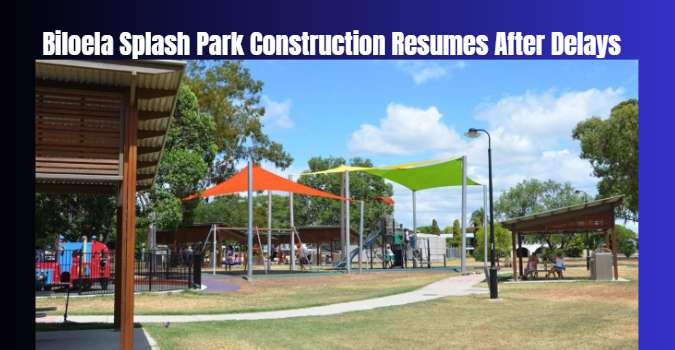
Work has restarted on a $4.5 million community splash park in central Queensland after wet weather and unexpected ground conditions delayed construction...
New South Wales has begun accepting firearms under the national gun buyback scheme, but limited appointment availability has created an early challenge...
Australian property values have fallen for seven consecutive months, with the national median home value dropping approximately $63,400 since March as h...
A new specialist police unit has begun high-visibility patrols across Sydney, with 250 specially trained officers equipped with assault rifles to respon...
Eight people have died in separate road crashes across Victoria during the Melbourne Cup long weekend, with four of the fatal incidents involving motorc...
A fisherman escaped unharmed after a large crocodile climbed onto his boat while he was fishing alone on the Mary River, prompting renewed safety warnin...
New South Wales has begun accepting firearms under the national gun buyback scheme, but limited appointment availability has created an early challenge...
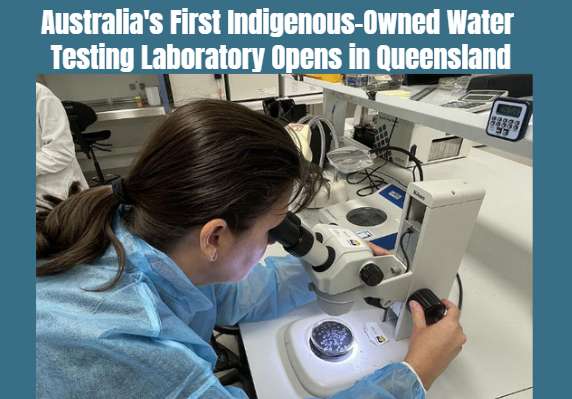
The new laboratory in Bundaberg will allow Indigenous rangers and traditional owner groups to test water locally, strengthening environmental management...