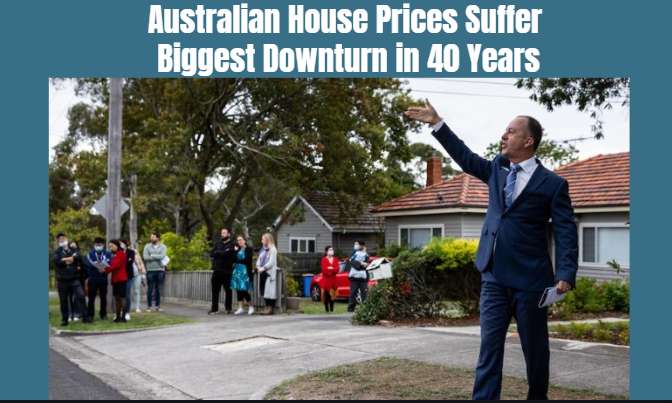
Australian House Prices Suffer Biggest Downturn in 40 Years
By Chloe · Published 02 Nov 2026 · Updated 02 Nov 2026
Sydney, NSW · New South Wales News
Safety note: Admin approval is an initial review, not a guarantee that every detail is correct. Check important or urgent claims with official sources and report anything inaccurate or unsafe.
Source and credit: Contributor's own report
Australian House Prices Suffer Biggest Downturn in 40 Years - Sydney, NSW
Smart summary
Australian property values have fallen for seven consecutive months, with the national median home value dropping approximately $63,400 since March as higher interest rates and reduced buyer demand put pressure on the...
Australia's housing market is experiencing one of its most significant downturns in four decades, with property prices continuing to decline as higher mortgage costs and reduced buyer confidence affect homeowners, investors and prospective buyers.
According to the latest figures released by property research group Cotality, Australian home values declined by 1.2 per cent during October 2026. This represents the seventh consecutive month of falling property prices.
The national housing market has now fallen approximately 6.7 per cent from its peak in March 2026. The decline represents an estimated $63,400 reduction in the value of the median Australian dwelling, bringing the national median value to approximately $884,855.
The downturn is affecting major cities across the country, although some markets are experiencing more significant declines than others.
Sydney has been among the hardest-hit markets. Property values in the city declined by 1.6 per cent during October, leaving the median dwelling value at approximately $1,178,959. This is more than 10 per cent below its February peak and below the level recorded five years ago.
Brisbane and Perth have also experienced considerable declines. Brisbane property values fell by approximately 2 per cent in October, while Perth recorded a 1.7 per cent decline. Both cities had previously experienced substantial property price growth, making the recent reversal particularly noticeable.
Melbourne's housing market has followed a slightly different pattern. Although property values have also declined, the city's market has been adjusting more gradually than several other capital cities. Some buyers are increasingly considering Melbourne because of its relative affordability compared with Brisbane, Perth and Adelaide.
One of the major factors contributing to the downturn is the increase in mortgage interest rates. Higher borrowing costs have reduced the amount many households can afford to borrow, making it more difficult for prospective buyers to enter the property market.
Rising repayments have also placed pressure on existing homeowners, particularly households with large mortgages. Some potential buyers are choosing to postpone purchasing decisions while waiting for greater certainty about interest rates and future property values.
Another important factor is the decline in property sales. Recent figures show that Australian home sales over the previous three months were approximately 23 per cent lower than the same period a year earlier.
Auction activity has also weakened, with clearance rates across the combined capital cities frequently remaining below 50 per cent. Properties are taking longer to sell, and some vendors are offering larger discounts to attract interested buyers.
Changes to federal property taxation arrangements have also affected investor confidence, adding another challenge to an already weakening market.
However, falling prices could create opportunities for certain buyers, particularly first-home buyers and families looking to upgrade their properties. People with sufficient savings and borrowing capacity may find more negotiating power than they had during the previous housing boom.
Economists expect housing market conditions to remain challenging into 2027, particularly if interest rates increase further. The Reserve Bank of Australia is expected to make an important interest-rate decision on 3 November 2026.
The continuing decline highlights the growing affordability challenges facing Australian households. While some buyers may benefit from lower property prices, higher borrowing costs remain a major obstacle to home ownership.
PropertyBuyersCentMarketAlso
Australia's housing market is experiencing one of its most significant downturns in four decades, with property prices continuing to decline as higher mortgage costs and reduced buyer confidence affect homeowners, investors and prospective buyers.
According to the latest figures released by property research group Cotality, Australian home values declined by 1.2 per cent during October 2026. This represents the seventh consecutive month of falling property prices.
The national housing market has now fallen approximately 6.7 per cent from its peak in March 2026. The decline represents an estimated $63,400 reduction in the value of the median Australian dwelling, bringing the national median value to approximately $884,855.
The downturn is affecting major cities across the country, although some markets are experiencing more significant declines than others.
Sydney has been among the hardest-hit markets. Property values in the city declined by 1.6 per cent during October, leaving the median dwelling value at approximately $1,178,959. This is more than 10 per cent below its February peak and below the level recorded five years ago.
Brisbane and Perth have also experienced considerable declines. Brisbane property values fell by approximately 2 per cent in October, while Perth recorded a 1.7 per cent decline. Both cities had previously experienced substantial property price growth, making the recent reversal particularly noticeable.
Melbourne's housing market has followed a slightly different pattern. Although property values have also declined, the city's market has been adjusting more gradually than several other capital cities. Some buyers are increasingly considering Melbourne because of its relative affordability compared with Brisbane, Perth and Adelaide.
One of the major factors contributing to the downturn is the increase in mortgage interest rates. Higher borrowing costs have reduced the amount many households can afford to borrow, making it more difficult for prospective buyers to enter the property market.
Rising repayments have also placed pressure on existing homeowners, particularly households with large mortgages. Some potential buyers are choosing to postpone purchasing decisions while waiting for greater certainty about interest rates and future property values.
Another important factor is the decline in property sales. Recent figures show that Australian home sales over the previous three months were approximately 23 per cent lower than the same period a year earlier.
Auction activity has also weakened, with clearance rates across the combined capital cities frequently remaining below 50 per cent. Properties are taking longer to sell, and some vendors are offering larger discounts to attract interested buyers.
Changes to federal property taxation arrangements have also affected investor confidence, adding another challenge to an already weakening market.
However, falling prices could create opportunities for certain buyers, particularly first-home buyers and families looking to upgrade their properties. People with sufficient savings and borrowing capacity may find more negotiating power than they had during the previous housing boom.
Economists expect housing market conditions to remain challenging into 2027, particularly if interest rates increase further. The Reserve Bank of Australia is expected to make an important interest-rate decision on 3 November 2026.
The continuing decline highlights the growing affordability challenges facing Australian households. While some buyers may benefit from lower property prices, higher borrowing costs remain a major obstacle to home ownership.
Around 8,000 customers in Western Australia's coastal city of Albany will need to replace gas appliances with electric alternatives or switch to bottled...
Buyers from Sydney and Melbourne are purchasing homes in Alice Springs at a rapid pace, attracted by strong rental returns and limited housing availabil...
Growing awareness of Auslan is highlighting the importance of teaching children sign language and helping them communicate with people who are deaf or h...
An animal health company has applied to increase antibiotic dosage levels and expand treatment areas in Tasmania's salmon farming industry, raising conc...
New South Wales has begun accepting firearms under the national gun buyback scheme, but limited appointment availability has created an early challenge...
Education experts support New South Wales' proposal to replace computer-based NAPLAN writing tests with traditional pen-and-paper examinations for stude...
A new specialist police unit has begun high-visibility patrols across Sydney, with 250 specially trained officers equipped with assault rifles to respon...
Eight people have died in separate road crashes across Victoria during the Melbourne Cup long weekend, with four of the fatal incidents involving motorc...
A fisherman escaped unharmed after a large crocodile climbed onto his boat while he was fishing alone on the Mary River, prompting renewed safety warnin...
New South Wales has begun accepting firearms under the national gun buyback scheme, but limited appointment availability has created an early challenge...