Australia's First Indigenous-Owned Water Testing Laboratory Opens in Queensland
By Chloe · Published 02 Nov 2026 · Updated 02 Nov 2026
Bundaberg, QLD · Queensland News
Safety note: Admin approval is an initial review, not a guarantee that every detail is correct. Check important or urgent claims with official sources and report anything inaccurate or unsafe.
Source and credit: Contributor's own report
Australia's First Indigenous-Owned Water Testing Laboratory Opens in Queensland - Bundaberg, QLD
Smart summary
The new laboratory in Bundaberg will allow Indigenous rangers and traditional owner groups to test water locally, strengthening environmental management and creating opportunities in science.
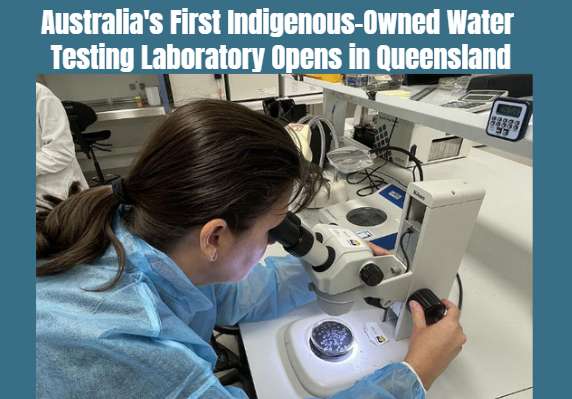
Australia's first Indigenous-owned water testing laboratory has opened in regional Queensland, marking a significant development in Indigenous-led environmental management and scientific services.
The facility, named Nyamgim Gung, meaning “looking at water” in the local Gurang language, is located beside the Burnett River at Bundaberg Port, approximately 400 kilometres north of Brisbane. It was established by the Gidarjil Development Corporation, which works with traditional owner groups across the region.
The laboratory will support water-quality monitoring projects carried out by Indigenous rangers and provide testing services to other organisations. Previously, water samples collected by the group had to be sent to Brisbane for analysis. Having a laboratory in the region is expected to make the process faster and give local communities more direct access to scientific results.
The facility is equipped to test a range of water-quality indicators, including nutrients, trace elements, hardness and alkalinity. Although it specialises in seawater testing, it can also analyse river water, freshwater and brackish water.
Environmental scientist and laboratory manager Nirali Vadgama has been working to establish the facility since 2022. The laboratory received accreditation through the National Association of Testing Authorities in September, allowing it to provide testing recognised against national and international standards.
Gidarjil Development Corporation chief executive Margaret Blackman said the project was designed to help Aboriginal organisations strengthen their ability to care for their land and sea country. The organisation hopes other traditional owner groups along the coast will learn from the project and develop similar capabilities.
The laboratory is also expected to create new opportunities for Indigenous people interested in science, environmental monitoring and technical careers. The organisation is working with the Yalga Binbi Institute to support training for young Indigenous leaders in on-country management.
The project has also been connected with the launch of Dulba Muni, meaning “strong women” in Gurang, an all-female ranger program. Members of the group have been involved in collecting and preparing water samples, recording information and learning how laboratory testing can help assess the condition of local waterways.
For Indigenous communities, caring for rivers, coastal waters and sea country is closely connected to cultural responsibilities and long-term environmental protection. The new facility brings scientific testing closer to the people undertaking that work and gives them greater independence in monitoring water quality.
The opening represents an important step in expanding regional scientific infrastructure while supporting Indigenous participation in environmental research and management.
LaboratoryTestingWaterEnvironmentalIndigenous
Australia's first Indigenous-owned water testing laboratory has opened in regional Queensland, marking a significant development in Indigenous-led environmental management and scientific services.
The facility, named Nyamgim Gung, meaning “looking at water” in the local Gurang language, is located beside the Burnett River at Bundaberg Port, approximately 400 kilometres north of Brisbane. It was established by the Gidarjil Development Corporation, which works with traditional owner groups across the region.
The laboratory will support water-quality monitoring projects carried out by Indigenous rangers and provide testing services to other organisations. Previously, water samples collected by the group had to be sent to Brisbane for analysis. Having a laboratory in the region is expected to make the process faster and give local communities more direct access to scientific results.
The facility is equipped to test a range of water-quality indicators, including nutrients, trace elements, hardness and alkalinity. Although it specialises in seawater testing, it can also analyse river water, freshwater and brackish water.
Environmental scientist and laboratory manager Nirali Vadgama has been working to establish the facility since 2022. The laboratory received accreditation through the National Association of Testing Authorities in September, allowing it to provide testing recognised against national and international standards.
Gidarjil Development Corporation chief executive Margaret Blackman said the project was designed to help Aboriginal organisations strengthen their ability to care for their land and sea country. The organisation hopes other traditional owner groups along the coast will learn from the project and develop similar capabilities.
The laboratory is also expected to create new opportunities for Indigenous people interested in science, environmental monitoring and technical careers. The organisation is working with the Yalga Binbi Institute to support training for young Indigenous leaders in on-country management.
The project has also been connected with the launch of Dulba Muni, meaning “strong women” in Gurang, an all-female ranger program. Members of the group have been involved in collecting and preparing water samples, recording information and learning how laboratory testing can help assess the condition of local waterways.
For Indigenous communities, caring for rivers, coastal waters and sea country is closely connected to cultural responsibilities and long-term environmental protection. The new facility brings scientific testing closer to the people undertaking that work and gives them greater independence in monitoring water quality.
The opening represents an important step in expanding regional scientific infrastructure while supporting Indigenous participation in environmental research and management.
Newcastle New South Wales · General News · 12 Nov 2026
According to NSW Police, officers received reports of multiple fires between approximately 6:40pm and 9:30pm. Investigators allege that several separate incidents occurred acros...
The university has closed an exhibition by Palawa/Pakana artist Cody Gangell-Smith after one day, following complaints about its public visibility and c...
Conservation groups and landowners are opposing a proposed road through a protected sanctuary near Canberra, warning it could damage habitat for threate...
Liquidators have recovered just $8 million from more than $512 million invested in the collapsed First Guardian fund, leaving thousands of Australians u...
A special soybean planting strategy is helping Australia move closer to eradicating red witchweed, an invasive parasite that has damaged agricultural cr...
Government support brings fresh hope to Mount Isa’s plan for a research facility aimed at attracting investment and creating new opportunities in Queens...
Gold Coast Suns player Georgia Clayden has not been offered a contract for the 2027 season, just weeks before giving birth. The decision has renewed cal...
A proposed night-surfing event at Snapper Rocks has received council approval, but local surfers have raised concerns about artificial lighting and poss...
A private conversation between the two leaders was accidentally recorded during a break at the international climate summit in Türkiye, prompting widesp...
Australia delivers a dominant performance against Asian Cup champions Qatar in Doha, with Riley McGree, Tete Yengi and Nestory Irankunda scoring three f...
A major Microsoft service disruption affected millions of users worldwide, interrupting email, workplace communication, healthcare administration and bu...
A new national online threat centre has opened to help identify dangerous extremist content, tackle online radicalisation and strengthen Australia's res...