University of Tasmania to Increase Supervised Exams to Address AI Cheating
By Chloe · Published 28 Oct 2026 · Updated 28 Oct 2026
Hobart, TAS · Tasmania News
Safety note: Admin approval is an initial review, not a guarantee that every detail is correct. Check important or urgent claims with official sources and report anything inaccurate or unsafe.
Source and credit: Contributor's own report
Smart summary
The university will introduce stronger in-person assessments and independent audits to help ensure students demonstrate their own knowledge as artificial intelligence becomes more widely used in education.
The University of Tasmania (UTAS) is strengthening its approach to student assessments by placing greater emphasis on supervised examinations and other in-person tasks. The move aims to protect the credibility of university qualifications amid concerns that students may be relying excessively on artificial intelligence tools to complete assignments.
The initiative introduces a standard developed by UTAS in partnership with Proudly Human, a human-certification organisation. Under the new approach, university courses must demonstrate that students have genuinely achieved their required learning outcomes and that assessments provide reliable evidence of individual ability.
Artificial intelligence tools can produce essays, answer questions, summarise research and assist with coding. While these capabilities can support learning when used appropriately, they also create challenges for universities trying to establish whether submitted work reflects a student's own understanding.
Traditional take-home assignments can be difficult to verify because students may use AI systems to generate substantial portions of their work. This creates concerns about fairness between students who complete assignments independently and those who submit work produced largely by automated tools.
Under the new standard, UTAS will need to demonstrate that it uses an appropriate balance of supervised and unsupervised assessment. Supervised methods can include examinations completed in person, essays written in class, oral presentations and discussions in which students explain their reasoning. These methods give educators more direct evidence of a student's knowledge and skills.
Luke Bereznicki, the university's pro vice-chancellor and a co-developer of the standard, said institutions needed to ensure that graduates had personally demonstrated the abilities their qualifications claim they possess. The approach is intended to establish three essential elements: confirming the student's identity, verifying authorship of the work and observing the student completing the assessment under secure conditions.
The standard will also introduce independent audits, potentially twice a year. Auditors will examine how the university designs its assessments and whether its procedures are sufficiently robust to prevent students from relying on AI inappropriately. UTAS will need to explain how its assessment arrangements ensure that students can demonstrate the required knowledge and skills.
The initiative does not mean that every assessment must take place in an examination hall or that all AI use will be prohibited. Instead, the university will consider which assessment methods are appropriate for different courses and learning outcomes. Some assignments may continue to be completed online or outside supervised settings, provided the university can demonstrate that they reliably assess students' own capabilities.
The University of Sydney introduced a similar two-part assessment approach in 2024, separating supervised assessments from tasks completed without direct observation. The growing adoption of such methods reflects a broader effort across Australian higher education to adapt assessment practices to rapidly developing technology.
Education experts say universities must reconsider not only how assessments are supervised but also what students should learn in an environment where AI can perform many routine tasks. Oral examinations, practical demonstrations and in-person writing may become more important, particularly when courses require students to demonstrate professional judgement, critical thinking or technical competence.
The Tasmanian University Student Association has also highlighted student concerns that widespread misuse of AI could undermine the perceived value of university degrees. Students who complete their work honestly may worry that employers will struggle to distinguish their abilities from those of graduates who relied heavily on AI-generated submissions.
The new standard represents an effort to preserve confidence in qualifications while allowing universities to adapt to technological change. Its effectiveness will depend on how assessments are designed, how consistently they are applied and whether students receive clear guidance about acceptable AI use.
StudentsUniversityWillAssessmentStudent
The University of Tasmania (UTAS) is strengthening its approach to student assessments by placing greater emphasis on supervised examinations and other in-person tasks. The move aims to protect the credibility of university qualifications amid concerns that students may be relying excessively on artificial intelligence tools to complete assignments.
The initiative introduces a standard developed by UTAS in partnership with Proudly Human, a human-certification organisation. Under the new approach, university courses must demonstrate that students have genuinely achieved their required learning outcomes and that assessments provide reliable evidence of individual ability.
Artificial intelligence tools can produce essays, answer questions, summarise research and assist with coding. While these capabilities can support learning when used appropriately, they also create challenges for universities trying to establish whether submitted work reflects a student's own understanding.
Traditional take-home assignments can be difficult to verify because students may use AI systems to generate substantial portions of their work. This creates concerns about fairness between students who complete assignments independently and those who submit work produced largely by automated tools.
Under the new standard, UTAS will need to demonstrate that it uses an appropriate balance of supervised and unsupervised assessment. Supervised methods can include examinations completed in person, essays written in class, oral presentations and discussions in which students explain their reasoning. These methods give educators more direct evidence of a student's knowledge and skills.
Luke Bereznicki, the university's pro vice-chancellor and a co-developer of the standard, said institutions needed to ensure that graduates had personally demonstrated the abilities their qualifications claim they possess. The approach is intended to establish three essential elements: confirming the student's identity, verifying authorship of the work and observing the student completing the assessment under secure conditions.
The standard will also introduce independent audits, potentially twice a year. Auditors will examine how the university designs its assessments and whether its procedures are sufficiently robust to prevent students from relying on AI inappropriately. UTAS will need to explain how its assessment arrangements ensure that students can demonstrate the required knowledge and skills.
The initiative does not mean that every assessment must take place in an examination hall or that all AI use will be prohibited. Instead, the university will consider which assessment methods are appropriate for different courses and learning outcomes. Some assignments may continue to be completed online or outside supervised settings, provided the university can demonstrate that they reliably assess students' own capabilities.
The University of Sydney introduced a similar two-part assessment approach in 2024, separating supervised assessments from tasks completed without direct observation. The growing adoption of such methods reflects a broader effort across Australian higher education to adapt assessment practices to rapidly developing technology.
Education experts say universities must reconsider not only how assessments are supervised but also what students should learn in an environment where AI can perform many routine tasks. Oral examinations, practical demonstrations and in-person writing may become more important, particularly when courses require students to demonstrate professional judgement, critical thinking or technical competence.
The Tasmanian University Student Association has also highlighted student concerns that widespread misuse of AI could undermine the perceived value of university degrees. Students who complete their work honestly may worry that employers will struggle to distinguish their abilities from those of graduates who relied heavily on AI-generated submissions.
The new standard represents an effort to preserve confidence in qualifications while allowing universities to adapt to technological change. Its effectiveness will depend on how assessments are designed, how consistently they are applied and whether students receive clear guidance about acceptable AI use.
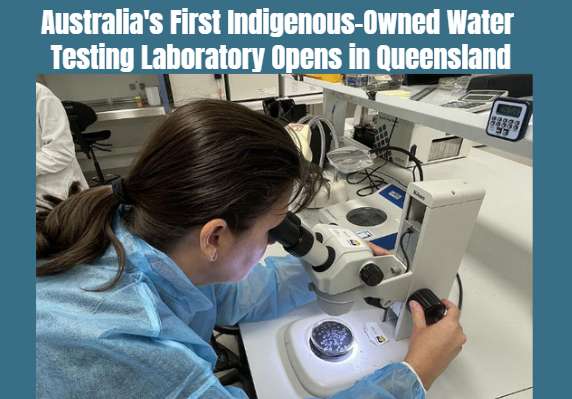
The new laboratory in Bundaberg will allow Indigenous rangers and traditional owner groups to test water locally, strengthening environmental management...
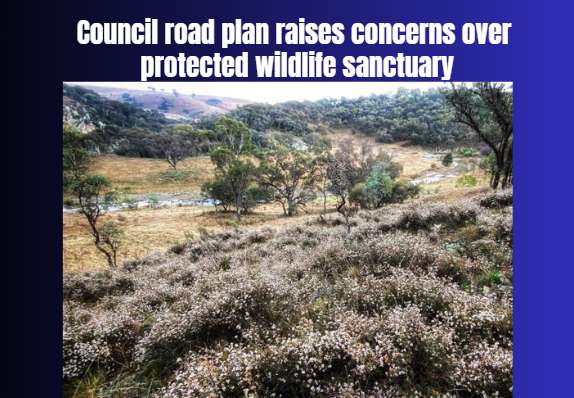
Conservation groups and landowners are opposing a proposed road through a protected sanctuary near Canberra, warning it could damage habitat for threate...
Liquidators have recovered just $8 million from more than $512 million invested in the collapsed First Guardian fund, leaving thousands of Australians u...
Western Australia is consulting on safety standards for plug-in solar panels and batteries, potentially giving renters and apartment residents a new way...
Two next-generation Spirit of Tasmania vessels begin their first passenger journeys between Victoria and Tasmania, bringing increased passenger capacity...
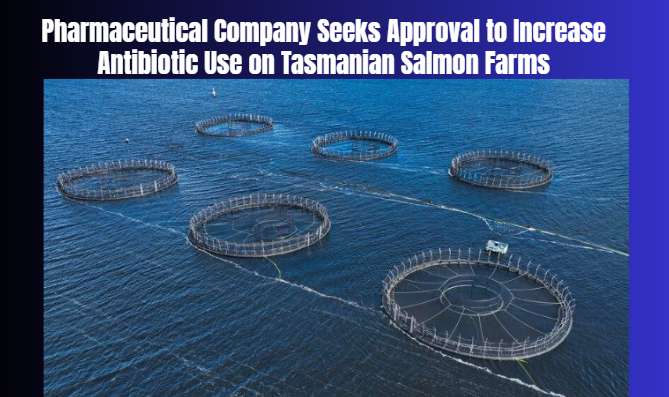
An animal health company has applied to increase antibiotic dosage levels and expand treatment areas in Tasmania's salmon farming industry, raising conc...
Restoration work on one of Tasmania’s oldest theatres is underway, but difficult site conditions have pushed costs more than $13 million above the origi...
A bill to prohibit conversion practices has passed Tasmania’s lower house, marking a significant step in the state’s debate over protections for LGBTQIA...
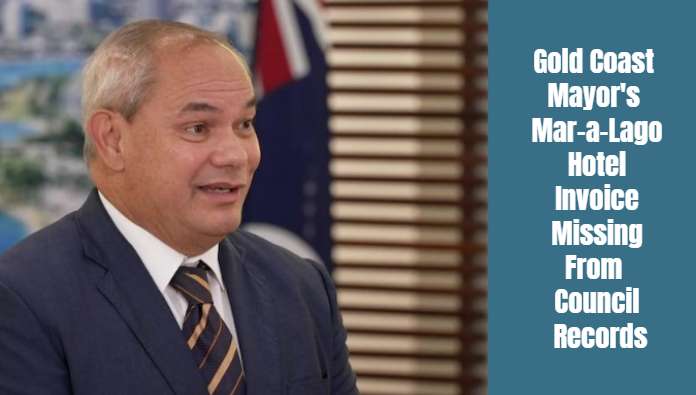
A freedom of information request has revealed that Gold Coast Council does not hold a copy of the invoice for Mayor Tom Tate's three-day stay at Donald...
Eight people have died in separate road crashes across Victoria during the Melbourne Cup long weekend, with four of the fatal incidents involving motorc...
A fisherman escaped unharmed after a large crocodile climbed onto his boat while he was fishing alone on the Mary River, prompting renewed safety warnin...