Residents Voice Concerns Over Future of Remote NSW Community
By Neha Maurya · Published 10 Jun 2026 · Updated 10 Jun 2026
Tibooburra, NSW · New South Wales News
Safety note: Admin approval is an initial review, not a guarantee that every detail is correct. Check important or urgent claims with official sources and report anything inaccurate or unsafe.
Source and credit: Contributor's own report
A view of a remote Australian outback town landscape.
Smart summary
Community members in a remote New South Wales town are raising alarms regarding the long-term viability of their region due to population decline and service shortages.
Residents of the remote New South Wales town of Tibooburra fear their community could disappear unless urgent action is taken to attract new residents and restore essential services.
Located in the state's far north-west near the borders of Queensland and South Australia, Tibooburra is home to fewer than 150 permanent residents. Locals say the town is facing a growing crisis as an ageing population, staffing shortages and difficulties attracting new families place increasing pressure on community life.
Speaking to 9News, residents described a future filled with uncertainty, warning that without intervention their small outback town may not survive.
"Our small town may die," one resident said, reflecting concerns shared throughout the community. (nine.com.au)
Tibooburra sits more than 1,100 kilometres from Sydney and relies heavily on industries such as tourism, agriculture and local government services. However, business owners and community leaders say attracting skilled workers has become increasingly difficult.
The shortage extends across several sectors, including healthcare, hospitality and education. Residents fear that if key services are reduced or withdrawn, more families will be forced to relocate elsewhere, creating a cycle of population decline that becomes harder to reverse.
Despite the challenges, locals remain deeply connected to the town and determined to fight for its future. Community members describe Tibooburra as a place where neighbours support one another and where the slower pace of life offers unique advantages not found in larger cities.
The town is known as the gateway to Sturt National Park and attracts thousands of visitors each year seeking to experience Australia's rugged outback landscapes. Tourism operators believe increased investment in infrastructure and regional development could help secure the area's future.
Residents are calling on governments to introduce incentives aimed at encouraging people to move to regional communities. Suggested measures include housing assistance, improved healthcare access, stronger telecommunications services and programs designed to attract essential workers.
The concerns raised by Tibooburra reflect broader issues facing many small communities across rural Australia. Population drift towards metropolitan areas has left some country towns struggling to maintain schools, medical facilities and local businesses.
Regional advocacy groups argue that these communities play an important role in Australia's economic and cultural identity and deserve greater support to remain viable.
While uncertainty remains, the people of Tibooburra are determined not to give up. Community events continue to bring residents together, and local leaders remain optimistic that with the right support the town can adapt and thrive.
For now, however, many locals worry that time is running out.
Their message is simple: regional towns matter, and preserving them requires action before communities reach a point where recovery is no longer possible.
The story has sparked conversations nationwide about how Australia can ensure its remote communities continue to survive and prosper for future generations.
ResidentsCommunityTownTibooburraCommunities
Residents of the remote New South Wales town of Tibooburra fear their community could disappear unless urgent action is taken to attract new residents and restore essential services.
Located in the state's far north-west near the borders of Queensland and South Australia, Tibooburra is home to fewer than 150 permanent residents. Locals say the town is facing a growing crisis as an ageing population, staffing shortages and difficulties attracting new families place increasing pressure on community life.
Speaking to 9News, residents described a future filled with uncertainty, warning that without intervention their small outback town may not survive.
"Our small town may die," one resident said, reflecting concerns shared throughout the community. (nine.com.au)
Tibooburra sits more than 1,100 kilometres from Sydney and relies heavily on industries such as tourism, agriculture and local government services. However, business owners and community leaders say attracting skilled workers has become increasingly difficult.
The shortage extends across several sectors, including healthcare, hospitality and education. Residents fear that if key services are reduced or withdrawn, more families will be forced to relocate elsewhere, creating a cycle of population decline that becomes harder to reverse.
Despite the challenges, locals remain deeply connected to the town and determined to fight for its future. Community members describe Tibooburra as a place where neighbours support one another and where the slower pace of life offers unique advantages not found in larger cities.
The town is known as the gateway to Sturt National Park and attracts thousands of visitors each year seeking to experience Australia's rugged outback landscapes. Tourism operators believe increased investment in infrastructure and regional development could help secure the area's future.
Residents are calling on governments to introduce incentives aimed at encouraging people to move to regional communities. Suggested measures include housing assistance, improved healthcare access, stronger telecommunications services and programs designed to attract essential workers.
The concerns raised by Tibooburra reflect broader issues facing many small communities across rural Australia. Population drift towards metropolitan areas has left some country towns struggling to maintain schools, medical facilities and local businesses.
Regional advocacy groups argue that these communities play an important role in Australia's economic and cultural identity and deserve greater support to remain viable.
While uncertainty remains, the people of Tibooburra are determined not to give up. Community events continue to bring residents together, and local leaders remain optimistic that with the right support the town can adapt and thrive.
For now, however, many locals worry that time is running out.
Their message is simple: regional towns matter, and preserving them requires action before communities reach a point where recovery is no longer possible.
The story has sparked conversations nationwide about how Australia can ensure its remote communities continue to survive and prosper for future generations.
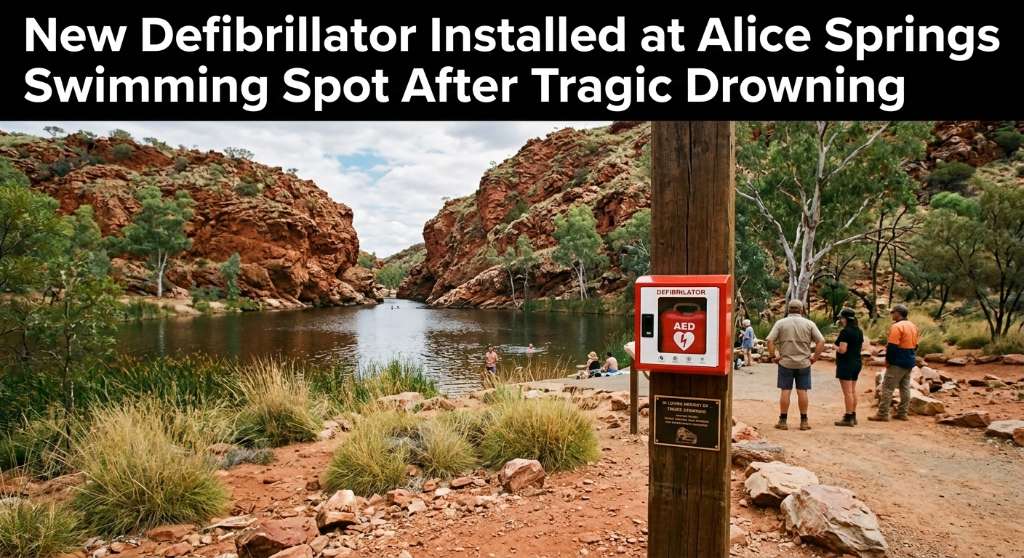
An automated external defibrillator and memorial plaque have been installed at Ellery Creek Big Hole following the death of disability advocate Ellen Fr...
Bathurst New South Wales · Community News · 17 Sep 2026
Kerry “Pecky” Peck, a long-standing Bathurst radio personality, has been inducted into the Bathurst Business Hall of Fame in recognition of his extensive contribution to the loc...
A new specialist family-violence support model has been introduced in Ballarat, with dedicated workers now embedded alongside Victoria Police to help people experiencing family...
Orange New South Wales · Community News · 17 Sep 2026
Orange City Council has elected a new Deputy Mayor for the next two years, with the decision announced today, 17 September 2026. The council said the election took place during...
A 36-year-old man has been charged after investigators allegedly found fraudulent identification documents, cloned number plates, cash and drug-manufact...
A Sydney court has heard that a man sent 249 messages to a former partner within 24 hours, with the messages treated as a single alleged breach of an ap...
A high-profile athlete has returned to court and told the hearing that an alleged unwanted kiss by former broadcaster Alan Jones remained difficult to f...
Work on the $150 million Sydney Town Hall Square project has been paused after the NSW Planning Minister referred the development for review by the Inde...
Cairns Regional Council has unanimously voted to seek $400,000 in Queensland Government funding for a program designed to connect local businesses with the region’s growing film...
An automated external defibrillator and memorial plaque have been installed at Ellery Creek Big Hole following the death of disability advocate Ellen Fr...
Queensland firefighters spent several hours monitoring a significant grass fire at Mary Kinross Park in Bargara, near Bundaberg, after the blaze broke out on Wednesday evening....