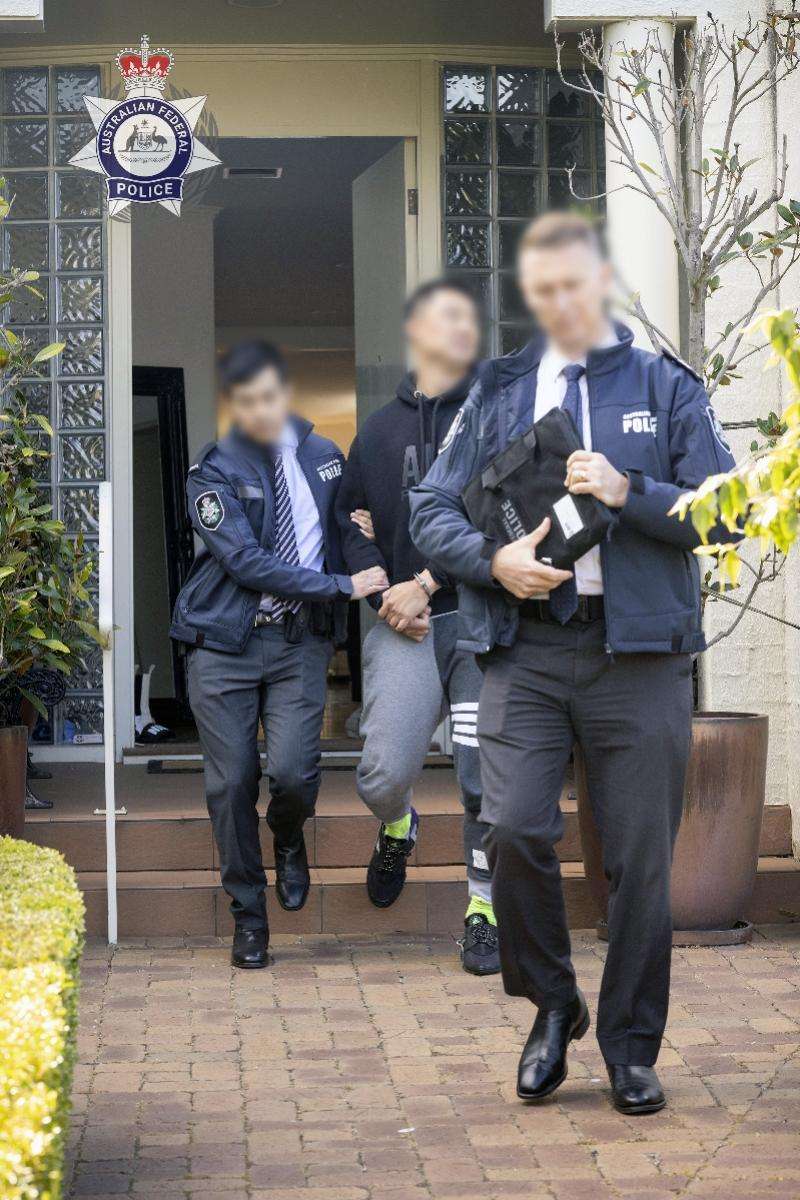
Sydney Construction Business Owner Charged Over Alleged $2.4 Million Money Laundering Scheme
By Neha Maurya · Published 04 Jul 2026 · Updated 04 Jul 2026
Sydney, NSW · New South Wales News
Safety note: Admin approval is an initial review, not a guarantee that every detail is correct. Check important or urgent claims with official sources and report anything inaccurate or unsafe.
Source and credit: Contributor's own report
Sydney Construction Business Owner Charged Over Alleged $2.4 Million Money Laundering Scheme - Sydney, NSW
Smart summary
AFP alleges North Shore man laundered millions in criminal proceeds through his construction company for an organised crime syndicate.
A 45-year-old Sydney man has been charged by the Australian Federal Police (AFP) after investigators alleged he laundered more than $2.4 million in illicit funds through a construction business linked to an organised crime network.
According to police, the accused allegedly received large sums of cash generated through criminal activities and used his construction company to disguise the illegal money as legitimate business income. Investigators claim the laundering operation ran over an extended period, during which fraudulent invoices and financial transactions were allegedly used to conceal the true source of the funds.
Authorities allege the man accepted cash from members of an organised criminal syndicate before transferring legitimate business funds back to the group, while retaining a commission for facilitating the transactions. The alleged scheme is believed to have enabled criminals to integrate illegal proceeds into the legitimate financial system.
The investigation was conducted by the Australian Federal Police with assistance from financial crime specialists who tracked suspicious banking activity and business records. Officers executed search warrants at multiple locations, seizing financial documents, electronic devices and other evidence that will form part of the ongoing investigation.
The accused has been charged with dealing with proceeds of crime valued at more than $1 million, an offence carrying a maximum penalty of 12 years' imprisonment under Commonwealth law. He was scheduled to appear before the NSW Bail Division Court on Saturday, 4 July 2026.
Police emphasised that money laundering plays a vital role in enabling organised crime by allowing profits from illegal activities—including drug trafficking, fraud and other serious offences—to appear legitimate. The AFP said disrupting financial networks is a key strategy in weakening criminal organisations and preventing further offences.
Investigators allege the construction business was deliberately used to create the appearance of lawful commercial activity, making it more difficult for authorities to detect the movement of criminal proceeds. Financial records are continuing to be examined as part of the investigation, and authorities have not ruled out further charges or additional arrests.
The AFP has urged businesses and financial institutions to remain vigilant for suspicious transactions that may indicate money laundering. Officials said cooperation between law enforcement agencies and the private sector remains essential in identifying financial crime and protecting Australia's economy from organised criminal activity.
The matter remains before the courts, and the allegations have not yet been tested in court. As legal proceedings continue, investigators will examine whether additional individuals or entities were involved in facilitating the alleged laundering network. The case highlights the increasing focus Australian authorities are placing on disrupting organised crime by targeting the financial systems that support criminal enterprises rather than only pursuing the underlying offences themselves.
FinancialBusinessCrimeCriminalLaundering
A 45-year-old Sydney man has been charged by the Australian Federal Police (AFP) after investigators alleged he laundered more than $2.4 million in illicit funds through a construction business linked to an organised crime network.
According to police, the accused allegedly received large sums of cash generated through criminal activities and used his construction company to disguise the illegal money as legitimate business income. Investigators claim the laundering operation ran over an extended period, during which fraudulent invoices and financial transactions were allegedly used to conceal the true source of the funds.
Authorities allege the man accepted cash from members of an organised criminal syndicate before transferring legitimate business funds back to the group, while retaining a commission for facilitating the transactions. The alleged scheme is believed to have enabled criminals to integrate illegal proceeds into the legitimate financial system.
The investigation was conducted by the Australian Federal Police with assistance from financial crime specialists who tracked suspicious banking activity and business records. Officers executed search warrants at multiple locations, seizing financial documents, electronic devices and other evidence that will form part of the ongoing investigation.
The accused has been charged with dealing with proceeds of crime valued at more than $1 million, an offence carrying a maximum penalty of 12 years' imprisonment under Commonwealth law. He was scheduled to appear before the NSW Bail Division Court on Saturday, 4 July 2026.
Police emphasised that money laundering plays a vital role in enabling organised crime by allowing profits from illegal activities—including drug trafficking, fraud and other serious offences—to appear legitimate. The AFP said disrupting financial networks is a key strategy in weakening criminal organisations and preventing further offences.
Investigators allege the construction business was deliberately used to create the appearance of lawful commercial activity, making it more difficult for authorities to detect the movement of criminal proceeds. Financial records are continuing to be examined as part of the investigation, and authorities have not ruled out further charges or additional arrests.
The AFP has urged businesses and financial institutions to remain vigilant for suspicious transactions that may indicate money laundering. Officials said cooperation between law enforcement agencies and the private sector remains essential in identifying financial crime and protecting Australia's economy from organised criminal activity.
The matter remains before the courts, and the allegations have not yet been tested in court. As legal proceedings continue, investigators will examine whether additional individuals or entities were involved in facilitating the alleged laundering network. The case highlights the increasing focus Australian authorities are placing on disrupting organised crime by targeting the financial systems that support criminal enterprises rather than only pursuing the underlying offences themselves.
A 29-year-old man from Aldinga has been charged with multiple drug, traffic and weapons offences after police allegedly found methamphetamine, other ill...
South Australian police have arrested a 22-year-old woman following an alleged assault on an elderly woman outside a business on Beach Road, Christies B...
Two men have been charged after a series of police raids across Cessnock, Denman, Muswellbrook and Singleton Heights uncovered 1,465 cannabis plants, wi...
A 36-year-old man from Kambah has been charged with drug trafficking and multiple prohibited weapons offences after ACT Policing searched his home as pa...
The upcoming Coffs Harbour bypass is expected to remove around 35,000 vehicles a day from the city's main highway route, prompting local businesses, inc...
Police are investigating the disappearance of hundreds of thousands of dollars' worth of cattle from an outback property in far-western New South Wales.
Armidale Regional Council will replace an ageing cast-iron water main in Ampol and Miller Streets with a modern system, with construction scheduled to b...
Young people from regional and remote Queensland communities are participating in youth councils and a state youth parliament, raising issues such as di...
A 29-year-old man from Aldinga has been charged with multiple drug, traffic and weapons offences after police allegedly found methamphetamine, other ill...
South Australian police have arrested a 22-year-old woman following an alleged assault on an elderly woman outside a business on Beach Road, Christies B...
Two men have been charged after a series of police raids across Cessnock, Denman, Muswellbrook and Singleton Heights uncovered 1,465 cannabis plants, wi...