Safety note: Admin approval is an initial review, not a guarantee that every detail is correct. Check important or urgent claims with official sources and report anything inaccurate or unsafe.
Source and credit: Contributor's own report
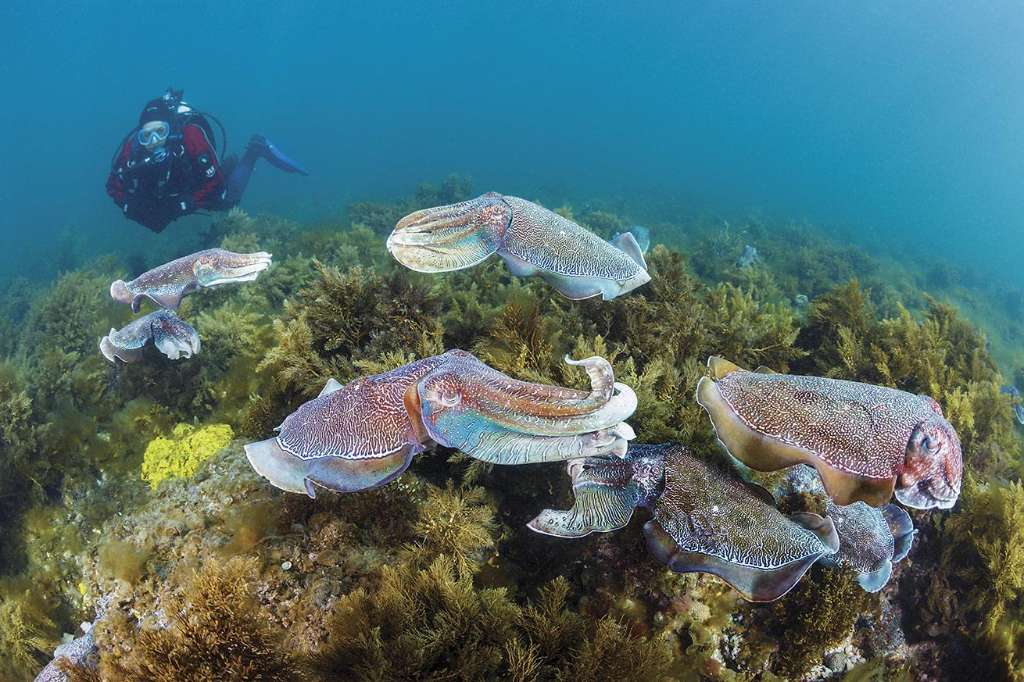
Temporary protection measures introduced for Whyalla's giant cuttlefish breeding grounds - Whyalla, SA
Smart summary
outh Australia has introduced a 90-day exclusion zone around the giant Australian cuttlefish breeding habitat near Whyalla after unusually low numbers of the species were recorded during this year's spawning season.
The South Australian Government has introduced temporary protection measures for the world-famous giant Australian cuttlefish breeding grounds near Whyalla, responding to concerns over dramatically reduced numbers of the marine species during its annual spawning season.
From 1 July 2026, a 90-day exclusion zone has been established between Black Point and Stony Point in the Upper Spencer Gulf. The restrictions temporarily prohibit recreational in-water activities including snorkelling, scuba diving, swimming and other water-based recreation within the protected breeding area. Authorities say the measures are designed to minimise disturbance while scientists investigate why so few cuttlefish have arrived this season.
The giant Australian cuttlefish aggregation near Whyalla is internationally recognised as the largest known breeding aggregation of its kind in the world. Every winter, thousands—and in some years hundreds of thousands—of cuttlefish gather on the rocky reefs around Point Lowly to mate and lay eggs, attracting divers, photographers and tourists from across Australia and overseas.
However, monitoring conducted during the 2026 breeding season found significantly fewer cuttlefish than expected. Marine scientists believe the decline may be linked to the prolonged harmful algal bloom that has affected South Australia's coastline since 2025, although investigations are continuing to determine the exact cause. Researchers are examining whether the bloom directly affected the animals or reduced the availability of food needed before the breeding migration.
Tourism operators in Whyalla have broadly welcomed the temporary restrictions despite the short-term impact on business. Many believe protecting the remaining breeding population is essential to ensuring the long-term survival of the species and preserving one of the region's most important tourism attractions. Some guided dive tours have already been cancelled because of the unusually low number of animals present this season.
The exclusion zone will be monitored by state authorities, with penalties applying to anyone who enters the restricted area without authorisation. Officials say the measures are precautionary and will remain in place while scientists continue population surveys and assess environmental conditions throughout the breeding season.
The giant Australian cuttlefish is considered an ecological icon of the Upper Spencer Gulf and contributes millions of dollars annually to the regional economy through nature-based tourism. The annual migration supports local accommodation providers, tour operators, restaurants and retailers, making the health of the breeding population important both environmentally and economically.
Authorities say protecting this year's breeding event is critical because giant Australian cuttlefish have relatively short lifespans and breed only once before dying. A poor breeding season can therefore have significant consequences for future populations. Scientists will continue monitoring numbers over the coming months before determining whether additional conservation measures are required.
BreedingCuttlefishSeasonGiantMeasures
The South Australian Government has introduced temporary protection measures for the world-famous giant Australian cuttlefish breeding grounds near Whyalla, responding to concerns over dramatically reduced numbers of the marine species during its annual spawning season.
From 1 July 2026, a 90-day exclusion zone has been established between Black Point and Stony Point in the Upper Spencer Gulf. The restrictions temporarily prohibit recreational in-water activities including snorkelling, scuba diving, swimming and other water-based recreation within the protected breeding area. Authorities say the measures are designed to minimise disturbance while scientists investigate why so few cuttlefish have arrived this season.
The giant Australian cuttlefish aggregation near Whyalla is internationally recognised as the largest known breeding aggregation of its kind in the world. Every winter, thousands—and in some years hundreds of thousands—of cuttlefish gather on the rocky reefs around Point Lowly to mate and lay eggs, attracting divers, photographers and tourists from across Australia and overseas.
However, monitoring conducted during the 2026 breeding season found significantly fewer cuttlefish than expected. Marine scientists believe the decline may be linked to the prolonged harmful algal bloom that has affected South Australia's coastline since 2025, although investigations are continuing to determine the exact cause. Researchers are examining whether the bloom directly affected the animals or reduced the availability of food needed before the breeding migration.
Tourism operators in Whyalla have broadly welcomed the temporary restrictions despite the short-term impact on business. Many believe protecting the remaining breeding population is essential to ensuring the long-term survival of the species and preserving one of the region's most important tourism attractions. Some guided dive tours have already been cancelled because of the unusually low number of animals present this season.
The exclusion zone will be monitored by state authorities, with penalties applying to anyone who enters the restricted area without authorisation. Officials say the measures are precautionary and will remain in place while scientists continue population surveys and assess environmental conditions throughout the breeding season.
The giant Australian cuttlefish is considered an ecological icon of the Upper Spencer Gulf and contributes millions of dollars annually to the regional economy through nature-based tourism. The annual migration supports local accommodation providers, tour operators, restaurants and retailers, making the health of the breeding population important both environmentally and economically.
Authorities say protecting this year's breeding event is critical because giant Australian cuttlefish have relatively short lifespans and breed only once before dying. A poor breeding season can therefore have significant consequences for future populations. Scientists will continue monitoring numbers over the coming months before determining whether additional conservation measures are required.
Armidale Regional Council will replace an ageing cast-iron water main in Ampol and Miller Streets with a modern system, with construction scheduled to b...
Community and education representatives have raised concerns that the initial $500,000 allocation may not cover the infrastructure upgrades needed for t...
Four public swimming pools across the Central Darling Shire are being opened for unsupervised access this season, with residents required to complete sa...
Ballarat’s redeveloped Mars Stadium has unveiled its expanded seating capacity and upgraded facilities ahead of the return of major AFLW events to the r...
A 17-year-old passenger died after a station wagon crashed into a Stobie pole at Elizabeth Vale early Wednesday morning. An 18-year-old learner driver h...
A 35-year-old Adelaide man has been arrested and charged after allegedly entering a construction site in the CBD and removing property early Wednesday m...
Authorities have crushed 23 confiscated electric bikes in Blacktown under new laws targeting non-compliant e-bikes, following a joint enforcement operat...
Thousands of Victorian doctors and allied health professionals have begun industrial action over stalled negotiations on pay and working conditions, wit...