Safety note: Admin approval is an initial review, not a guarantee that every detail is correct. Check important or urgent claims with official sources and report anything inaccurate or unsafe.
Source and credit: Contributor's own report
Crash Follows Mayhem at New Babinda Pedestrian Crossing - Cairns, QLD
Smart summary
A crash has sparked controversy over the design and operation of a newly installed signalised pedestrian crossing at the Bruce Highway–Munro Street intersection in Babinda, south of Cairns.
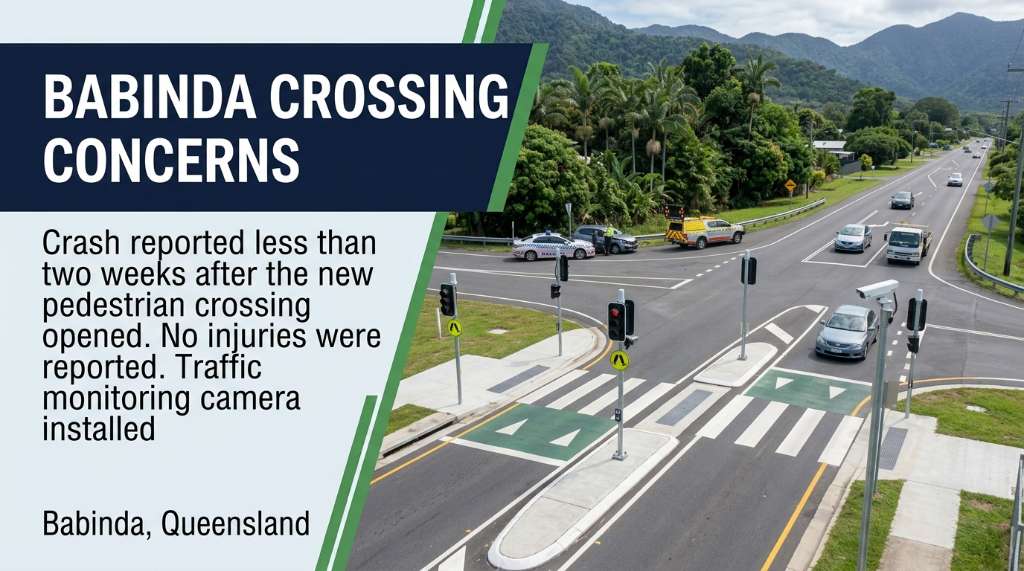
A newly installed signalised pedestrian crossing at the Bruce Highway–Munro Street intersection in Babinda, south of Cairns, has become the focus of local concern after a crash occurred less than a week after the new system was activated. The incident has raised questions about the crossing's design, how drivers understand the signals and whether additional measures may be needed to improve safety. The report was published on 15 August 2026 by Cairns Local News.
The crash occurred shortly after 11.30am on Thursday, when a vehicle leaving Munro Street attempted to cross the Bruce Highway towards Howard Kennedy Drive. The vehicle was struck by a southbound four-wheel-drive vehicle that was towing a caravan. Emergency services attended the scene, but fortunately no injuries were reported.
The incident has attracted attention because of the unusual configuration of the new pedestrian crossing. The signals facing northbound traffic leaving Munro Street include amber and red lights but no green light. These signals are designed to operate when a pedestrian or cyclist activates the crossing on the northern side of the intersection.
The infrastructure forms part of the Bruce Highway upgrade program and was jointly funded by the Australian and Queensland governments. The new crossing was activated on 31 July, meaning it had been operating for less than two weeks when the collision occurred.
The unusual arrangement has generated concern among some local motorists. Drivers have reportedly raised questions about how the signals operate and whether the configuration is sufficiently clear for people unfamiliar with pedestrian-activated, part-time traffic signals. Social-media comments following the crash also included reports of other near-misses during the first week of operation.
One reported near-miss involved a driver braking suddenly to avoid a school bus entering the intersection. The driver also described nearly being struck from behind by a heavy truck while attempting to understand the new road markings. These accounts have contributed to calls for clearer signage or possible changes to the intersection's signal arrangement.
Traffic-engineering considerations are also relevant to the controversy. The report notes that part-time or two-aspect signals, which use amber and red rather than the conventional three-colour arrangement, can create challenges when introduced to drivers who are not familiar with their operation. At Babinda, the lights remain dark during normal traffic conditions and are activated when pedestrians or cyclists need to cross the highway.
Under Queensland road rules, a signal head that is dark or unlit does not mean that a driver has a green light or automatic right of way. Drivers entering from side streets must continue to follow existing give-way and stop controls when the pedestrian signals are inactive.
The concern is that drivers unfamiliar with the system could mistakenly interpret the dark signal as meaning they are free to proceed. At an intersection connected to the busy Bruce Highway, such a misunderstanding could create a dangerous situation because highway traffic may continue moving at speed while a vehicle from Munro Street attempts to cross.
The Department of Transport and Main Roads (TMR) has explained that the pedestrian signals are intended to provide a safe crossing for pedestrians and cyclists. When activated, the system stops Bruce Highway traffic to allow vulnerable road users to cross the highway safely. However, traffic entering from Munro Street must continue to observe the normal give-way and stop arrangements whenever the pedestrian signals are inactive.
Following the crash, TMR has installed a traffic-monitoring camera at the intersection. The camera will allow authorities to observe driver behaviour and assess how the new lights are performing. This monitoring could help determine whether changes to the layout or additional road information are required.
Local motorists are continuing to call for improved static signage or modifications to the signal arrangement to reduce confusion and prevent further collisions. The discussion highlights the challenge of introducing new traffic infrastructure in regional communities where drivers may already be accustomed to a different intersection layout.
The aim of the project remains improving safety for pedestrians and cyclists crossing the busy Bruce Highway. However, the recent crash has shown that infrastructure must also be clearly understood by motorists using the intersection.
Authorities will continue monitoring the location to determine whether the current configuration is working as intended. The outcome of that monitoring could influence whether additional signage, road markings or signal changes are introduced.
For Babinda residents, the issue is particularly important because the intersection is used by local motorists as well as highway traffic travelling through the area. Ensuring that drivers understand exactly when they have priority and when they must give way will be essential to reducing the risk of future incidents.
The crash fortunately resulted in no reported injuries, but the controversy surrounding the new crossing has highlighted the importance of clear communication and driver awareness whenever new traffic systems are introduced.
HighwayCrossingIntersectionSignalsTraffic
A newly installed signalised pedestrian crossing at the Bruce Highway–Munro Street intersection in Babinda, south of Cairns, has become the focus of local concern after a crash occurred less than a week after the new system was activated. The incident has raised questions about the crossing's design, how drivers understand the signals and whether additional measures may be needed to improve safety. The report was published on 15 August 2026 by Cairns Local News.
The crash occurred shortly after 11.30am on Thursday, when a vehicle leaving Munro Street attempted to cross the Bruce Highway towards Howard Kennedy Drive. The vehicle was struck by a southbound four-wheel-drive vehicle that was towing a caravan. Emergency services attended the scene, but fortunately no injuries were reported.
The incident has attracted attention because of the unusual configuration of the new pedestrian crossing. The signals facing northbound traffic leaving Munro Street include amber and red lights but no green light. These signals are designed to operate when a pedestrian or cyclist activates the crossing on the northern side of the intersection.
The infrastructure forms part of the Bruce Highway upgrade program and was jointly funded by the Australian and Queensland governments. The new crossing was activated on 31 July, meaning it had been operating for less than two weeks when the collision occurred.
The unusual arrangement has generated concern among some local motorists. Drivers have reportedly raised questions about how the signals operate and whether the configuration is sufficiently clear for people unfamiliar with pedestrian-activated, part-time traffic signals. Social-media comments following the crash also included reports of other near-misses during the first week of operation.
One reported near-miss involved a driver braking suddenly to avoid a school bus entering the intersection. The driver also described nearly being struck from behind by a heavy truck while attempting to understand the new road markings. These accounts have contributed to calls for clearer signage or possible changes to the intersection's signal arrangement.
Traffic-engineering considerations are also relevant to the controversy. The report notes that part-time or two-aspect signals, which use amber and red rather than the conventional three-colour arrangement, can create challenges when introduced to drivers who are not familiar with their operation. At Babinda, the lights remain dark during normal traffic conditions and are activated when pedestrians or cyclists need to cross the highway.
Under Queensland road rules, a signal head that is dark or unlit does not mean that a driver has a green light or automatic right of way. Drivers entering from side streets must continue to follow existing give-way and stop controls when the pedestrian signals are inactive.
The concern is that drivers unfamiliar with the system could mistakenly interpret the dark signal as meaning they are free to proceed. At an intersection connected to the busy Bruce Highway, such a misunderstanding could create a dangerous situation because highway traffic may continue moving at speed while a vehicle from Munro Street attempts to cross.
The Department of Transport and Main Roads (TMR) has explained that the pedestrian signals are intended to provide a safe crossing for pedestrians and cyclists. When activated, the system stops Bruce Highway traffic to allow vulnerable road users to cross the highway safely. However, traffic entering from Munro Street must continue to observe the normal give-way and stop arrangements whenever the pedestrian signals are inactive.
Following the crash, TMR has installed a traffic-monitoring camera at the intersection. The camera will allow authorities to observe driver behaviour and assess how the new lights are performing. This monitoring could help determine whether changes to the layout or additional road information are required.
Local motorists are continuing to call for improved static signage or modifications to the signal arrangement to reduce confusion and prevent further collisions. The discussion highlights the challenge of introducing new traffic infrastructure in regional communities where drivers may already be accustomed to a different intersection layout.
The aim of the project remains improving safety for pedestrians and cyclists crossing the busy Bruce Highway. However, the recent crash has shown that infrastructure must also be clearly understood by motorists using the intersection.
Authorities will continue monitoring the location to determine whether the current configuration is working as intended. The outcome of that monitoring could influence whether additional signage, road markings or signal changes are introduced.
For Babinda residents, the issue is particularly important because the intersection is used by local motorists as well as highway traffic travelling through the area. Ensuring that drivers understand exactly when they have priority and when they must give way will be essential to reducing the risk of future incidents.
The crash fortunately resulted in no reported injuries, but the controversy surrounding the new crossing has highlighted the importance of clear communication and driver awareness whenever new traffic systems are introduced.
A new proposal for factory-built ecohomes in Orange aims to speed up construction while reducing household energy costs as local property prices remain...
A Japanese love of Tasmanian buckwheat and fresh soba noodles helped create a lasting cultural connection that is now celebrated through the annual Hana...
Essential bus services connecting Alice Springs with five remote communities have been reduced, with the operator warning that some routes could be canc...
A carpentry apprentice in Alice Springs says course cancellations at Charles Darwin University could delay his qualification by up to 12 months because...
A 22-year-old Elimbah man has been charged after a two-car crash at Baringa on the Sunshine Coast, with police alleging he fled into nearby bushland bef...
A 34-year-old man has been charged after police allege a worker was threatened with a knife during an overnight robbery at a fast-food restaurant in Spr...
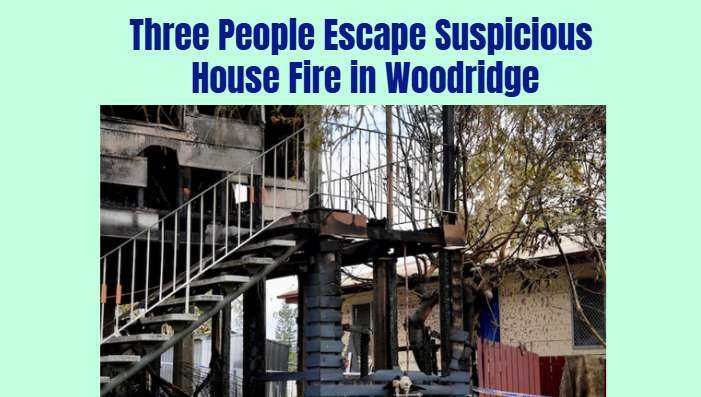
A two-storey home in Woodridge, south of Brisbane, has been extensively damaged by fire, with police declaring a crime scene after three people escaped...
A 22-year-old Elimbah man has been charged after a two-car crash at Baringa on the Sunshine Coast, with police alleging he fled into nearby bushland bef...
A new proposal for factory-built ecohomes in Orange aims to speed up construction while reducing household energy costs as local property prices remain...
Geelong's historic Botanic Gardens are preparing for their 175th anniversary, with volunteers and horticultural staff working to preserve a living colle...