Queensland Scientists Use “False Crops” to Fight Invasive Weed Threatening Australian Agriculture
By Chloe · Published 13 Nov 2026 · Updated 13 Nov 2026
Mackay, QLD · Queensland News
Safety note: Admin approval is an initial review, not a guarantee that every detail is correct. Check important or urgent claims with official sources and report anything inaccurate or unsafe.
Source and credit: Contributor's own report
Smart summary
A special soybean planting strategy is helping Australia move closer to eradicating red witchweed, an invasive parasite that has damaged agricultural crops overseas.
Scientists in Queensland are making significant progress towards eliminating red witchweed, a highly invasive parasitic plant that threatens agricultural production. Researchers and biosecurity specialists have developed a strategy using specially planted crops to encourage the weed's seeds to germinate before the seedlings die naturally because they cannot attach to a suitable host plant.
Red witchweed was first detected in Australia in 2013 in the sugarcane-growing community of Habana, north of Mackay. The infestation was identified across six farming properties, raising concerns among agricultural authorities because the weed has caused substantial damage to grain and cereal crops in other parts of the world.
The plant is particularly dangerous because it survives by attaching itself to the roots of other plants. It takes water and nutrients from its host, weakening the crop and potentially causing stunted growth, wilting and even plant death.
One of the biggest challenges is the weed's ability to produce millions of seeds during its short life cycle. These seeds can remain in contaminated soil, making it difficult to confirm that an affected property is completely free of the infestation.
To address this problem, Biosecurity Queensland has introduced a strategy involving what researchers call false host plants or trap crops. Soybeans are used because their roots release natural chemicals that stimulate red witchweed seeds to germinate.
However, soybeans are not a compatible host for the parasite. When the weed begins growing, it cannot establish the root connection it needs to obtain nutrients. Without this connection, the young seedlings quickly die.
This approach allows scientists to encourage hidden seeds in the soil to germinate while preventing the parasite from completing its life cycle. It is being combined with other control measures, including soil fumigation, herbicide treatments and the removal or burning of emerged plants to prevent further seed production.
The eradication program began in 2015, and the affected area has reduced from approximately 110 hectares to just 4.3 hectares after years of treatment and monitoring.
Local farmers have also played an important role in the project. Some properties were placed under quarantine restrictions, affecting normal agricultural operations. One farming family reported losing access to about a quarter of its farming operation during the restrictions.
After years of coordinated work with biosecurity authorities, affected sugarcane paddocks have gradually returned to production.
The federal Department of Agriculture has approved a proof-of-freedom plan for the final stage of the eradication campaign. Four of the original six properties have entered the surveillance phase, while treatment continues on the remaining two.
Authorities will need to monitor the affected land carefully to ensure no new plants emerge from seeds remaining in the soil. If no further plants are detected, a three-year surveillance period will help establish whether the weed has been successfully eliminated.
Biosecurity Queensland believes eradication could be achieved within three years. If successful, Australia would become the first country to eliminate red witchweed.
The progress is important not only for Queensland's sugarcane industry but also for the wider Australian agricultural sector. Preventing the spread of invasive weeds helps protect farms, reduce future economic losses and maintain confidence in Australia's agricultural production.
SeedsWeedAgriculturalPlantsQueensland
Scientists in Queensland are making significant progress towards eliminating red witchweed, a highly invasive parasitic plant that threatens agricultural production. Researchers and biosecurity specialists have developed a strategy using specially planted crops to encourage the weed's seeds to germinate before the seedlings die naturally because they cannot attach to a suitable host plant.
Red witchweed was first detected in Australia in 2013 in the sugarcane-growing community of Habana, north of Mackay. The infestation was identified across six farming properties, raising concerns among agricultural authorities because the weed has caused substantial damage to grain and cereal crops in other parts of the world.
The plant is particularly dangerous because it survives by attaching itself to the roots of other plants. It takes water and nutrients from its host, weakening the crop and potentially causing stunted growth, wilting and even plant death.
One of the biggest challenges is the weed's ability to produce millions of seeds during its short life cycle. These seeds can remain in contaminated soil, making it difficult to confirm that an affected property is completely free of the infestation.
To address this problem, Biosecurity Queensland has introduced a strategy involving what researchers call false host plants or trap crops. Soybeans are used because their roots release natural chemicals that stimulate red witchweed seeds to germinate.
However, soybeans are not a compatible host for the parasite. When the weed begins growing, it cannot establish the root connection it needs to obtain nutrients. Without this connection, the young seedlings quickly die.
This approach allows scientists to encourage hidden seeds in the soil to germinate while preventing the parasite from completing its life cycle. It is being combined with other control measures, including soil fumigation, herbicide treatments and the removal or burning of emerged plants to prevent further seed production.
The eradication program began in 2015, and the affected area has reduced from approximately 110 hectares to just 4.3 hectares after years of treatment and monitoring.
Local farmers have also played an important role in the project. Some properties were placed under quarantine restrictions, affecting normal agricultural operations. One farming family reported losing access to about a quarter of its farming operation during the restrictions.
After years of coordinated work with biosecurity authorities, affected sugarcane paddocks have gradually returned to production.
The federal Department of Agriculture has approved a proof-of-freedom plan for the final stage of the eradication campaign. Four of the original six properties have entered the surveillance phase, while treatment continues on the remaining two.
Authorities will need to monitor the affected land carefully to ensure no new plants emerge from seeds remaining in the soil. If no further plants are detected, a three-year surveillance period will help establish whether the weed has been successfully eliminated.
Biosecurity Queensland believes eradication could be achieved within three years. If successful, Australia would become the first country to eliminate red witchweed.
The progress is important not only for Queensland's sugarcane industry but also for the wider Australian agricultural sector. Preventing the spread of invasive weeds helps protect farms, reduce future economic losses and maintain confidence in Australia's agricultural production.
CSIRO report highlights how Australian aluminium, copper and existing industrial expertise could help manufacture key battery components locally and cre...
The federal government has submitted a proposal to the European Space Agency for astronaut Katherine Bennell-Pegg to travel to the International Space S...
Researchers studying ancient cave systems beneath South Australia's Nullarbor Plain say the underground environment could provide clues for future searc...
The Australian Government is considering moving the major Great Barrier Reef aquarium to Townsville's Strand after an engineering report raised concerns...
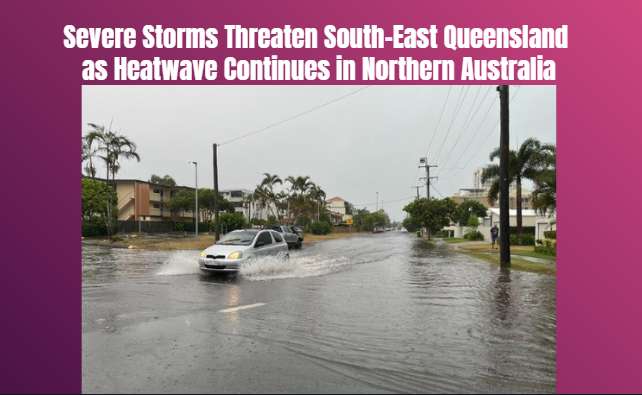
Meteorologists warn of giant hail, destructive winds and intense rainfall across parts of Queensland, while northern districts remain under severe heatw...
Government support brings fresh hope to Mount Isa’s plan for a research facility aimed at attracting investment and creating new opportunities in Queens...
NSW patient survey findings highlight safety concerns in several major hospitals, as the state government commits additional security staff to emergency...
Police are investigating a daylight theft after three valuable trophies belonging to Australia's legendary racehorse were taken from an exhibition displ...
Operation Amarok 15 resulted in 1,594 charges, hundreds of apprehended domestic violence order breaches identified and dozens of firearms seized across...