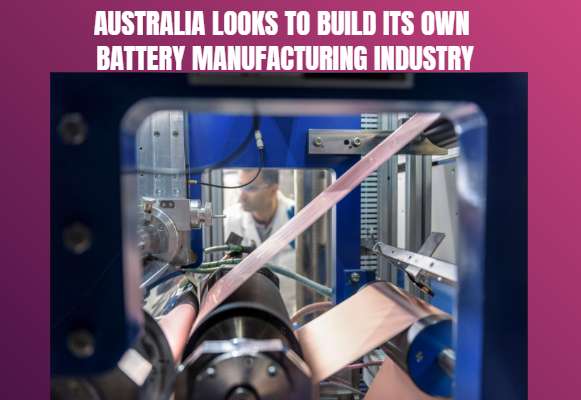
Australia identifies new opportunities to build its own battery manufacturing industry
By Chloe · Published 04 Nov 2026 · Updated 04 Nov 2026
National, ACT
Safety note: Admin approval is an initial review, not a guarantee that every detail is correct. Check important or urgent claims with official sources and report anything inaccurate or unsafe.
Source and credit: Contributor's own report
Australia identifies new opportunities to build its own battery manufacturing industry - National, ACT
Smart summary
CSIRO report highlights how Australian aluminium, copper and existing industrial expertise could help manufacture key battery components locally and create skilled jobs.
Australia could take an important step towards becoming a major battery manufacturing country following new research released by the Commonwealth Scientific and Industrial Research Organisation (CSIRO) on 4 November 2026. The research identifies opportunities for Australia to manufacture important battery components domestically instead of relying heavily on overseas suppliers.
The report, titled The Future of Australian Battery Manufacturing: Cell Cans and Current Collector Foils, examines how Australia's existing natural resources, industrial infrastructure and manufacturing expertise could support the development of a stronger local battery industry.
Battery technology is becoming increasingly important as countries transition towards electric vehicles, renewable energy storage and cleaner industrial operations. Demand for lithium-ion batteries continues to create opportunities for countries capable of supplying the materials and components required for battery production.
Australia already has significant resources of lithium, copper and aluminium. However, much of the value generated through battery manufacturing is currently captured outside the country. CSIRO believes Australia has an opportunity to change this situation by expanding its manufacturing capabilities and producing more finished battery components locally.
The research identifies two major opportunities that could help establish a domestic battery manufacturing supply chain.
The first opportunity involves manufacturing prismatic battery cell cans using Australian aluminium. These metal containers hold the internal components of battery cells and must meet strict requirements for strength, weight, safety and chemical compatibility. Australia already has an established aluminium industry and experience producing similar metal products, including aerosol cans. This existing expertise could provide a foundation for developing specialised battery component manufacturing facilities.
The second opportunity involves producing copper current collector foils through a manufacturing process known as electrolytic deposition. Copper foils are essential components inside lithium-ion batteries because they help conduct electrical current. These foils are extremely thin and require specialised production techniques to meet battery performance standards.
CSIRO researchers believe Australia could build on its existing copper production and refining capabilities to develop this manufacturing opportunity. The process could also allow production capacity to increase gradually as demand grows.
According to the report, the global lithium-ion battery value chain could exceed US$400 billion by 2030, based on projections cited from McKinsey analysis. Australia's National Battery Strategy also highlights that most of the potential economic value in the battery industry lies beyond mining.
Developing domestic manufacturing could provide several benefits for the Australian economy. These include creating skilled employment opportunities, supporting local industrial businesses, strengthening supply chains and reducing dependence on imported battery components.
The initiative could also support Australia's clean energy transition by improving access to locally manufactured battery technologies. Domestic production would be particularly important as electric vehicle adoption and large-scale renewable energy storage continue to expand.
However, researchers acknowledge that establishing a competitive manufacturing industry will require targeted investment, specialised equipment, technical expertise and careful commercial planning. Businesses will also need sufficient production demand to make manufacturing facilities financially sustainable.
CSIRO has also established the Australian Battery Safety Facility to strengthen Australia's ability to test and assess battery technologies.
The research was funded through the Australian Government-supported AU-USA Battery R&D Grant.
The findings suggest that Australia has an opportunity to move beyond exporting raw materials and become a more important participant in the international battery manufacturing industry.
BatteryManufacturingCouldComponentsIndustry
Australia could take an important step towards becoming a major battery manufacturing country following new research released by the Commonwealth Scientific and Industrial Research Organisation (CSIRO) on 4 November 2026. The research identifies opportunities for Australia to manufacture important battery components domestically instead of relying heavily on overseas suppliers.
The report, titled The Future of Australian Battery Manufacturing: Cell Cans and Current Collector Foils, examines how Australia's existing natural resources, industrial infrastructure and manufacturing expertise could support the development of a stronger local battery industry.
Battery technology is becoming increasingly important as countries transition towards electric vehicles, renewable energy storage and cleaner industrial operations. Demand for lithium-ion batteries continues to create opportunities for countries capable of supplying the materials and components required for battery production.
Australia already has significant resources of lithium, copper and aluminium. However, much of the value generated through battery manufacturing is currently captured outside the country. CSIRO believes Australia has an opportunity to change this situation by expanding its manufacturing capabilities and producing more finished battery components locally.
The research identifies two major opportunities that could help establish a domestic battery manufacturing supply chain.
The first opportunity involves manufacturing prismatic battery cell cans using Australian aluminium. These metal containers hold the internal components of battery cells and must meet strict requirements for strength, weight, safety and chemical compatibility. Australia already has an established aluminium industry and experience producing similar metal products, including aerosol cans. This existing expertise could provide a foundation for developing specialised battery component manufacturing facilities.
The second opportunity involves producing copper current collector foils through a manufacturing process known as electrolytic deposition. Copper foils are essential components inside lithium-ion batteries because they help conduct electrical current. These foils are extremely thin and require specialised production techniques to meet battery performance standards.
CSIRO researchers believe Australia could build on its existing copper production and refining capabilities to develop this manufacturing opportunity. The process could also allow production capacity to increase gradually as demand grows.
According to the report, the global lithium-ion battery value chain could exceed US$400 billion by 2030, based on projections cited from McKinsey analysis. Australia's National Battery Strategy also highlights that most of the potential economic value in the battery industry lies beyond mining.
Developing domestic manufacturing could provide several benefits for the Australian economy. These include creating skilled employment opportunities, supporting local industrial businesses, strengthening supply chains and reducing dependence on imported battery components.
The initiative could also support Australia's clean energy transition by improving access to locally manufactured battery technologies. Domestic production would be particularly important as electric vehicle adoption and large-scale renewable energy storage continue to expand.
However, researchers acknowledge that establishing a competitive manufacturing industry will require targeted investment, specialised equipment, technical expertise and careful commercial planning. Businesses will also need sufficient production demand to make manufacturing facilities financially sustainable.
CSIRO has also established the Australian Battery Safety Facility to strengthen Australia's ability to test and assess battery technologies.
The research was funded through the Australian Government-supported AU-USA Battery R&D Grant.
The findings suggest that Australia has an opportunity to move beyond exporting raw materials and become a more important participant in the international battery manufacturing industry.
The federal government has submitted a proposal to the European Space Agency for astronaut Katherine Bennell-Pegg to travel to the International Space S...
Researchers studying ancient cave systems beneath South Australia's Nullarbor Plain say the underground environment could provide clues for future searc...
Amateur astronomers are using new telescope technology to photograph the Moon, planets and distant galaxies from Brisbane homes, showing that city skies...
NSW Police appeal to motorists to slow down, follow road rules and take extra care after nine people lost their lives in road crashes within a single week.
Malgana Traditional Owners have received approval to harvest sea cucumbers in Shark Bay, creating a potential opportunity for a new sustainable fishing...
A fresh warning from Australia’s superannuation regulator has raised concerns about complaints and service problems across the retirement savings industry.
NSW Police appeal to motorists to slow down, follow road rules and take extra care after nine people lost their lives in road crashes within a single week.