Australian Government Bids to Send Australian of the Year Into Space
By Chloe · Published 23 Oct 2026 · Updated 23 Oct 2026
Canberra, ACT · ACT News
Safety note: Admin approval is an initial review, not a guarantee that every detail is correct. Check important or urgent claims with official sources and report anything inaccurate or unsafe.
Source and credit: Contributor's own report
Australian Government Bids to Send Australian of the Year Into Space - Canberra, ACT
Smart summary
The federal government has submitted a proposal to the European Space Agency for astronaut Katherine Bennell-Pegg to travel to the International Space Station, subject to approval and funding arrangements.
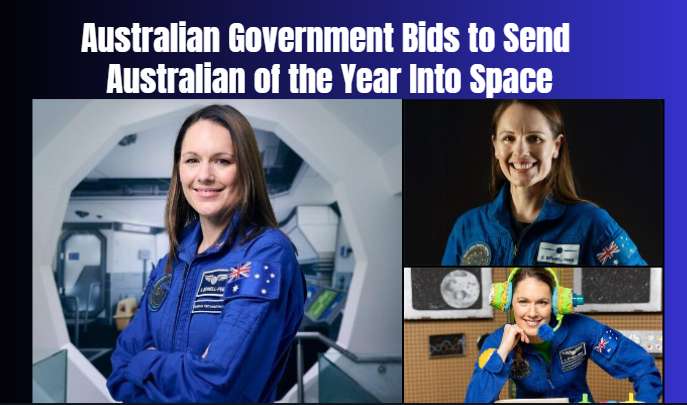
Australia has taken another step towards sending its current Australian of the Year, Katherine Bennell-Pegg, into space. The federal government has submitted a formal offer to the European Space Agency (ESA), seeking an opportunity for her to join a future mission to the International Space Station. Federal Science Minister Tim Ayres confirmed the submission on Friday, 23 October 2026.
The proposal follows discussions about an opportunity offered through the European space agency. If ESA accepts Australia's bid, Bennell-Pegg would need to undertake further preparation and training before joining a mission. The proposed journey is not yet confirmed, and the submission does not mean that a launch date has been secured.
Bennell-Pegg is a European Space Agency-trained astronaut and director of space technology at the Australian Space Agency. She completed astronaut training in 2024, becoming the first person to complete this training under the Australian flag. Her selection as Australian of the Year brought renewed attention to Australia's ambition to have one of its astronauts represent the country in space.
The government has described the proposal as an important opportunity, while also stressing the need to manage public finances carefully. Spaceflight is expensive, involving more than the journey itself. Costs can include mission arrangements, specialised preparation, technical support and other requirements associated with participation in an international space programme.
The federal government has been working to secure support from private-sector organisations, philanthropists and state and territory governments. According to the minister's office, philanthropists have committed more than $6 million in cash, alongside support provided in kind. Some state governments have also indicated support, although South Australia has been the only state or territory publicly confirmed as offering financial assistance.
Earlier discussions revealed that several other state and territory governments had declined requests for direct financial contributions. That has made the funding arrangement an important part of the proposal, as the federal government seeks to balance the national significance of the mission against competing budget priorities.
The mission could represent a milestone for Australia's space programme. Although Australians have travelled to space before, having an astronaut participate as an official representative of the country through its space agency would be a significant development. It could also raise public interest in astronaut training, space science and Australia's role in international research.
The International Space Station is a research laboratory in orbit where astronauts conduct experiments in areas such as biology, materials science, physics and human health. Living and working in microgravity allows researchers to investigate questions that cannot be studied in quite the same way on Earth. Participation in a mission could therefore provide Australian scientists and students with opportunities to engage with space research and related educational programmes.
The next major step is for the European Space Agency to consider Australia's submission. Until the offer is accepted and the necessary arrangements are finalised, Bennell-Pegg's participation remains a proposal rather than a confirmed flight. Funding commitments, training requirements and mission scheduling will all be important to its progress.
The government's submission nevertheless moves the plan forward. If successful, the mission could become a landmark moment for Australia's space ambitions and demonstrate how international partnerships and private support can help the country participate in human spaceflight.
SpaceMissionGovernmentAgencyInternational
Australia has taken another step towards sending its current Australian of the Year, Katherine Bennell-Pegg, into space. The federal government has submitted a formal offer to the European Space Agency (ESA), seeking an opportunity for her to join a future mission to the International Space Station. Federal Science Minister Tim Ayres confirmed the submission on Friday, 23 October 2026.
The proposal follows discussions about an opportunity offered through the European space agency. If ESA accepts Australia's bid, Bennell-Pegg would need to undertake further preparation and training before joining a mission. The proposed journey is not yet confirmed, and the submission does not mean that a launch date has been secured.
Bennell-Pegg is a European Space Agency-trained astronaut and director of space technology at the Australian Space Agency. She completed astronaut training in 2024, becoming the first person to complete this training under the Australian flag. Her selection as Australian of the Year brought renewed attention to Australia's ambition to have one of its astronauts represent the country in space.
The government has described the proposal as an important opportunity, while also stressing the need to manage public finances carefully. Spaceflight is expensive, involving more than the journey itself. Costs can include mission arrangements, specialised preparation, technical support and other requirements associated with participation in an international space programme.
The federal government has been working to secure support from private-sector organisations, philanthropists and state and territory governments. According to the minister's office, philanthropists have committed more than $6 million in cash, alongside support provided in kind. Some state governments have also indicated support, although South Australia has been the only state or territory publicly confirmed as offering financial assistance.
Earlier discussions revealed that several other state and territory governments had declined requests for direct financial contributions. That has made the funding arrangement an important part of the proposal, as the federal government seeks to balance the national significance of the mission against competing budget priorities.
The mission could represent a milestone for Australia's space programme. Although Australians have travelled to space before, having an astronaut participate as an official representative of the country through its space agency would be a significant development. It could also raise public interest in astronaut training, space science and Australia's role in international research.
The International Space Station is a research laboratory in orbit where astronauts conduct experiments in areas such as biology, materials science, physics and human health. Living and working in microgravity allows researchers to investigate questions that cannot be studied in quite the same way on Earth. Participation in a mission could therefore provide Australian scientists and students with opportunities to engage with space research and related educational programmes.
The next major step is for the European Space Agency to consider Australia's submission. Until the offer is accepted and the necessary arrangements are finalised, Bennell-Pegg's participation remains a proposal rather than a confirmed flight. Funding commitments, training requirements and mission scheduling will all be important to its progress.
The government's submission nevertheless moves the plan forward. If successful, the mission could become a landmark moment for Australia's space ambitions and demonstrate how international partnerships and private support can help the country participate in human spaceflight.
Researchers studying ancient cave systems beneath South Australia's Nullarbor Plain say the underground environment could provide clues for future searc...
Amateur astronomers are using new telescope technology to photograph the Moon, planets and distant galaxies from Brisbane homes, showing that city skies...
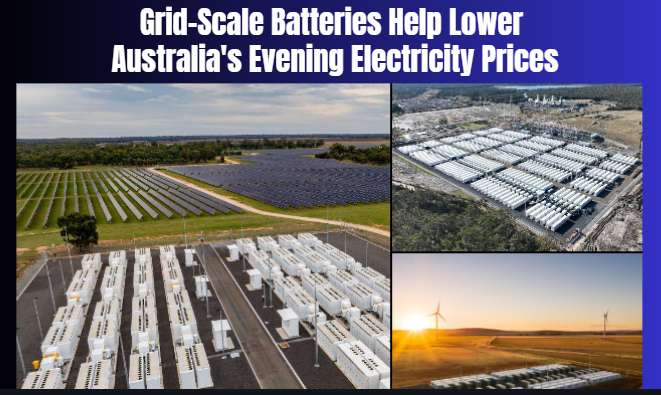
Australia's expanding battery storage capacity is reshaping the electricity market, storing renewable energy during the day and supplying power during p...
Australia’s cyber.gov.au website is among the government services affected by two critical vulnerabilities in PHP, a programming language used by millio...
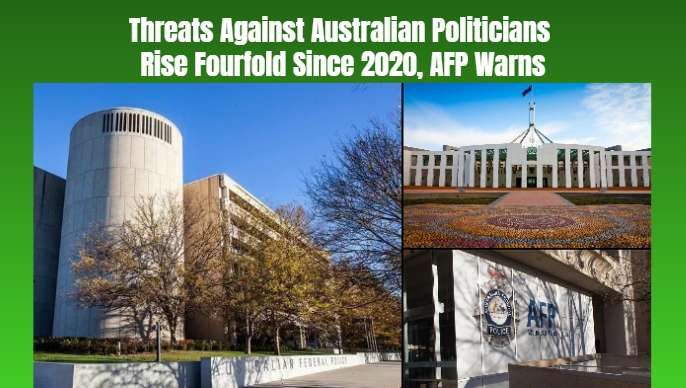
The Australian Federal Police says threats and harassment targeting federal politicians and senior public officials have increased sharply, raising fres...
One Nation leader Pauline Hanson has apologised after a controversial political cartoon mocked independent senator Jacqui Lambie’s medical condition, sa...
Several New South Wales MPs say a parliamentary security briefing left them anxious about how quickly security staff could respond to an incident, promp...
Australia's expanding battery storage capacity is reshaping the electricity market, storing renewable energy during the day and supplying power during p...
South Australia's civil and administrative tribunal has upheld a prohibition preventing a disability support worker from working with children and peopl...
Tasmania Police found that an artificial intelligence tool nearly halved the time needed to prepare family violence reports, but testing also revealed m...