Pauline Hanson Apologises Over Cartoon Mocking Jacqui Lambie’s Health Condition
By Chloe · Published 20 Oct 2026 · Updated 20 Oct 2026
Canberra, ACT · ACT News
Safety note: Admin approval is an initial review, not a guarantee that every detail is correct. Check important or urgent claims with official sources and report anything inaccurate or unsafe.
Source and credit: Contributor's own report
Pauline Hanson Apologises Over Cartoon Mocking Jacqui Lambie’s Health Condition - Canberra, ACT
Smart summary
One Nation leader Pauline Hanson has apologised after a controversial political cartoon mocked independent senator Jacqui Lambie’s medical condition, saying she had asked its creator to change the video.
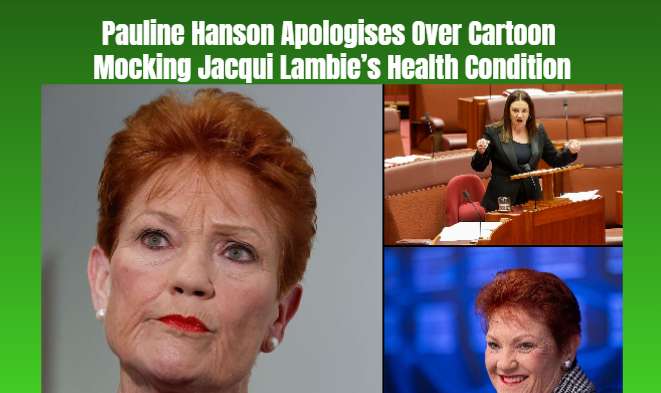
Australian senator Pauline Hanson has apologised for a controversial cartoon produced as part of One Nation’s satirical video series after it mocked the medical condition of independent senator Jacqui Lambie. The apology followed criticism from politicians across the political spectrum and renewed debate about the boundaries of political satire.
The video was published as part of One Nation’s Please Explain series, which uses animated satire to criticise political figures and current events. Its latest episode used Lambie’s experience of vaginal prolapse as a punchline, prompting criticism that a serious health condition had been turned into a source of ridicule.
Lambie, a former Australian Defence Force member representing Tasmania, had spoken publicly about her medical experience in the Senate in August. She explained that she had undergone surgery and taken five months away from parliamentary duties to recover. She also raised concerns about access to appropriate healthcare for female veterans.
After the cartoon appeared online, Lambie criticised its content and said that speaking openly about a health condition should not make someone a target for personal mockery. Her comments attracted support from politicians who praised her willingness to discuss an issue that many people find difficult to talk about.
Hanson initially defended the cartoon, describing it as satire and telling Lambie to take the criticism less seriously. She also suggested that the video might help raise awareness of the condition. Those remarks intensified the backlash, with critics arguing that awareness should not come at the expense of humiliating someone over a medical issue.
On Tuesday, Hanson changed her position. She said she had not personally watched the video before it was published and had spoken to its creator about making changes. She acknowledged that the cartoon was not presented tastefully and apologised to those offended by it.
Hanson also accepted responsibility for the content because the series carries her name. She said she would take a closer look at future episodes to avoid a repeat of the controversy.
Lambie had previously said that the issue was not simply about whether people could make jokes about politicians. She argued that the video used a personal medical experience to ridicule a condition that can have serious effects on women's health and quality of life.
Vaginal prolapse occurs when pelvic organs, such as the bladder, uterus or bowel, descend into the vagina because supporting tissues have weakened. Symptoms can vary, and treatment may involve pelvic-floor physiotherapy, medical devices or surgery. Health advocates say public discussion can help people seek support without feeling embarrassed.
The controversy has also highlighted the influence of political communication on social media. Satirical videos can spread rapidly and reach audiences beyond their intended supporters. While political satire is a longstanding feature of democratic debate, this episode has prompted questions about whether personal medical conditions should be used as material for political attacks.
Several politicians condemned the video, including Prime Minister Anthony Albanese, who praised Lambie's courage in speaking about her experience. Others argued that public figures should be able to criticise political opponents without making sensitive health issues the target of ridicule.
The incident comes during a period of heightened discussion about political conduct and hostility in Australia. The debate has focused on the responsibility of leaders and their teams to consider the consequences of public messaging, particularly when it involves personal vulnerabilities.
Hanson's apology represents a change in tone from her initial response, although the episode has already generated substantial public attention. She has said the video will be amended and that she intends to review future content more carefully.
For Lambie, the controversy has renewed attention on women's health and the challenges faced by people who speak publicly about medical conditions. It has also raised a broader question about how political satire can remain sharp and critical without reinforcing stigma around health problems.
LambiePoliticalHealthMedicalVideo
Australian senator Pauline Hanson has apologised for a controversial cartoon produced as part of One Nation’s satirical video series after it mocked the medical condition of independent senator Jacqui Lambie. The apology followed criticism from politicians across the political spectrum and renewed debate about the boundaries of political satire.
The video was published as part of One Nation’s Please Explain series, which uses animated satire to criticise political figures and current events. Its latest episode used Lambie’s experience of vaginal prolapse as a punchline, prompting criticism that a serious health condition had been turned into a source of ridicule.
Lambie, a former Australian Defence Force member representing Tasmania, had spoken publicly about her medical experience in the Senate in August. She explained that she had undergone surgery and taken five months away from parliamentary duties to recover. She also raised concerns about access to appropriate healthcare for female veterans.
After the cartoon appeared online, Lambie criticised its content and said that speaking openly about a health condition should not make someone a target for personal mockery. Her comments attracted support from politicians who praised her willingness to discuss an issue that many people find difficult to talk about.
Hanson initially defended the cartoon, describing it as satire and telling Lambie to take the criticism less seriously. She also suggested that the video might help raise awareness of the condition. Those remarks intensified the backlash, with critics arguing that awareness should not come at the expense of humiliating someone over a medical issue.
On Tuesday, Hanson changed her position. She said she had not personally watched the video before it was published and had spoken to its creator about making changes. She acknowledged that the cartoon was not presented tastefully and apologised to those offended by it.
Hanson also accepted responsibility for the content because the series carries her name. She said she would take a closer look at future episodes to avoid a repeat of the controversy.
Lambie had previously said that the issue was not simply about whether people could make jokes about politicians. She argued that the video used a personal medical experience to ridicule a condition that can have serious effects on women's health and quality of life.
Vaginal prolapse occurs when pelvic organs, such as the bladder, uterus or bowel, descend into the vagina because supporting tissues have weakened. Symptoms can vary, and treatment may involve pelvic-floor physiotherapy, medical devices or surgery. Health advocates say public discussion can help people seek support without feeling embarrassed.
The controversy has also highlighted the influence of political communication on social media. Satirical videos can spread rapidly and reach audiences beyond their intended supporters. While political satire is a longstanding feature of democratic debate, this episode has prompted questions about whether personal medical conditions should be used as material for political attacks.
Several politicians condemned the video, including Prime Minister Anthony Albanese, who praised Lambie's courage in speaking about her experience. Others argued that public figures should be able to criticise political opponents without making sensitive health issues the target of ridicule.
The incident comes during a period of heightened discussion about political conduct and hostility in Australia. The debate has focused on the responsibility of leaders and their teams to consider the consequences of public messaging, particularly when it involves personal vulnerabilities.
Hanson's apology represents a change in tone from her initial response, although the episode has already generated substantial public attention. She has said the video will be amended and that she intends to review future content more carefully.
For Lambie, the controversy has renewed attention on women's health and the challenges faced by people who speak publicly about medical conditions. It has also raised a broader question about how political satire can remain sharp and critical without reinforcing stigma around health problems.
A New South Wales parliamentary inquiry has recommended stopping two proposed waste-to-energy projects near Parkes and Goulburn, citing community opposi...
Australian Greens leader David Shoebridge says Senator Jordon Steele-John should take personal leave while an independent investigation examines allegat...
A Commonwealth Ombudsman report identifies an Australian citizen who spent more than two and a half years in immigration detention because citizenship l...
The Australian Greens say the concerns are being taken seriously and call for a fair, independent review of allegations concerning the Western Australia...
Australian biofuel producers are urging the federal government to require fuel companies to purchase more locally produced ethanol and biodiesel, after...
A new Australian Human Rights Commission report calls for stronger workplace protections after workers reported losing jobs, shifts and promotion opport...
A 22-year-old woman has been charged after police alleged she groomed a teenage boy known to her and committed several offences between May and July 2026.
A 42-year-old man from Chisholm has been charged with two offences after investigators allegedly found child abuse material on electronic devices during...
The veteran fullback has been recalled to captain Australia in his first Kangaroos Test since 2023, while four teammates are set to make their tournamen...
Western Australian police are investigating the death of a woman in her 50s who experienced a medical emergency shortly after undergoing a random breath...
A 79-year-old woman from Busselton is recovering in a Bali hospital after falling down a restaurant stairwell, with her family facing substantial medica...
Australia will open military recruitment to eligible students and recent graduates from Papua New Guinea next month, in a pilot program designed to stre...