Australian Defence Force to Recruit Papua New Guinean University Students in $65 Million Trial
By Chloe · Published 20 Oct 2026 · Updated 20 Oct 2026
Port Moresby, ACT
Safety note: Admin approval is an initial review, not a guarantee that every detail is correct. Check important or urgent claims with official sources and report anything inaccurate or unsafe.
Source and credit: Contributor's own report
Australian Defence Force to Recruit Papua New Guinean University Students in $65 Million Trial - Port Moresby, ACT
Smart summary
Australia will open military recruitment to eligible students and recent graduates from Papua New Guinea next month, in a pilot program designed to strengthen defence cooperation and address military staffing needs.
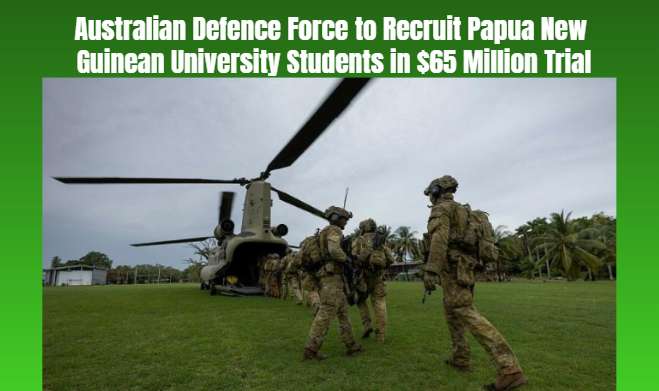
The Australian Defence Force (ADF) is preparing to recruit young Papua New Guineans under a new $65 million trial program, marking an important development in the defence relationship between Australia and its northern neighbour. The announcement was made on Tuesday, 20 October 2026, during a high-level meeting between Australian and Papua New Guinean ministers in Port Moresby.
Under the two-year pilot program, applications are expected to open on 16 November 2026. The initial intake will aim to recruit approximately 100 Papua New Guineans, with the first successful applicants expected to be sworn into the Australian military by late 2027.
The scheme will initially target students and recent graduates from two institutions: the University of Papua New Guinea in Port Moresby and Pacific Adventist University in the region. Applicants must be between 18 and 25 years old and must not have previously served in Papua New Guinea's military, police force or other government security institutions.
Candidates will be required to meet Australian Defence Force recruitment standards, including security and suitability requirements. Participation in the program will not guarantee acceptance, as applicants must pass the relevant assessments.
Successful recruits will initially serve in Australia on temporary visas. To continue serving in the ADF, they will eventually need to obtain Australian citizenship, according to the announced recruitment arrangements.
The initiative comes as Australia continues efforts to strengthen its military workforce. Recruitment shortages have been a concern for the ADF, although enlistment numbers have improved in recent years. Defence officials say starting with a relatively small group will allow the program to be tested before any expansion is considered.
Australian Deputy Prime Minister and Defence Minister Richard Marles said the pilot would establish the processes needed to ensure the program was sustainable and beneficial to both countries. The government has allocated $65 million to support the trial and its initial implementation.
For Papua New Guinean students, the opportunity could provide military training, employment and a potential pathway towards a long-term career in Australia. Moria Digori, a fourth-year political science student at the University of Papua New Guinea, told ABC News that she was interested in applying. She identified financial stability and improved living standards as potential attractions for young applicants.
The recruitment plan is connected to the Pukpuk Treaty, a landmark defence agreement between Australia and Papua New Guinea that entered into force in July 2026. The treaty enables both countries to recruit each other's citizens into their respective armed forces and includes a mutual-defence commitment in the event of an armed attack.
The agreement reflects the countries' shared strategic interests in the Pacific region. Both governments have emphasised the importance of closer defence cooperation, regional stability and improved coordination between their military forces.
Papua New Guinea has also been discussing the possibility of a much larger recruitment pathway in the future. However, the current pilot is deliberately limited in scale, and any expansion will depend on how the initial program operates.
The announcement may create new opportunities for eligible young people while also raising practical questions about training, relocation, citizenship and long-term military service. Applicants will need to understand the obligations associated with joining a foreign military, including the requirement to meet Australian standards and continue qualifying for service.
The next major milestone will be the opening of applications in November. The results of the first recruitment round will help determine whether the program can expand and whether it becomes a lasting part of Australia's military recruitment strategy.
WillPapuaDefenceMilitaryProgram
The Australian Defence Force (ADF) is preparing to recruit young Papua New Guineans under a new $65 million trial program, marking an important development in the defence relationship between Australia and its northern neighbour. The announcement was made on Tuesday, 20 October 2026, during a high-level meeting between Australian and Papua New Guinean ministers in Port Moresby.
Under the two-year pilot program, applications are expected to open on 16 November 2026. The initial intake will aim to recruit approximately 100 Papua New Guineans, with the first successful applicants expected to be sworn into the Australian military by late 2027.
The scheme will initially target students and recent graduates from two institutions: the University of Papua New Guinea in Port Moresby and Pacific Adventist University in the region. Applicants must be between 18 and 25 years old and must not have previously served in Papua New Guinea's military, police force or other government security institutions.
Candidates will be required to meet Australian Defence Force recruitment standards, including security and suitability requirements. Participation in the program will not guarantee acceptance, as applicants must pass the relevant assessments.
Successful recruits will initially serve in Australia on temporary visas. To continue serving in the ADF, they will eventually need to obtain Australian citizenship, according to the announced recruitment arrangements.
The initiative comes as Australia continues efforts to strengthen its military workforce. Recruitment shortages have been a concern for the ADF, although enlistment numbers have improved in recent years. Defence officials say starting with a relatively small group will allow the program to be tested before any expansion is considered.
Australian Deputy Prime Minister and Defence Minister Richard Marles said the pilot would establish the processes needed to ensure the program was sustainable and beneficial to both countries. The government has allocated $65 million to support the trial and its initial implementation.
For Papua New Guinean students, the opportunity could provide military training, employment and a potential pathway towards a long-term career in Australia. Moria Digori, a fourth-year political science student at the University of Papua New Guinea, told ABC News that she was interested in applying. She identified financial stability and improved living standards as potential attractions for young applicants.
The recruitment plan is connected to the Pukpuk Treaty, a landmark defence agreement between Australia and Papua New Guinea that entered into force in July 2026. The treaty enables both countries to recruit each other's citizens into their respective armed forces and includes a mutual-defence commitment in the event of an armed attack.
The agreement reflects the countries' shared strategic interests in the Pacific region. Both governments have emphasised the importance of closer defence cooperation, regional stability and improved coordination between their military forces.
Papua New Guinea has also been discussing the possibility of a much larger recruitment pathway in the future. However, the current pilot is deliberately limited in scale, and any expansion will depend on how the initial program operates.
The announcement may create new opportunities for eligible young people while also raising practical questions about training, relocation, citizenship and long-term military service. Applicants will need to understand the obligations associated with joining a foreign military, including the requirement to meet Australian standards and continue qualifying for service.
The next major milestone will be the opening of applications in November. The results of the first recruitment round will help determine whether the program can expand and whether it becomes a lasting part of Australia's military recruitment strategy.
Victoria's teaching regulator has carried out unannounced inspections at two Fitzroy Community School campuses as investigations into child-safety conce...
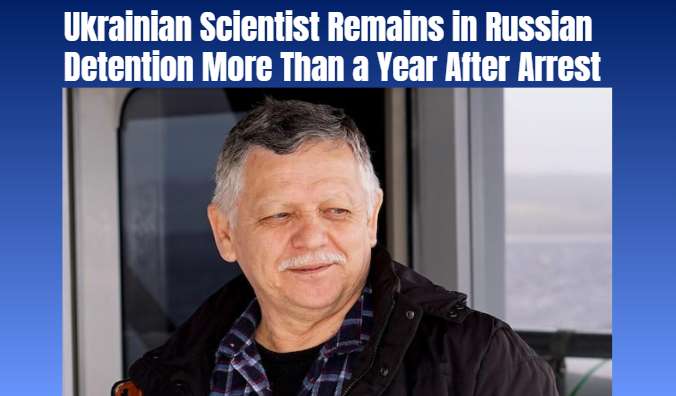
Ukraine has urged an international Antarctic conservation commission to press for the immediate release of scientist Leonid Pshenichnov, whose health is...
NSW Police are seeking public assistance to locate Kynan Benson, who was last seen in Vineyard on 15 October. Authorities say his welfare is a concern b...
Robert Pether has been allowed to leave Iraq after years of imprisonment and travel restrictions, clearing the way for him to reunite with his family in...
A 79-year-old woman from Busselton is recovering in a Bali hospital after falling down a restaurant stairwell, with her family facing substantial medica...
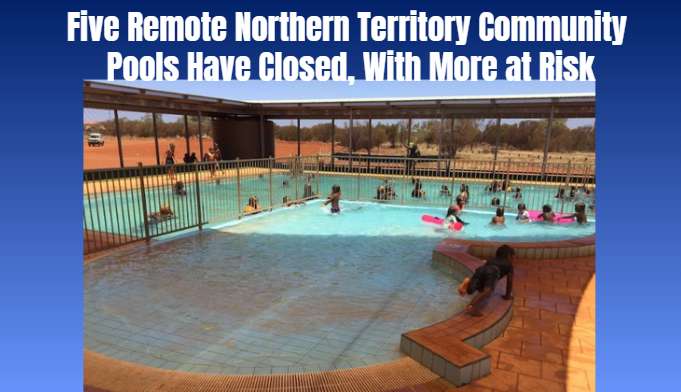
A new report warns that ageing facilities, staff shortages and fragmented funding threaten swimming pools that provide essential recreation and water-sa...
A Victorian coroner has criticised betting company Sportsbet after examining the case of a young man who wagered hundreds of thousands of dollars before...
A 79-year-old woman from Busselton is recovering in a Bali hospital after falling down a restaurant stairwell, with her family facing substantial medica...
A fresh protest has erupted in western Victoria over plans to duplicate a major highway, with Djab Wurrung people and supporters opposing the removal of...
A New South Wales parliamentary inquiry has recommended stopping two proposed waste-to-energy projects near Parkes and Goulburn, citing community opposi...
Six football clubs in Whyalla, South Australia, are facing an uncertain future as expected steelworks job losses threaten player numbers, club finances...