Ukrainian Scientist Remains in Russian Detention More Than a Year After Arrest
By Chloe · Published 19 Oct 2026 · Updated 19 Oct 2026
Hobart, TAS · Tasmania News
Safety note: Admin approval is an initial review, not a guarantee that every detail is correct. Check important or urgent claims with official sources and report anything inaccurate or unsafe.
Source and credit: Contributor's own report
Ukrainian Scientist Remains in Russian Detention More Than a Year After Arrest - Hobart, TAS
Smart summary
Ukraine has urged an international Antarctic conservation commission to press for the immediate release of scientist Leonid Pshenichnov, whose health is reportedly a serious concern
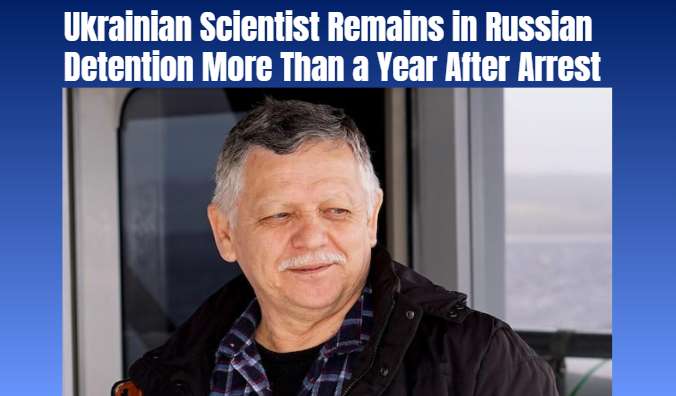
A Ukrainian scientist has remained in Russian detention for more than a year, prompting renewed calls for his release at an international conservation meeting in Hobart, Tasmania.
Leonid Pshenichnov was detained in Russian-controlled Crimea in September 2025, shortly before an annual meeting of the Commission for the Conservation of Antarctic Marine Living Resources (CCAMLR). Ukraine's ambassador to Australia, Vasyl Myroshnychenko, raised the case again at the commission's meeting on Monday, 19 October 2026.
Pshenichnov, 71, has represented Ukraine at the commission since 1996. The organisation works on conserving marine life in the Southern Ocean, including managing fishing activities and protecting Antarctic ecosystems.
Russian authorities reportedly accused Pshenichnov of treason, alleging that his research supported conservation measures that could affect Russian krill fishing operations. An arrest document reviewed by the ABC also reportedly linked the measures to restrictions on the exploitation of oil resources in Antarctica, where mineral resource activities are prohibited under the Antarctic Treaty framework. These are reported allegations, not independently established findings.
Speaking at the meeting in Hobart, Ukraine's ambassador said there were serious concerns about the scientist's health and called on commission members to support his immediate and unconditional release. Ukraine argues that the case criminalises scientific work undertaken as part of its official participation in an international conservation process.
The case has raised wider concerns about the risks researchers may face when scientific work intersects with geopolitical disputes. International scientific bodies often depend on cooperation between countries, even when those countries have serious political disagreements. The detention has therefore become an issue extending beyond the individual scientist to questions about scientific independence, international cooperation and the treatment of researchers.
Australia expressed grave concern about Pshenichnov's arrest at the commission's meeting in 2025. The ABC reported that it had contacted the Russian Embassy for comment.
As the annual meeting continues, Ukraine is seeking support from participating countries to secure Pshenichnov's release. The outcome of those discussions, and any response from Russian authorities, remain uncertain.
MeetingRussianCommissionPshenichnovUkraine
A Ukrainian scientist has remained in Russian detention for more than a year, prompting renewed calls for his release at an international conservation meeting in Hobart, Tasmania.
Leonid Pshenichnov was detained in Russian-controlled Crimea in September 2025, shortly before an annual meeting of the Commission for the Conservation of Antarctic Marine Living Resources (CCAMLR). Ukraine's ambassador to Australia, Vasyl Myroshnychenko, raised the case again at the commission's meeting on Monday, 19 October 2026.
Pshenichnov, 71, has represented Ukraine at the commission since 1996. The organisation works on conserving marine life in the Southern Ocean, including managing fishing activities and protecting Antarctic ecosystems.
Russian authorities reportedly accused Pshenichnov of treason, alleging that his research supported conservation measures that could affect Russian krill fishing operations. An arrest document reviewed by the ABC also reportedly linked the measures to restrictions on the exploitation of oil resources in Antarctica, where mineral resource activities are prohibited under the Antarctic Treaty framework. These are reported allegations, not independently established findings.
Speaking at the meeting in Hobart, Ukraine's ambassador said there were serious concerns about the scientist's health and called on commission members to support his immediate and unconditional release. Ukraine argues that the case criminalises scientific work undertaken as part of its official participation in an international conservation process.
The case has raised wider concerns about the risks researchers may face when scientific work intersects with geopolitical disputes. International scientific bodies often depend on cooperation between countries, even when those countries have serious political disagreements. The detention has therefore become an issue extending beyond the individual scientist to questions about scientific independence, international cooperation and the treatment of researchers.
Australia expressed grave concern about Pshenichnov's arrest at the commission's meeting in 2025. The ABC reported that it had contacted the Russian Embassy for comment.
As the annual meeting continues, Ukraine is seeking support from participating countries to secure Pshenichnov's release. The outcome of those discussions, and any response from Russian authorities, remain uncertain.
NSW Police are seeking public assistance to locate Kynan Benson, who was last seen in Vineyard on 15 October. Authorities say his welfare is a concern b...
Robert Pether has been allowed to leave Iraq after years of imprisonment and travel restrictions, clearing the way for him to reunite with his family in...
Social media, outdoor activities and a generation of young anglers are helping make recreational fishing popular again, but the industry is concerned ab...
Thirteen freshwater turtles rescued after a north-west New South Wales wetland dried out have been returned to their habitat. More than 250 eggs are als...
A Tasmanian local-government conduct panel found that long-serving Glenorchy councillor Peter Ridler breached the council’s code of conduct through inap...
Two people were seriously injured when a four-wheel-drive vehicle crashed through the front of a café in Shearwater, near Devonport. Police are investig...
A Royal Hobart Hospital nurse says she was left shaken after a group of young men chased and yelled at her as she walked to her car after a late shift....
A 44-year-old man has been charged after windows and doors were allegedly smashed at Tasmania’s Parliament House and a major Hobart entertainment venue.
St Kilda player Charlie Banfield was involved in an accident on private property in Western Australia earlier this month, when a car he was driving acci...
New South Wales health authorities have warned about the risks of unapproved peptide products after monthly emergency department presentations linked to...
Queensland police are investigating the death of a 48-year-old man whose body was found in bushland near the location where two dogs seriously injured a...
Australian Greens leader David Shoebridge says Senator Jordon Steele-John should take personal leave while an independent investigation examines allegat...