Amelia Earhart Mystery: Suspected Plane Wreckage Turns Out to Be Trees
By Chloe · Published 20 Oct 2026 · Updated 20 Oct 2026
National, ACT
Safety note: Admin approval is an initial review, not a guarantee that every detail is correct. Check important or urgent claims with official sources and report anything inaccurate or unsafe.
Source and credit: Contributor's own report
Amelia Earhart Mystery: Suspected Plane Wreckage Turns Out to Be Trees - National, ACT
Smart summary
An expedition searching for clues to Amelia Earhart’s disappearance has identified a suspected aircraft wreckage site as a clump of trees instead.
The mystery surrounding American aviator Amelia Earhart remains one of the most famous unsolved stories in aviation history. A recent expedition hoped to find evidence that could help explain what happened to Earhart and her navigator, Fred Noonan, when they disappeared during an attempted round-the-world flight in 1937.
According to an ABC News report published on 20 October 2026, researchers investigating what they suspected might be aircraft wreckage concluded that the apparent remains were actually a clump of trees. Although the expedition did not produce the discovery its team had hoped for, researchers said the mission was still worthwhile.
Earhart was already an internationally recognised aviation pioneer before her disappearance. She became the first woman to fly solo across the Atlantic Ocean in 1932 and inspired generations of women to pursue careers in aviation and other fields traditionally dominated by men.
In July 1937, Earhart and Noonan were attempting to complete a flight around the world. Their aircraft, a Lockheed Electra, disappeared during the journey while they were trying to reach Howland Island in the Pacific Ocean. Despite extensive searches, neither the aircraft nor the two aviators was conclusively located.
Over the decades, investigators, historians and independent researchers have proposed several explanations. One possibility is that the aircraft ran out of fuel and crashed into the ocean. Other theories suggest the pair may have landed on a remote island. However, no explanation has been conclusively established.
Modern expeditions use satellite imagery, aerial surveys, underwater equipment and other technologies to investigate possible locations. Even with these advances, identifying aircraft remains in remote areas is extremely difficult. Natural formations can resemble metal wreckage when viewed from a distance or through satellite images.
The latest expedition illustrates this challenge. A location that initially appeared promising did not withstand closer examination. Such false leads are not unusual in historical investigations, particularly when researchers are searching across vast and difficult-to-access areas.
Although the discovery did not solve the mystery, unsuccessful searches can still help researchers refine their methods, eliminate unlikely locations and better understand the limits of the available evidence.
Earhart’s disappearance continues to attract worldwide interest because of her historic achievements and the unanswered questions surrounding her final flight. Any future claim of a breakthrough will need to be supported by verifiable evidence, such as identifiable aircraft components, serial numbers or other material that can be independently examined.
For now, the expedition has not resolved what happened to Earhart and Noonan. Their fate remains uncertain, and the search for reliable evidence continues.
EarhartAircraftResearchersEvidenceExpedition
The mystery surrounding American aviator Amelia Earhart remains one of the most famous unsolved stories in aviation history. A recent expedition hoped to find evidence that could help explain what happened to Earhart and her navigator, Fred Noonan, when they disappeared during an attempted round-the-world flight in 1937.
According to an ABC News report published on 20 October 2026, researchers investigating what they suspected might be aircraft wreckage concluded that the apparent remains were actually a clump of trees. Although the expedition did not produce the discovery its team had hoped for, researchers said the mission was still worthwhile.
Earhart was already an internationally recognised aviation pioneer before her disappearance. She became the first woman to fly solo across the Atlantic Ocean in 1932 and inspired generations of women to pursue careers in aviation and other fields traditionally dominated by men.
In July 1937, Earhart and Noonan were attempting to complete a flight around the world. Their aircraft, a Lockheed Electra, disappeared during the journey while they were trying to reach Howland Island in the Pacific Ocean. Despite extensive searches, neither the aircraft nor the two aviators was conclusively located.
Over the decades, investigators, historians and independent researchers have proposed several explanations. One possibility is that the aircraft ran out of fuel and crashed into the ocean. Other theories suggest the pair may have landed on a remote island. However, no explanation has been conclusively established.
Modern expeditions use satellite imagery, aerial surveys, underwater equipment and other technologies to investigate possible locations. Even with these advances, identifying aircraft remains in remote areas is extremely difficult. Natural formations can resemble metal wreckage when viewed from a distance or through satellite images.
The latest expedition illustrates this challenge. A location that initially appeared promising did not withstand closer examination. Such false leads are not unusual in historical investigations, particularly when researchers are searching across vast and difficult-to-access areas.
Although the discovery did not solve the mystery, unsuccessful searches can still help researchers refine their methods, eliminate unlikely locations and better understand the limits of the available evidence.
Earhart’s disappearance continues to attract worldwide interest because of her historic achievements and the unanswered questions surrounding her final flight. Any future claim of a breakthrough will need to be supported by verifiable evidence, such as identifiable aircraft components, serial numbers or other material that can be independently examined.
For now, the expedition has not resolved what happened to Earhart and Noonan. Their fate remains uncertain, and the search for reliable evidence continues.
Adelaide is facing the loss of Oz Asia, one of Australia's leading Asian arts festivals, raising questions about the future of major cultural events and...
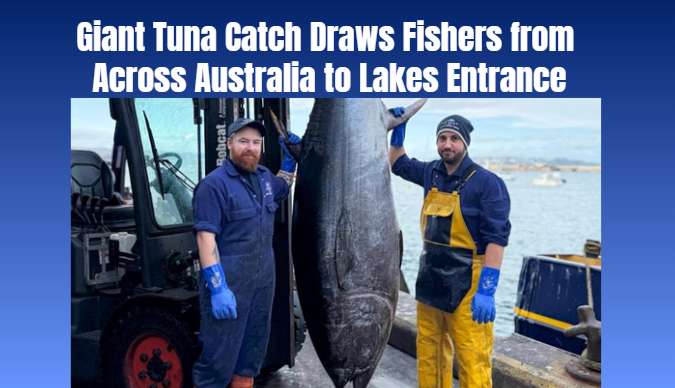
A 231-kilogram tuna caught by a five-person fishing team has helped turn Lakes Entrance into a major fishing destination, attracting anglers from across...
A new Australian Human Rights Commission report calls for stronger workplace protections after workers reported losing jobs, shifts and promotion opport...
A Victorian coroner has criticised betting company Sportsbet after examining the case of a young man who wagered hundreds of thousands of dollars before...
A driver has died after a car collided with a bus and both vehicles caught fire on Phillip Island, south-east of Melbourne. Police say the car crossed o...
A 231-kilogram tuna caught by a five-person fishing team has helped turn Lakes Entrance into a major fishing destination, attracting anglers from across...
St Kilda player Charlie Banfield was involved in an accident on private property in Western Australia earlier this month, when a car he was driving acci...
A Victorian coroner has criticised betting company Sportsbet after examining the case of a young man who wagered hundreds of thousands of dollars before...
Victoria's teaching regulator has carried out unannounced inspections at two Fitzroy Community School campuses as investigations into child-safety conce...