Giant Tuna Catch Draws Fishers from Across Australia to Lakes Entrance
By Chloe · Published 20 Oct 2026 · Updated 20 Oct 2026
Lakes, VIC
Safety note: Admin approval is an initial review, not a guarantee that every detail is correct. Check important or urgent claims with official sources and report anything inaccurate or unsafe.
Source and credit: Contributor's own report
Giant Tuna Catch Draws Fishers from Across Australia to Lakes Entrance - Lakes, VIC
Smart summary
A 231-kilogram tuna caught by a five-person fishing team has helped turn Lakes Entrance into a major fishing destination, attracting anglers from across Australia and boosting local tourism. Scientists are investigati...
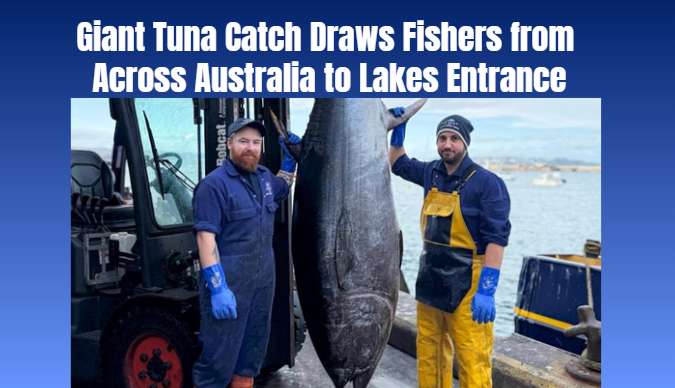
A remarkable run of giant tuna catches off the coast of Lakes Entrance in eastern Victoria has attracted fishing enthusiasts from across Australia, bringing renewed attention to the coastal town and providing a boost to local tourism. The story gained national attention after a five-person group known as the A Team landed a tuna weighing 231 kilograms on Sunday, 18 October 2026. The Gippsland Lakes Fishing Club described the catch as a club record.
Lakes Entrance is located approximately 300 kilometres from Melbourne and is well known for its waterways, fishing opportunities and coastal attractions. In recent weeks, anglers fishing offshore have reported catching exceptionally large tuna, with individual fish weighing between approximately 140 and 231 kilograms.
Local charter fishing operator Ricky Grech was among the early anglers to catch one of the large fish. He landed a 154-kilogram tuna while fishing with his 10-year-old son, Oliver, last month. Other anglers subsequently reported catches weighing 190 kilograms or more. Belinda Brogna also caught a tuna weighing 204 kilograms, while Tristan Rodgers landed a 217-kilogram fish.
The extraordinary catches have created a surge of interest in the town. Visitors have travelled from Sydney, Queensland, Adelaide and Western Australia in the hope of catching one of the giant fish themselves. Local businesses have reported increased interest in accommodation, restaurants, fishing equipment and charter trips.
Grech described the activity as unusual for the region, with more than 150 boats reportedly out on the water at one point. Boat trailers filled local parking areas, and accommodation providers and fishing shops received additional enquiries. For a regional community that relies partly on tourism, the influx of visitors offers an opportunity to support local businesses and attract new visitors.
However, the identity of the giant tuna remains an important scientific question. Earlier in October, the CSIRO confirmed that two tuna caught off Western Port Bay in July were Pacific bluefin tuna. These were the first fish of that species to be genetically confirmed in Victorian waters. Researchers are now investigating whether the tuna being caught near Lakes Entrance belong to the same species.
Scientists are examining genetic samples and otoliths, which are small structures in fish ears that can help researchers determine a fish's age. Recreational anglers and charter operators are assisting by sharing information and providing samples. Although the fish reportedly have anatomical features consistent with Pacific bluefin tuna, their identity has not yet been genetically confirmed.
Researchers say information supplied by people who regularly fish in local waters can be valuable in understanding unusual marine sightings and changes in fish distribution. Why such large numbers of giant tuna have appeared near Lakes Entrance remains uncertain.
The fishing activity has also raised the profile of Victoria's eastern coastline as a destination for recreational fishing. Charter operators, accommodation providers and hospitality businesses may benefit if the attention encourages visitors to explore the area beyond the current fishing season.
For now, the giant tuna catches remain both a fishing spectacle and a scientific mystery. Further genetic testing should help determine which species are responsible for the unusual catches and improve understanding of their presence in Victorian waters.
TunaFishingFishGiantLakes
A remarkable run of giant tuna catches off the coast of Lakes Entrance in eastern Victoria has attracted fishing enthusiasts from across Australia, bringing renewed attention to the coastal town and providing a boost to local tourism. The story gained national attention after a five-person group known as the A Team landed a tuna weighing 231 kilograms on Sunday, 18 October 2026. The Gippsland Lakes Fishing Club described the catch as a club record.
Lakes Entrance is located approximately 300 kilometres from Melbourne and is well known for its waterways, fishing opportunities and coastal attractions. In recent weeks, anglers fishing offshore have reported catching exceptionally large tuna, with individual fish weighing between approximately 140 and 231 kilograms.
Local charter fishing operator Ricky Grech was among the early anglers to catch one of the large fish. He landed a 154-kilogram tuna while fishing with his 10-year-old son, Oliver, last month. Other anglers subsequently reported catches weighing 190 kilograms or more. Belinda Brogna also caught a tuna weighing 204 kilograms, while Tristan Rodgers landed a 217-kilogram fish.
The extraordinary catches have created a surge of interest in the town. Visitors have travelled from Sydney, Queensland, Adelaide and Western Australia in the hope of catching one of the giant fish themselves. Local businesses have reported increased interest in accommodation, restaurants, fishing equipment and charter trips.
Grech described the activity as unusual for the region, with more than 150 boats reportedly out on the water at one point. Boat trailers filled local parking areas, and accommodation providers and fishing shops received additional enquiries. For a regional community that relies partly on tourism, the influx of visitors offers an opportunity to support local businesses and attract new visitors.
However, the identity of the giant tuna remains an important scientific question. Earlier in October, the CSIRO confirmed that two tuna caught off Western Port Bay in July were Pacific bluefin tuna. These were the first fish of that species to be genetically confirmed in Victorian waters. Researchers are now investigating whether the tuna being caught near Lakes Entrance belong to the same species.
Scientists are examining genetic samples and otoliths, which are small structures in fish ears that can help researchers determine a fish's age. Recreational anglers and charter operators are assisting by sharing information and providing samples. Although the fish reportedly have anatomical features consistent with Pacific bluefin tuna, their identity has not yet been genetically confirmed.
Researchers say information supplied by people who regularly fish in local waters can be valuable in understanding unusual marine sightings and changes in fish distribution. Why such large numbers of giant tuna have appeared near Lakes Entrance remains uncertain.
The fishing activity has also raised the profile of Victoria's eastern coastline as a destination for recreational fishing. Charter operators, accommodation providers and hospitality businesses may benefit if the attention encourages visitors to explore the area beyond the current fishing season.
For now, the giant tuna catches remain both a fishing spectacle and a scientific mystery. Further genetic testing should help determine which species are responsible for the unusual catches and improve understanding of their presence in Victorian waters.
Adelaide is facing the loss of Oz Asia, one of Australia's leading Asian arts festivals, raising questions about the future of major cultural events and...
A new Australian Human Rights Commission report calls for stronger workplace protections after workers reported losing jobs, shifts and promotion opport...
Four Melbourne councils and Melbourne Water have joined forces to improve the Yarra River's water quality, with a long-term goal of making parts of the...
St Kilda player Charlie Banfield was involved in an accident on private property in Western Australia earlier this month, when a car he was driving acci...
New South Wales health authorities have warned about the risks of unapproved peptide products after monthly emergency department presentations linked to...
Hundreds of residents have gathered as a developer challenges the rejection of a proposed plastics recycling factory, with local families describing yea...
A remote Western Australian station is looking for positives after Cyclone Narelle brought damaging weather, highlighting the resilience of regional com...
Adelaide is facing the loss of Oz Asia, one of Australia's leading Asian arts festivals, raising questions about the future of major cultural events and...
A 40-year-old cyclist has died after being struck by an unidentified vehicle on North Lake Road in Bibra Lake early Tuesday morning. The driver failed t...
A new Australian Human Rights Commission report calls for stronger workplace protections after workers reported losing jobs, shifts and promotion opport...
National Australia Bank announces plans to reduce its workforce by approximately 2,500 positions by mid-2027, citing rising competition, operating costs...