By Chloe · Published 19 Oct 2026 · Updated 19 Oct 2026
Bullara Station, WA
Safety note: Admin approval is an initial review, not a guarantee that every detail is correct. Check important or urgent claims with official sources and report anything inaccurate or unsafe.
Source and credit: Contributor's own report
Bullara Station Finds Hope After Cyclone Narelle - Bullara Station, WA
Smart summary
A remote Western Australian station is looking for positives after Cyclone Narelle brought damaging weather, highlighting the resilience of regional communities recovering from severe storms.
Bullara Station, an outback cattle property and popular tourist destination in Western Australia’s Pilbara region, has finished its latest tourist season on a positive note, seven months after Tropical Cyclone Narelle caused extensive damage across the property. The station’s recovery has become an example of how regional businesses can rebuild after extreme weather.
Located near the Exmouth Gulf, about 1,200 kilometres north of Perth, Bullara Station was hit by destructive winds and widespread flooding when Cyclone Narelle crossed the region in March 2026. The storm caused severe damage to buildings and infrastructure, leaving the owners facing the difficult task of restoring the property while caring for their livestock and preparing to welcome visitors again.
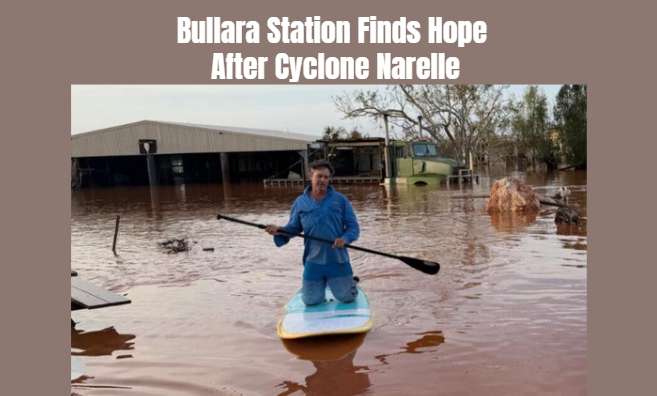
Station owner Edwina Shallcross said the initial excitement about receiving rain quickly turned into concern as the scale of the flooding became apparent. More than two metres of floodwater covered parts of the station’s 100,000-hectare property. Infrastructure was inundated, and the station lost access to clean water and electricity for weeks.
The damage created significant financial and emotional pressure for the family and their workers. The owners had experienced cyclones before, but Ms Shallcross described this event as unprecedented in its impact on the property.
Despite the destruction, the team worked to reopen the station to tourists just weeks after the cyclone. Their efforts allowed the business to continue operating and helped preserve an important part of the local tourism economy. Bullara Station attracts visitors interested in outback landscapes, camping and experiencing life on a working cattle property.
The recovery was not limited to repairing buildings and facilities. The station’s livestock also faced the dangerous conditions brought by the cyclone and flooding. Images shared during the storm showed cattle moving through deep water as animals searched for shelter and higher ground.
In the months following the disaster, the owners gradually assessed the condition of the herd and the surrounding land. When the final cattle were transported out of the property in October, Ms Shallcross said she was encouraged by the animals’ condition. She described the Droughtmaster cattle as healthy and said the improved feed growing across the property was a welcome sign of recovery.
The return of vegetation across the rangelands has offered another positive development. Although the cyclone caused significant destruction, the rainfall has helped regenerate parts of the landscape. The contrast between the flooded property in March and the greener land seen later in the year demonstrates the complicated effects severe weather can have on farming and pastoral businesses.
As the tourist season came to an end, the owners were able to reflect on the work undertaken by their team. Ms Shallcross expressed gratitude for the staff who remained committed to the business during the recovery. Their efforts helped the station reopen and welcome tourists while longer-term restoration continued.
The experience also highlights the vulnerability of remote businesses to extreme weather. Damage to infrastructure can disrupt accommodation, tourism, livestock operations and access to essential services. Recovery can require months of physical work and substantial financial investment, particularly when properties cover large areas far from major towns.
For Bullara Station, the end of the tourist season represents a milestone after a difficult year. The property has not escaped the consequences of Cyclone Narelle, but the returning greenery, healthy cattle and successful visitor season have given its owners reasons to be optimistic.
The owners are now looking forward to a period of rest after months of rebuilding. Their experience serves as a reminder of the resilience required to operate a regional business in a climate where severe storms and flooding can rapidly change the landscape.
StationPropertyCycloneCattleOwners
Bullara Station, an outback cattle property and popular tourist destination in Western Australia’s Pilbara region, has finished its latest tourist season on a positive note, seven months after Tropical Cyclone Narelle caused extensive damage across the property. The station’s recovery has become an example of how regional businesses can rebuild after extreme weather.
Located near the Exmouth Gulf, about 1,200 kilometres north of Perth, Bullara Station was hit by destructive winds and widespread flooding when Cyclone Narelle crossed the region in March 2026. The storm caused severe damage to buildings and infrastructure, leaving the owners facing the difficult task of restoring the property while caring for their livestock and preparing to welcome visitors again.
Station owner Edwina Shallcross said the initial excitement about receiving rain quickly turned into concern as the scale of the flooding became apparent. More than two metres of floodwater covered parts of the station’s 100,000-hectare property. Infrastructure was inundated, and the station lost access to clean water and electricity for weeks.
The damage created significant financial and emotional pressure for the family and their workers. The owners had experienced cyclones before, but Ms Shallcross described this event as unprecedented in its impact on the property.
Despite the destruction, the team worked to reopen the station to tourists just weeks after the cyclone. Their efforts allowed the business to continue operating and helped preserve an important part of the local tourism economy. Bullara Station attracts visitors interested in outback landscapes, camping and experiencing life on a working cattle property.
The recovery was not limited to repairing buildings and facilities. The station’s livestock also faced the dangerous conditions brought by the cyclone and flooding. Images shared during the storm showed cattle moving through deep water as animals searched for shelter and higher ground.
In the months following the disaster, the owners gradually assessed the condition of the herd and the surrounding land. When the final cattle were transported out of the property in October, Ms Shallcross said she was encouraged by the animals’ condition. She described the Droughtmaster cattle as healthy and said the improved feed growing across the property was a welcome sign of recovery.
The return of vegetation across the rangelands has offered another positive development. Although the cyclone caused significant destruction, the rainfall has helped regenerate parts of the landscape. The contrast between the flooded property in March and the greener land seen later in the year demonstrates the complicated effects severe weather can have on farming and pastoral businesses.
As the tourist season came to an end, the owners were able to reflect on the work undertaken by their team. Ms Shallcross expressed gratitude for the staff who remained committed to the business during the recovery. Their efforts helped the station reopen and welcome tourists while longer-term restoration continued.
The experience also highlights the vulnerability of remote businesses to extreme weather. Damage to infrastructure can disrupt accommodation, tourism, livestock operations and access to essential services. Recovery can require months of physical work and substantial financial investment, particularly when properties cover large areas far from major towns.
For Bullara Station, the end of the tourist season represents a milestone after a difficult year. The property has not escaped the consequences of Cyclone Narelle, but the returning greenery, healthy cattle and successful visitor season have given its owners reasons to be optimistic.
The owners are now looking forward to a period of rest after months of rebuilding. Their experience serves as a reminder of the resilience required to operate a regional business in a climate where severe storms and flooding can rapidly change the landscape.
Northern Territory authorities are urging residents to prepare early for another potentially severe wet season, with cyclones, flooding and dangerous st...
South East Queensland faces a prolonged period of heavy rainfall, with Brisbane, the Gold Coast and the Sunshine Coast warned of potentially significant...
Emergency financial assistance has been announced for eligible Alice Springs residents who remain without electricity following destructive storms that...
Hundreds of residents have gathered as a developer challenges the rejection of a proposed plastics recycling factory, with local families describing yea...
An Australian activist detained in Vietnam has reportedly told his family that he is frightened, renewing concerns about his welfare and circumstances i...
Small-scale flower growers and local entrepreneurs in Western Australia's Kimberley region are stepping in to meet demand after the town's main florist...
Australian Greens leader David Shoebridge says Senator Jordon Steele-John should take personal leave while an independent investigation examines allegat...
Questions are growing over the collapse of the Whyalla steelworks, as the billionaire-backed company involved rejects responsibility for the facility’s...
Hundreds of residents have gathered as a developer challenges the rejection of a proposed plastics recycling factory, with local families describing yea...
A new guide developed with survivors and specialists aims to help doctors and other healthcare professionals recognise signs of modern slavery and conne...