Billionaire’s Company Rejects Blame for Whyalla Steelworks Failure
By Chloe · Published 19 Oct 2026 · Updated 19 Oct 2026
Whyalla, SA · South Australia News
Safety note: Admin approval is an initial review, not a guarantee that every detail is correct. Check important or urgent claims with official sources and report anything inaccurate or unsafe.
Source and credit: Contributor's own report
Billionaire’s Company Rejects Blame for Whyalla Steelworks Failure - Whyalla, SA
Smart summary
Questions are growing over the collapse of the Whyalla steelworks, as the billionaire-backed company involved rejects responsibility for the facility’s long-running decline.
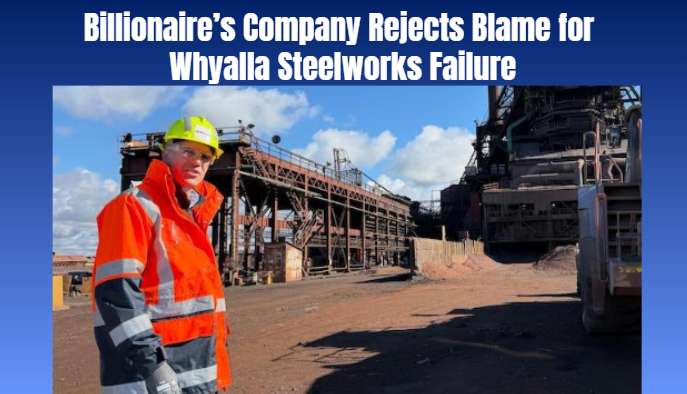
The future of the Whyalla steelworks remains a major concern for South Australia, following renewed debate over who should be held responsible for the facility’s prolonged decline. A report published by ABC News on 19 October 2026 highlighted the refusal of a company associated with billionaire interests to accept blame for the steelworks’ difficulties.
Australian Broadcasting Corporation
Whyalla’s steelworks have long been an important part of the city’s economy. The facility supports industrial employment, contributes to the regional supply chain and has helped shape the community’s identity for generations. Its performance also affects local contractors, transport businesses, suppliers and other companies that depend on steel production.
When a major industrial facility faces financial trouble, the consequences can extend far beyond its owners. Workers may worry about job security, small businesses can face uncertainty over contracts, and local governments must consider the economic effects of reduced industrial activity. For Whyalla, the steelworks’ future is therefore closely linked to the prosperity of the surrounding region.
The latest dispute centres on responsibility for the plant’s long-running problems. The company has rejected the suggestion that it should be blamed for the steelworks’ failure. Determining responsibility requires examining the history of the business, its financial position, investment decisions, operating costs and the circumstances that led to its difficulties.
Steel production is a capital-intensive industry. Facilities require expensive equipment, reliable energy supplies, ongoing maintenance and access to competitive markets. When these conditions become difficult to sustain, operators may struggle to maintain production and invest in modernisation. Changes in global steel prices and competition can add further pressure.
For Whyalla, the challenge is not simply keeping the plant operating in the short term. Any long-term solution must also consider whether the facility can produce steel competitively, attract investment and provide stable employment. A sustainable future would require a clear operating strategy and confidence among workers, suppliers and potential investors.
The South Australian government and other stakeholders face difficult decisions when a major industrial employer becomes financially distressed. Government support can help protect jobs and preserve strategically important infrastructure, but public assistance also raises questions about cost, accountability and the conditions attached to funding.
Residents and workers need reliable information about the facility’s position, including what steps are being taken to protect employment and restore confidence in the business. Businesses connected to the steelworks also need clarity to make decisions about investment, staffing and future contracts.
The dispute over responsibility highlights the importance of transparency when major industrial companies experience serious financial difficulties. Understanding what happened is necessary for assessing whether earlier decisions contributed to the decline and what changes may be required to avoid similar problems in the future.
Whyalla’s industrial future remains important to South Australia’s economy. The central questions are whether the steelworks can operate sustainably, how workers and the community will be protected, and who will bear the financial and operational responsibilities for the next stage.
SteelworksFutureIndustrialWhyallaFacility
The future of the Whyalla steelworks remains a major concern for South Australia, following renewed debate over who should be held responsible for the facility’s prolonged decline. A report published by ABC News on 19 October 2026 highlighted the refusal of a company associated with billionaire interests to accept blame for the steelworks’ difficulties.
Australian Broadcasting Corporation
Whyalla’s steelworks have long been an important part of the city’s economy. The facility supports industrial employment, contributes to the regional supply chain and has helped shape the community’s identity for generations. Its performance also affects local contractors, transport businesses, suppliers and other companies that depend on steel production.
When a major industrial facility faces financial trouble, the consequences can extend far beyond its owners. Workers may worry about job security, small businesses can face uncertainty over contracts, and local governments must consider the economic effects of reduced industrial activity. For Whyalla, the steelworks’ future is therefore closely linked to the prosperity of the surrounding region.
The latest dispute centres on responsibility for the plant’s long-running problems. The company has rejected the suggestion that it should be blamed for the steelworks’ failure. Determining responsibility requires examining the history of the business, its financial position, investment decisions, operating costs and the circumstances that led to its difficulties.
Steel production is a capital-intensive industry. Facilities require expensive equipment, reliable energy supplies, ongoing maintenance and access to competitive markets. When these conditions become difficult to sustain, operators may struggle to maintain production and invest in modernisation. Changes in global steel prices and competition can add further pressure.
For Whyalla, the challenge is not simply keeping the plant operating in the short term. Any long-term solution must also consider whether the facility can produce steel competitively, attract investment and provide stable employment. A sustainable future would require a clear operating strategy and confidence among workers, suppliers and potential investors.
The South Australian government and other stakeholders face difficult decisions when a major industrial employer becomes financially distressed. Government support can help protect jobs and preserve strategically important infrastructure, but public assistance also raises questions about cost, accountability and the conditions attached to funding.
Residents and workers need reliable information about the facility’s position, including what steps are being taken to protect employment and restore confidence in the business. Businesses connected to the steelworks also need clarity to make decisions about investment, staffing and future contracts.
The dispute over responsibility highlights the importance of transparency when major industrial companies experience serious financial difficulties. Understanding what happened is necessary for assessing whether earlier decisions contributed to the decline and what changes may be required to avoid similar problems in the future.
Whyalla’s industrial future remains important to South Australia’s economy. The central questions are whether the steelworks can operate sustainably, how workers and the community will be protected, and who will bear the financial and operational responsibilities for the next stage.
Australia has designated an offshore geological formation near its northern coast for a major carbon capture and storage project proposed by Japanese en...
Australian motorists face continued pressure as insurance costs rise faster than inflation, prompting calls for fairer pricing and greater transparency.
Mining giant BHP confirms workforce reductions across several Pilbara operations, prompting calls from the Western Australian Government and unions to p...
A coffee-price tracker found that 17% of surveyed cafés increased prices after Australia’s credit card surcharge ban began, with average increases of 50...
South Australia Police have released CCTV footage in an effort to identify a man suspected of stealing a gold bracelet from a jewellery store in Salisbu...
A tribunal has upheld an indefinite ban on Adrian Fabio Mangini after findings concerning misleading health claims and inappropriate conduct towards vul...
A 22-year-old man was arrested on Grand Junction Road less than 30 minutes after police were notified that a detained patient had left a health facility...
South Australian police have continued forensic examinations at a Glen Osmond motel after an infant was found dead there. Two adults have been charged i...
New South Wales health authorities have warned about the risks of unapproved peptide products after monthly emergency department presentations linked to...
Queensland police are investigating the death of a 48-year-old man whose body was found in bushland near the location where two dogs seriously injured a...
Australian Greens leader David Shoebridge says Senator Jordon Steele-John should take personal leave while an independent investigation examines allegat...
Hundreds of residents have gathered as a developer challenges the rejection of a proposed plastics recycling factory, with local families describing yea...