Safety note: Admin approval is an initial review, not a guarantee that every detail is correct. Check important or urgent claims with official sources and report anything inaccurate or unsafe.
Source and credit: Contributor's own report
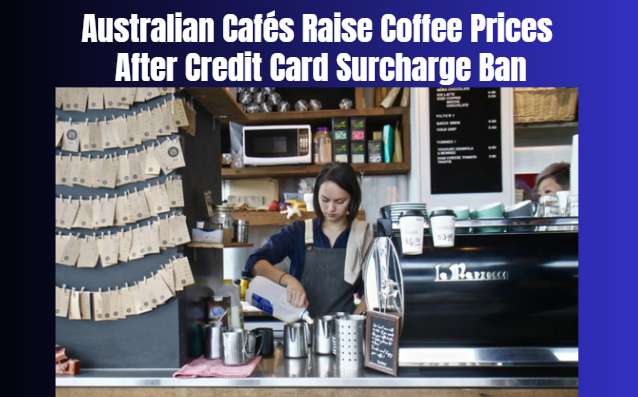
Australian Cafés Raise Coffee Prices After Credit Card Surcharge Ban - National, ACT
Smart summary
A coffee-price tracker found that 17% of surveyed cafés increased prices after Australia’s credit card surcharge ban began, with average increases of 50 cents among those that raised prices.
Australian consumers are facing questions about café pricing after new rules banning credit card surcharges took effect on 1 October 2026. Economists and consumer advocates say some businesses may be using the change as an opportunity to introduce price increases larger than the fees customers previously paid when using cards.
The surcharge ban was introduced following reforms led by the Reserve Bank of Australia, with the aim of making prices more transparent and reducing the additional costs customers face when paying electronically.
Before the change, businesses commonly applied a surcharge of about 1.5 per cent to card transactions. Under the new arrangements, customers should see the price they are expected to pay without a separate surcharge being added at checkout.
However, early data from Small Flat White, an online coffee-price tracker, suggests that some cafés have raised their advertised prices since the ban began. Its survey of more than 1,500 cafés found that 17 per cent had increased coffee prices. Among those businesses, the average increase was approximately 50 cents, or more than 10 per cent.
That increase is substantially greater than the typical 1.5 per cent card surcharge. Economists have suggested that broader business pressures, including inflation and resilient consumer demand, may help explain why some prices have risen by more than the former surcharge amount.
Café and restaurant operators also face higher costs for ingredients, rent, wages, equipment and financing. Industry representatives argue that many businesses have been absorbing these pressures for years and are now reviewing their prices.
The Australian Competition and Consumer Commission has warned businesses that they must not mislead customers by attributing an increase entirely to the surcharge ban when other factors have contributed to the change. Businesses also risk breaching consumer law if they attempt to circumvent the rules by relabelling a prohibited surcharge as another type of fee.
Consumer advocates say the central benefit of the reform is greater price transparency. Customers should be able to compare the advertised price of a product or service and understand what they will pay before reaching the checkout.
Nevertheless, the early figures do not prove that every café raising prices is doing so improperly. Businesses can legitimately change prices to reflect higher operating costs, provided they comply with consumer law and do not misrepresent the reasons for the increase.
For consumers, the practical advice is to check menu prices before ordering, compare nearby cafés and review the final amount charged. If a business appears to be applying a prohibited surcharge or making misleading claims about its pricing, customers can seek guidance from the relevant consumer-protection authority.
The effect of the new rules will become clearer as more pricing data becomes available. For now, the early figures show that the surcharge ban has not prevented some businesses from raising prices, although the reasons and effects differ from one café to another.
The broader debate is whether the reform will ultimately reduce payment costs for consumers or whether some businesses will absorb those costs through higher advertised prices.
PricesSurchargeBusinessesConsumerCustomers
Australian consumers are facing questions about café pricing after new rules banning credit card surcharges took effect on 1 October 2026. Economists and consumer advocates say some businesses may be using the change as an opportunity to introduce price increases larger than the fees customers previously paid when using cards.
The surcharge ban was introduced following reforms led by the Reserve Bank of Australia, with the aim of making prices more transparent and reducing the additional costs customers face when paying electronically.
Before the change, businesses commonly applied a surcharge of about 1.5 per cent to card transactions. Under the new arrangements, customers should see the price they are expected to pay without a separate surcharge being added at checkout.
However, early data from Small Flat White, an online coffee-price tracker, suggests that some cafés have raised their advertised prices since the ban began. Its survey of more than 1,500 cafés found that 17 per cent had increased coffee prices. Among those businesses, the average increase was approximately 50 cents, or more than 10 per cent.
That increase is substantially greater than the typical 1.5 per cent card surcharge. Economists have suggested that broader business pressures, including inflation and resilient consumer demand, may help explain why some prices have risen by more than the former surcharge amount.
Café and restaurant operators also face higher costs for ingredients, rent, wages, equipment and financing. Industry representatives argue that many businesses have been absorbing these pressures for years and are now reviewing their prices.
The Australian Competition and Consumer Commission has warned businesses that they must not mislead customers by attributing an increase entirely to the surcharge ban when other factors have contributed to the change. Businesses also risk breaching consumer law if they attempt to circumvent the rules by relabelling a prohibited surcharge as another type of fee.
Consumer advocates say the central benefit of the reform is greater price transparency. Customers should be able to compare the advertised price of a product or service and understand what they will pay before reaching the checkout.
Nevertheless, the early figures do not prove that every café raising prices is doing so improperly. Businesses can legitimately change prices to reflect higher operating costs, provided they comply with consumer law and do not misrepresent the reasons for the increase.
For consumers, the practical advice is to check menu prices before ordering, compare nearby cafés and review the final amount charged. If a business appears to be applying a prohibited surcharge or making misleading claims about its pricing, customers can seek guidance from the relevant consumer-protection authority.
The effect of the new rules will become clearer as more pricing data becomes available. For now, the early figures show that the surcharge ban has not prevented some businesses from raising prices, although the reasons and effects differ from one café to another.
The broader debate is whether the reform will ultimately reduce payment costs for consumers or whether some businesses will absorb those costs through higher advertised prices.
Australia’s competition regulator has launched Federal Court proceedings against 12 egg producers and suppliers, alleging they coordinated production an...
Tesla has proposed a $3.5 million charging facility in Thurgoona, near the Hume Highway, with space to charge 37 electric vehicles simultaneously. The p...
Tesla has applied to increase the number of fast-charging stalls in Kaniva, western Victoria, from 10 to 18. Local businesses say the charging station i...
Buru Energy has referred its proposed Rafael conventional gas project for environmental assessment, with supporters citing regional energy security and...
Prime Minister Anthony Albanese says Australia will explore options to prevent a planned US military execution livestream from appearing on Australian s...
Emergency doctors warn that hospitals are struggling to accommodate older patients, with longer waits for inpatient beds, overcrowding and gaps in aged...
A proposed Queensland law would exempt corrective services staff from having to consider prisoners’ human rights when making certain decisions. Supporte...
The Olympic medallist has been removed from Great Britain’s team for the 2026 UCI Track Cycling World Championships in Shanghai. Reports have linked the...
A landmark Queensland court judgment has awarded Mackay grandfather Robin Smith nearly $1.9 million after he developed asbestosis following workplace ex...
Prime Minister Anthony Albanese says Australia will explore options to prevent a planned US military execution livestream from appearing on Australian s...
MPs restrained a climate protester who climbed into the NSW Legislative Assembly chamber during question time to oppose a Hunter Valley coal mine expans...
A Western Australian police officer has been sentenced after pleading guilty to shaking his infant daughter at the family home in Perth. The court heard...