Australia Approves Offshore Site for Major Carbon Storage Project
By Neha · Published 16 Oct 2026 · Updated 16 Oct 2026
Offshore, NT
Safety note: Admin approval is an initial review, not a guarantee that every detail is correct. Check important or urgent claims with official sources and report anything inaccurate or unsafe.
Source and credit: Contributor's own report
Australia Approves Offshore Site for Major Carbon Storage Project - Offshore, NT
Smart summary
Australia has designated an offshore geological formation near its northern coast for a major carbon capture and storage project proposed by Japanese energy company Inpex. The project aims to store carbon dioxide deep...
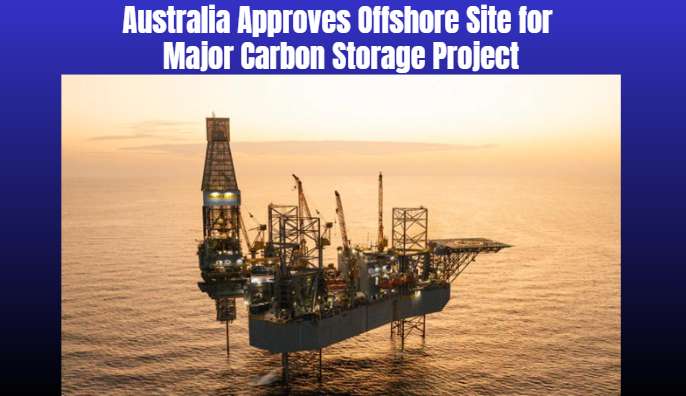
Australia has officially designated the West Peron undersea rock formation as the proposed storage site for the Bonaparte carbon capture and storage project, a major industrial initiative led by Japanese energy company Inpex. The project is designed to capture carbon dioxide and inject it into geological formations deep beneath the seabed. The selected formation is located offshore from Australia's northern coast and consists of porous rock capable of holding carbon dioxide underground.
The Bonaparte project is initially expected to receive carbon dioxide from Inpex's Ichthys liquefied natural gas project. The company proposes to expand the operation over time so that other industrial facilities can also use the storage service. The planned project has a potential storage capacity of up to eight million metric tonnes of carbon dioxide per year. Inpex has proposed permanently storing as much as 443 million tonnes over a period of up to 35 years. These figures describe the project's proposed capacity and long-term plans, rather than carbon dioxide already captured or stored.
Carbon capture and storage, commonly known as CCS, involves capturing carbon dioxide from industrial operations, transporting it to a suitable location and injecting it into underground geological formations. The objective is to prevent some of the gas from entering the atmosphere, where it contributes to global warming.
The technology is attracting attention because certain industries, including natural gas processing and other energy-intensive operations, can face significant challenges in reducing emissions through electrification or renewable energy alone. Supporters argue that geological storage could provide an additional emissions-management option for these sectors. Australia's Resources Minister Madeleine King said the designation demonstrated government support for technologies intended to reduce emissions in industries where cutting greenhouse gases remains difficult. Australia has a legislated target of reaching net-zero emissions by 2050.
However, the effectiveness of carbon capture and storage depends on the performance of the entire system. Capturing carbon dioxide requires energy, while transport infrastructure, injection operations and long-term monitoring all contribute to the project's environmental and financial costs.
Long-term storage also requires confidence that the carbon dioxide will remain contained underground. Geological assessments, monitoring systems and appropriate regulatory oversight are therefore important considerations when developing such projects.
For northern Australia, the proposed development represents a potential expansion of industrial infrastructure associated with the energy sector. It could create demand for engineering, construction, transport and specialist monitoring services, although the scale of any employment or economic benefits will depend on project development and investment. The designation of the West Peron formation is an important regulatory step, but it does not mean the full project is already operational. Further development, investment and implementation will determine how much carbon dioxide can ultimately be captured and stored.
The project will be watched as Australia balances its established energy industries with its emissions-reduction commitments. Its eventual contribution to climate targets will depend on the amount of carbon dioxide captured, the reliability of storage and the overall emissions associated with operating the system.
CarbonProjectDioxideStorageEnergy
Australia has officially designated the West Peron undersea rock formation as the proposed storage site for the Bonaparte carbon capture and storage project, a major industrial initiative led by Japanese energy company Inpex. The project is designed to capture carbon dioxide and inject it into geological formations deep beneath the seabed. The selected formation is located offshore from Australia's northern coast and consists of porous rock capable of holding carbon dioxide underground.
The Bonaparte project is initially expected to receive carbon dioxide from Inpex's Ichthys liquefied natural gas project. The company proposes to expand the operation over time so that other industrial facilities can also use the storage service. The planned project has a potential storage capacity of up to eight million metric tonnes of carbon dioxide per year. Inpex has proposed permanently storing as much as 443 million tonnes over a period of up to 35 years. These figures describe the project's proposed capacity and long-term plans, rather than carbon dioxide already captured or stored.
Carbon capture and storage, commonly known as CCS, involves capturing carbon dioxide from industrial operations, transporting it to a suitable location and injecting it into underground geological formations. The objective is to prevent some of the gas from entering the atmosphere, where it contributes to global warming.
The technology is attracting attention because certain industries, including natural gas processing and other energy-intensive operations, can face significant challenges in reducing emissions through electrification or renewable energy alone. Supporters argue that geological storage could provide an additional emissions-management option for these sectors. Australia's Resources Minister Madeleine King said the designation demonstrated government support for technologies intended to reduce emissions in industries where cutting greenhouse gases remains difficult. Australia has a legislated target of reaching net-zero emissions by 2050.
However, the effectiveness of carbon capture and storage depends on the performance of the entire system. Capturing carbon dioxide requires energy, while transport infrastructure, injection operations and long-term monitoring all contribute to the project's environmental and financial costs.
Long-term storage also requires confidence that the carbon dioxide will remain contained underground. Geological assessments, monitoring systems and appropriate regulatory oversight are therefore important considerations when developing such projects.
For northern Australia, the proposed development represents a potential expansion of industrial infrastructure associated with the energy sector. It could create demand for engineering, construction, transport and specialist monitoring services, although the scale of any employment or economic benefits will depend on project development and investment. The designation of the West Peron formation is an important regulatory step, but it does not mean the full project is already operational. Further development, investment and implementation will determine how much carbon dioxide can ultimately be captured and stored.
The project will be watched as Australia balances its established energy industries with its emissions-reduction commitments. Its eventual contribution to climate targets will depend on the amount of carbon dioxide captured, the reliability of storage and the overall emissions associated with operating the system.
Australian motorists face continued pressure as insurance costs rise faster than inflation, prompting calls for fairer pricing and greater transparency.
Mining giant BHP confirms workforce reductions across several Pilbara operations, prompting calls from the Western Australian Government and unions to p...
A coffee-price tracker found that 17% of surveyed cafés increased prices after Australia’s credit card surcharge ban began, with average increases of 50...
Australia’s competition regulator has launched Federal Court proceedings against 12 egg producers and suppliers, alleging they coordinated production an...
Australian motorists face continued pressure as insurance costs rise faster than inflation, prompting calls for fairer pricing and greater transparency.
Three teenagers have been arrested after shots were allegedly fired into a home in Lansvale, in Sydney’s south-west. A firearm was reportedly found duri...