Grid-Scale Batteries Help Lower Australia's Evening Electricity Prices
By Chloe · Published 23 Oct 2026 · Updated 23 Oct 2026
Canberra, ACT · ACT News
Safety note: Admin approval is an initial review, not a guarantee that every detail is correct. Check important or urgent claims with official sources and report anything inaccurate or unsafe.
Australia's expanding battery storage capacity is reshaping the electricity market, storing renewable energy during the day and supplying power during peak evening demand.
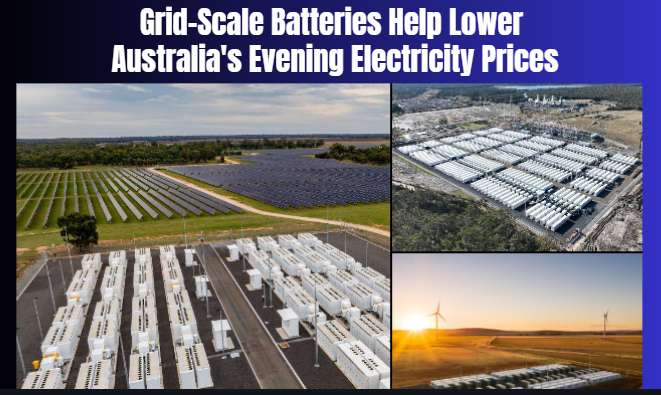
Large-scale batteries are playing an increasingly important role in Australia's electricity system, helping reduce wholesale electricity prices during periods of high evening demand. New figures discussed by the Australian Energy Market Operator (AEMO) on 23 October 2026 show how battery storage is changing the way electricity is generated, stored and supplied across the national market.
Electricity demand often changes throughout the day. Solar panels produce substantial amounts of power during daylight hours, sometimes creating periods when supply exceeds immediate demand. In the evening, solar generation declines while households return home, switch on appliances and use more electricity. Traditionally, gas-fired power stations and other dispatchable generators have played an important role in meeting this peak demand.
Battery storage provides another option. Large batteries can charge when electricity is plentiful and release stored energy later, when demand increases. This helps shift electricity from periods of abundant supply to periods when the grid needs additional power.
According to AEMO's latest market update, grid-scale batteries contributed to significantly lower evening peak prices during the September quarter. Batteries set wholesale electricity prices in almost half of market dispatch intervals, compared with 18 per cent during the same quarter a year earlier.
The figures reflect the rapid expansion of battery storage across Australia's electricity network. Battery installations have increased as energy companies invest in infrastructure capable of storing power generated by solar and wind farms. These systems can respond quickly to changing demand and help the grid manage fluctuations in renewable energy production.
The latest electricity snapshot also showed that renewable energy supplied a larger share of demand during the quarter. Renewable sources accounted for 44.3 per cent of demand, up from 41.8 per cent in the corresponding period a year earlier. Rooftop solar generation increased, while grid-scale solar and hydropower also contributed to the changing energy mix.
Another significant development was the contribution of batteries during evening peak hours. Grid-scale batteries supplied approximately 8 per cent of total generation during those periods, exceeding the 5 per cent contribution from gas-fired power plants. The amount of battery storage installed had tripled over the previous year, according to the market operator's figures.
Battery storage can also help manage periods of excess solar generation. By absorbing electricity when supply is high, batteries may reduce the frequency of very low or negative wholesale prices during the day. When they discharge during periods of higher demand, they can reduce the need for more expensive generation.
However, lower wholesale prices do not automatically translate into an immediate reduction in every household's electricity bill. Retail bills also include network charges, environmental and policy costs, retailer operating expenses and other components. The final impact depends on electricity contracts, retail pricing decisions and the wider market.
Regional differences also remain important. While wholesale prices eased in several eastern market regions, Western Australia's electricity market experienced higher prices during the September quarter, reflecting different demand and supply conditions.
The growing contribution of batteries marks a major change in Australia's energy transition. Continued investment in storage, transmission and renewable generation will influence how reliably and affordably the electricity system can meet future demand.
ElectricityDemandDuringBatteriesMarket
Large-scale batteries are playing an increasingly important role in Australia's electricity system, helping reduce wholesale electricity prices during periods of high evening demand. New figures discussed by the Australian Energy Market Operator (AEMO) on 23 October 2026 show how battery storage is changing the way electricity is generated, stored and supplied across the national market.
Electricity demand often changes throughout the day. Solar panels produce substantial amounts of power during daylight hours, sometimes creating periods when supply exceeds immediate demand. In the evening, solar generation declines while households return home, switch on appliances and use more electricity. Traditionally, gas-fired power stations and other dispatchable generators have played an important role in meeting this peak demand.
Battery storage provides another option. Large batteries can charge when electricity is plentiful and release stored energy later, when demand increases. This helps shift electricity from periods of abundant supply to periods when the grid needs additional power.
According to AEMO's latest market update, grid-scale batteries contributed to significantly lower evening peak prices during the September quarter. Batteries set wholesale electricity prices in almost half of market dispatch intervals, compared with 18 per cent during the same quarter a year earlier.
The figures reflect the rapid expansion of battery storage across Australia's electricity network. Battery installations have increased as energy companies invest in infrastructure capable of storing power generated by solar and wind farms. These systems can respond quickly to changing demand and help the grid manage fluctuations in renewable energy production.
The latest electricity snapshot also showed that renewable energy supplied a larger share of demand during the quarter. Renewable sources accounted for 44.3 per cent of demand, up from 41.8 per cent in the corresponding period a year earlier. Rooftop solar generation increased, while grid-scale solar and hydropower also contributed to the changing energy mix.
Another significant development was the contribution of batteries during evening peak hours. Grid-scale batteries supplied approximately 8 per cent of total generation during those periods, exceeding the 5 per cent contribution from gas-fired power plants. The amount of battery storage installed had tripled over the previous year, according to the market operator's figures.
Battery storage can also help manage periods of excess solar generation. By absorbing electricity when supply is high, batteries may reduce the frequency of very low or negative wholesale prices during the day. When they discharge during periods of higher demand, they can reduce the need for more expensive generation.
However, lower wholesale prices do not automatically translate into an immediate reduction in every household's electricity bill. Retail bills also include network charges, environmental and policy costs, retailer operating expenses and other components. The final impact depends on electricity contracts, retail pricing decisions and the wider market.
Regional differences also remain important. While wholesale prices eased in several eastern market regions, Western Australia's electricity market experienced higher prices during the September quarter, reflecting different demand and supply conditions.
The growing contribution of batteries marks a major change in Australia's energy transition. Continued investment in storage, transmission and renewable generation will influence how reliably and affordably the electricity system can meet future demand.
A new agreement between the Victorian and federal governments sets a pathway towards fully funding public schools by 2034, with education leaders cautio...
Children learning through Western Australia’s School of the Air have collaborated with country musician Josh Arnold to create a music video celebrating...
The Victorian government says the proposed restriction aims to protect student privacy, reduce classroom distractions and help students focus on learning.
Queensland Corrective Services is reviewing an incident after an Indigenous woman in custody was allegedly restrained in hospital following a caesarean...
The federal government has submitted a proposal to the European Space Agency for astronaut Katherine Bennell-Pegg to travel to the International Space S...
Australia’s cyber.gov.au website is among the government services affected by two critical vulnerabilities in PHP, a programming language used by millio...
The Australian Federal Police says threats and harassment targeting federal politicians and senior public officials have increased sharply, raising fres...
One Nation leader Pauline Hanson has apologised after a controversial political cartoon mocked independent senator Jacqui Lambie’s medical condition, sa...
Two of the three teenagers responsible for the fatal machete attack on 14-year-old Ethan Hoac have received prison sentences of 17 years and 18-and-a-ha...
The ABC has begun wiping a small number of staff devices after researchers identified malicious online advertisements linked to a spyware campaign targe...
Several New South Wales MPs say a parliamentary security briefing left them anxious about how quickly security staff could respond to an incident, promp...
South Australia's civil and administrative tribunal has upheld a prohibition preventing a disability support worker from working with children and peopl...