Victoria Signs School Funding Deal to Improve Public Education
By Chloe · Published 22 Oct 2026 · Updated 22 Oct 2026
Melbourne, VIC · Victoria News
Safety note: Admin approval is an initial review, not a guarantee that every detail is correct. Check important or urgent claims with official sources and report anything inaccurate or unsafe.
Source and credit: Contributor's own report
Victoria Signs School Funding Deal to Improve Public Education - Melbourne, VIC
Smart summary
A new agreement between the Victorian and federal governments sets a pathway towards fully funding public schools by 2034, with education leaders cautiously welcoming the commitment.
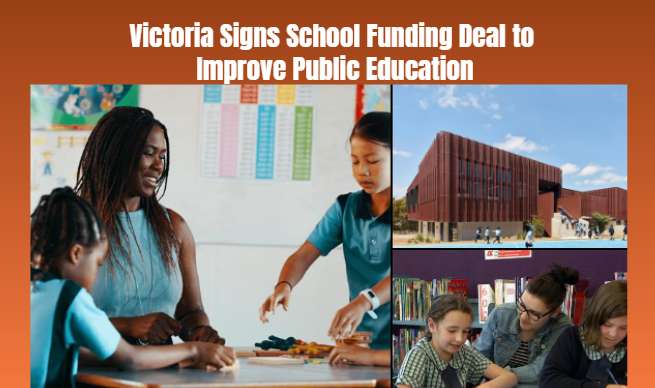
The Victorian government has signed a new school funding agreement with the federal government, setting out a plan to increase financial support for public schools and work towards full funding by 2034. The agreement was announced on 22 October 2026 by Victorian Premier Ben Carroll and federal Education Minister Jason Clare.
The deal is part of the broader national effort to improve resources available to government schools. Public schools rely on government funding to support classroom teaching, maintain buildings, provide learning materials and deliver additional assistance to students who need it. Why the agreement matters School funding is a central issue for principals, teachers, families and education unions. Schools face different challenges depending on their location, student population and available facilities. Some communities need additional support for students with disability, language-learning needs or other barriers to educational participation.
Funding agreements between state and federal governments determine how financial responsibilities are shared and how additional resources are delivered over time.
Supporters of increased funding argue that schools need sufficient resources to recruit and retain teachers, improve facilities and provide students with access to quality learning opportunities regardless of their family circumstances. Concerns about implementation Although the agreement has been welcomed as progress, education representatives have responded cautiously. The long timeline means schools will continue to depend on existing resources while the funding arrangements are implemented.
Principals and teachers have also highlighted the importance of ensuring that funding reaches classrooms and addresses practical problems, including ageing buildings, maintenance requirements, staffing pressures and shortages of specialist support.
An agreement alone does not immediately resolve these challenges. Its impact will depend on the funding schedule, how the money is allocated and whether schools experiencing the greatest difficulties receive adequate assistance. Potential benefits for students Additional school resources can help provide better learning materials, improve access to specialist programs and support students who require extra assistance. Funding can also contribute to safer and more suitable school environments through maintenance and infrastructure improvements.
For families, a stronger public education system can help reduce differences in educational opportunities between communities. Schools with adequate resources may be better positioned to provide individual support, maintain a broad curriculum and respond to changing student needs.
However, funding is only one factor affecting educational outcomes. Teacher availability, school leadership, student wellbeing and family circumstances also play important roles. Significance for Victoria The agreement establishes a longer-term framework for cooperation between the Victorian and federal governments on public education. Reaching the 2034 target will require sustained investment and continued coordination between the two levels of government.
The announcement is an important policy development for Victorian schools, but the results will be measured by how effectively the agreement improves resources, facilities and support for students over time.
FundingSchoolsAgreementResourcesSupport
The Victorian government has signed a new school funding agreement with the federal government, setting out a plan to increase financial support for public schools and work towards full funding by 2034. The agreement was announced on 22 October 2026 by Victorian Premier Ben Carroll and federal Education Minister Jason Clare.
The deal is part of the broader national effort to improve resources available to government schools. Public schools rely on government funding to support classroom teaching, maintain buildings, provide learning materials and deliver additional assistance to students who need it. Why the agreement matters School funding is a central issue for principals, teachers, families and education unions. Schools face different challenges depending on their location, student population and available facilities. Some communities need additional support for students with disability, language-learning needs or other barriers to educational participation.
Funding agreements between state and federal governments determine how financial responsibilities are shared and how additional resources are delivered over time.
Supporters of increased funding argue that schools need sufficient resources to recruit and retain teachers, improve facilities and provide students with access to quality learning opportunities regardless of their family circumstances. Concerns about implementation Although the agreement has been welcomed as progress, education representatives have responded cautiously. The long timeline means schools will continue to depend on existing resources while the funding arrangements are implemented.
Principals and teachers have also highlighted the importance of ensuring that funding reaches classrooms and addresses practical problems, including ageing buildings, maintenance requirements, staffing pressures and shortages of specialist support.
An agreement alone does not immediately resolve these challenges. Its impact will depend on the funding schedule, how the money is allocated and whether schools experiencing the greatest difficulties receive adequate assistance. Potential benefits for students Additional school resources can help provide better learning materials, improve access to specialist programs and support students who require extra assistance. Funding can also contribute to safer and more suitable school environments through maintenance and infrastructure improvements.
For families, a stronger public education system can help reduce differences in educational opportunities between communities. Schools with adequate resources may be better positioned to provide individual support, maintain a broad curriculum and respond to changing student needs.
However, funding is only one factor affecting educational outcomes. Teacher availability, school leadership, student wellbeing and family circumstances also play important roles. Significance for Victoria The agreement establishes a longer-term framework for cooperation between the Victorian and federal governments on public education. Reaching the 2034 target will require sustained investment and continued coordination between the two levels of government.
The announcement is an important policy development for Victorian schools, but the results will be measured by how effectively the agreement improves resources, facilities and support for students over time.
Children learning through Western Australia’s School of the Air have collaborated with country musician Josh Arnold to create a music video celebrating...
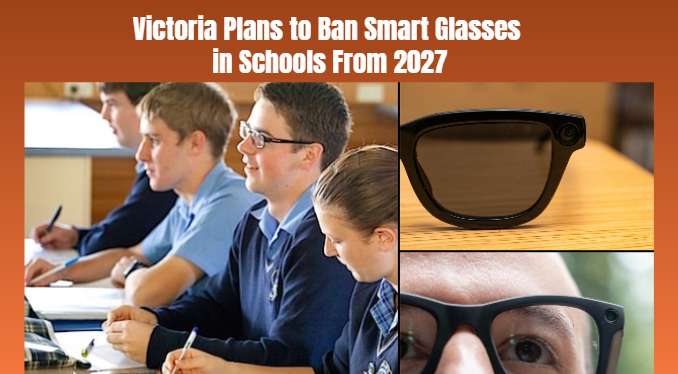
The Victorian government says the proposed restriction aims to protect student privacy, reduce classroom distractions and help students focus on learning.
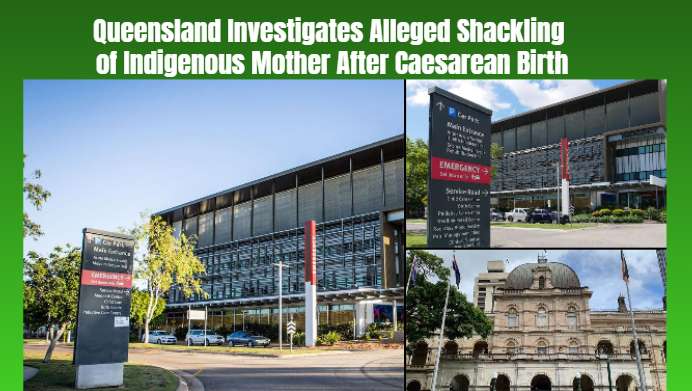
Queensland Corrective Services is reviewing an incident after an Indigenous woman in custody was allegedly restrained in hospital following a caesarean...
A community-based storytelling initiative in Mount Druitt is using culture, stories and reading activities to help children strengthen their literacy sk...
The Victorian government says the proposed restriction aims to protect student privacy, reduce classroom distractions and help students focus on learning.
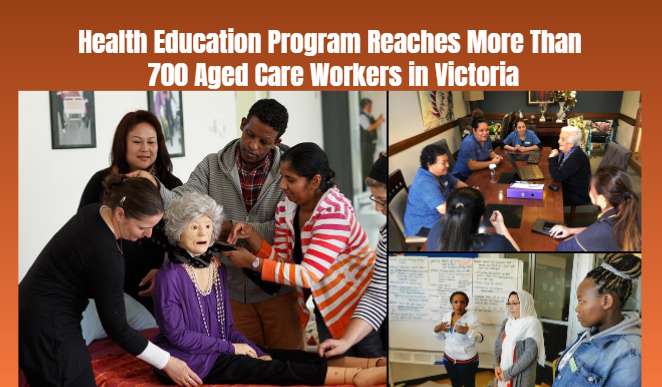
A partnership is helping aged care employees access women’s health information in their preferred languages, with reported improvements in confidence ar...
Three men and two women have been charged after police searched a property in Cranbourne and allegedly recovered stolen electronics, a scooter, copper a...
A 29-year-old man was arrested after allegedly attempting to steal a vehicle while carrying an axe following a multi-vehicle collision in Melbourne’s no...
Children learning through Western Australia’s School of the Air have collaborated with country musician Josh Arnold to create a music video celebrating...
The Victorian government says the proposed restriction aims to protect student privacy, reduce classroom distractions and help students focus on learning.
Wet weather is expected to add uncertainty to the Supercars championship street race, with leading drivers preparing for difficult track conditions on Q...