Indigenous Storytelling Program Helps Bridge Literacy Gap for Children in Western Sydney
By Chloe · Published 21 Oct 2026 · Updated 21 Oct 2026
Sydney, NSW · New South Wales News
Safety note: Admin approval is an initial review, not a guarantee that every detail is correct. Check important or urgent claims with official sources and report anything inaccurate or unsafe.
Source and credit: Contributor's own report
Indigenous Storytelling Program Helps Bridge Literacy Gap for Children in Western Sydney - Sydney, NSW
Smart summary
A community-based storytelling initiative in Mount Druitt is using culture, stories and reading activities to help children strengthen their literacy skills and build confidence.
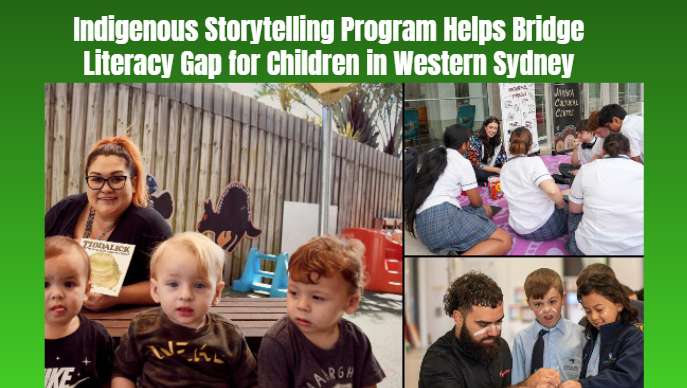
A literacy initiative in Bidwill, in Sydney’s western suburbs, is working to help children improve their reading and writing skills through storytelling, creative activities and connections to Indigenous culture.
The program, run through Story Factory in Bidwill, comes amid concerns about educational disadvantage among children whose parents did not complete high school. Research cited by ABC News indicates that these children are, on average, around five years behind in reading and writing compared with children whose parents completed their schooling.
The initiative aims to give young people a supportive environment where they can develop their communication skills, express their ideas and build confidence in their own abilities.
Storytelling is central to the approach. By encouraging children to create and share stories, educators can make literacy activities more engaging than conventional exercises alone. Students have opportunities to develop vocabulary, organise their thoughts and practise expressing themselves through written and spoken language.
The program also features Indigenous storytelling, helping children engage with cultural knowledge and oral storytelling traditions. These experiences can give students a broader understanding of the ways stories preserve identity, community history and lived experiences.
For children who struggle with reading and writing, confidence can be as important as technical skills. A supportive learning environment can encourage them to participate, ask questions and keep practising without feeling embarrassed about mistakes.
Families also play an important role in children’s learning. Access to books, opportunities to discuss stories and encouragement at home can reinforce the skills developed through educational programs. Community initiatives can help provide additional support when families face barriers to accessing educational resources.
The work in Bidwill highlights the importance of addressing literacy gaps early. Reading and writing affect performance across school subjects, while strong communication skills can also influence later educational opportunities and employment prospects.
However, a single program cannot resolve every cause of educational disadvantage. Long-term improvements depend on sustained support, access to learning resources, well-supported educators and cooperation between schools, families and community organisations.
The Story Factory initiative offers a local example of how creative education can help children engage with learning while recognising the value of their cultural backgrounds and personal experiences.
As Australia continues to address differences in educational outcomes, programs like this demonstrate why community-based approaches matter. Giving children opportunities to tell their own stories can help them strengthen essential literacy skills and feel more confident about their future.
ChildrenEducationalSkillsLiteracyStorytelling
A literacy initiative in Bidwill, in Sydney’s western suburbs, is working to help children improve their reading and writing skills through storytelling, creative activities and connections to Indigenous culture.
The program, run through Story Factory in Bidwill, comes amid concerns about educational disadvantage among children whose parents did not complete high school. Research cited by ABC News indicates that these children are, on average, around five years behind in reading and writing compared with children whose parents completed their schooling.
The initiative aims to give young people a supportive environment where they can develop their communication skills, express their ideas and build confidence in their own abilities.
Storytelling is central to the approach. By encouraging children to create and share stories, educators can make literacy activities more engaging than conventional exercises alone. Students have opportunities to develop vocabulary, organise their thoughts and practise expressing themselves through written and spoken language.
The program also features Indigenous storytelling, helping children engage with cultural knowledge and oral storytelling traditions. These experiences can give students a broader understanding of the ways stories preserve identity, community history and lived experiences.
For children who struggle with reading and writing, confidence can be as important as technical skills. A supportive learning environment can encourage them to participate, ask questions and keep practising without feeling embarrassed about mistakes.
Families also play an important role in children’s learning. Access to books, opportunities to discuss stories and encouragement at home can reinforce the skills developed through educational programs. Community initiatives can help provide additional support when families face barriers to accessing educational resources.
The work in Bidwill highlights the importance of addressing literacy gaps early. Reading and writing affect performance across school subjects, while strong communication skills can also influence later educational opportunities and employment prospects.
However, a single program cannot resolve every cause of educational disadvantage. Long-term improvements depend on sustained support, access to learning resources, well-supported educators and cooperation between schools, families and community organisations.
The Story Factory initiative offers a local example of how creative education can help children engage with learning while recognising the value of their cultural backgrounds and personal experiences.
As Australia continues to address differences in educational outcomes, programs like this demonstrate why community-based approaches matter. Giving children opportunities to tell their own stories can help them strengthen essential literacy skills and feel more confident about their future.
Unusually wet conditions in Central Australia have helped butterfly numbers increase, prompting thousands of caper white butterflies to migrate south to...
A new report warns that ageing facilities, staff shortages and fragmented funding threaten swimming pools that provide essential recreation and water-sa...
Restoration work on bushland damaged during the controversial Roe 8 road project is reportedly progressing better than expected, nearly a decade after v...
An Australian activist detained in Vietnam has reportedly told his family that he is frightened, renewing concerns about his welfare and circumstances i...
Reserve Bank deputy governor Andrew Hauser says inflation is proving difficult to control, increasing concerns that Australians could face another inter...
A New South Wales parliamentary inquiry has recommended stopping two proposed waste-to-energy projects near Parkes and Goulburn, citing community opposi...
Regional aged-care providers warn that changes to migration pathways could make it harder to recruit and retain workers, putting additional pressure on...
Western Australian police are investigating a suspicious fire at a high-value Perth property after a threatening message was reportedly found at the scene.
The final bottles have come off the production line in Launceston, marking the end of local production at one of Tasmania’s best-known breweries. The cl...
Sudden hail has damaged crops in parts of Australia just as farmers prepare for an important harvest season, raising concerns about crop quality and pot...
Australian data centre operator Next DC has suffered a major share-price collapse after electricity network upgrade delays forced the company to cut its...