Hailstorm Damages Australian Crops in Minutes Ahead of Expected Bumper Harvest
By Chloe · Published 21 Oct 2026 · Updated 21 Oct 2026
Sandalwood, SA
Safety note: Admin approval is an initial review, not a guarantee that every detail is correct. Check important or urgent claims with official sources and report anything inaccurate or unsafe.
Source and credit: Contributor's own report
Hailstorm Damages Australian Crops in Minutes Ahead of Expected Bumper Harvest - Sandalwood, SA
Smart summary
Sudden hail has damaged crops in parts of Australia just as farmers prepare for an important harvest season, raising concerns about crop quality and potential financial losses.
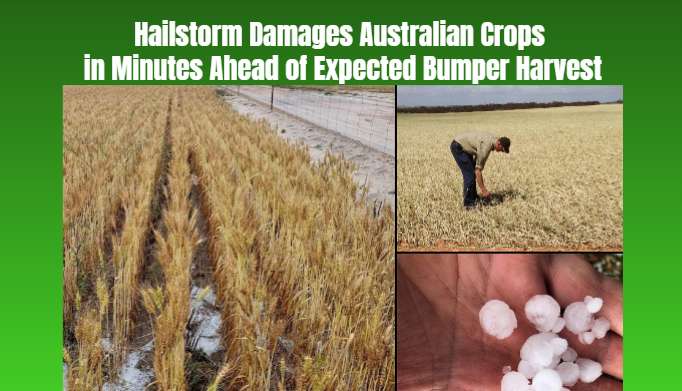
South Australian farmers preparing for an expected record-breaking harvest are assessing crop losses after severe thunderstorms brought heavy rain and hail to parts of the Riverland and Mallee regions. The storms struck on Tuesday, 20 October, with damage reported at a property near Sandalwood, approximately 175 kilometres east of Adelaide. The incident was reported on 21 October 2026.
At Kamora Park Poll Merino Station, around 30 millimetres of rain fell in just 10 minutes. Hailstones also swept across the property, damaging crops and agricultural equipment. Some lupin plants were stripped back to their stalks, leaving the farm's owners concerned about how much of the crop could still be harvested.
Farm principal Katelyn Boughen said the damage was particularly disappointing because the lupin crop had been growing well. She estimated that at least half of the affected section could have been damaged, although the full extent of the losses remained uncertain at the time of reporting. Her family had been trying to grow lupins successfully for several years to help reduce farm expenses.
The impact extended beyond crops. Sheep feeders were reportedly smashed, trees lost leaves and branches, and water runoff carved large channels into paddocks. These effects could create additional work and costs for farmers already managing the demands of the harvest season.
Other parts of the region also experienced intense weather. Lameroo, in the Mallee, received around 35 millimetres of rain and hail within an hour, with flooding reported in the town's main street. Rainfall was also recorded around Halidon, Loxton and other locations across the wider region.
The storms arrived after a more favourable period for South Australian agriculture. Above-average rainfall earlier in the year helped break years of drought in many areas and improved prospects for a strong harvest. Farmers had been optimistic about crop yields, making the sudden damage especially frustrating.
Severe weather can affect farm income in several ways. Hail may destroy plants, reduce the quality of grain and make harvesting more difficult. Heavy rainfall can also cause erosion, waterlogging and damage to farm infrastructure. The financial consequences depend on the size of the affected area, the condition of the remaining crops and the cost of repairs.
Farmers and property owners are now assessing the damage to determine how much production may be lost. Until those assessments are complete, the overall financial impact on the affected properties remains unclear.
The event highlights the vulnerability of agricultural production to sudden weather changes, even when seasonal conditions have been favourable. For South Australian farmers, the priority is to establish the extent of the losses and protect whatever crops remain ahead of the harvest.
BeenCropsDamageFarmFarmers
South Australian farmers preparing for an expected record-breaking harvest are assessing crop losses after severe thunderstorms brought heavy rain and hail to parts of the Riverland and Mallee regions. The storms struck on Tuesday, 20 October, with damage reported at a property near Sandalwood, approximately 175 kilometres east of Adelaide. The incident was reported on 21 October 2026.
At Kamora Park Poll Merino Station, around 30 millimetres of rain fell in just 10 minutes. Hailstones also swept across the property, damaging crops and agricultural equipment. Some lupin plants were stripped back to their stalks, leaving the farm's owners concerned about how much of the crop could still be harvested.
Farm principal Katelyn Boughen said the damage was particularly disappointing because the lupin crop had been growing well. She estimated that at least half of the affected section could have been damaged, although the full extent of the losses remained uncertain at the time of reporting. Her family had been trying to grow lupins successfully for several years to help reduce farm expenses.
The impact extended beyond crops. Sheep feeders were reportedly smashed, trees lost leaves and branches, and water runoff carved large channels into paddocks. These effects could create additional work and costs for farmers already managing the demands of the harvest season.
Other parts of the region also experienced intense weather. Lameroo, in the Mallee, received around 35 millimetres of rain and hail within an hour, with flooding reported in the town's main street. Rainfall was also recorded around Halidon, Loxton and other locations across the wider region.
The storms arrived after a more favourable period for South Australian agriculture. Above-average rainfall earlier in the year helped break years of drought in many areas and improved prospects for a strong harvest. Farmers had been optimistic about crop yields, making the sudden damage especially frustrating.
Severe weather can affect farm income in several ways. Hail may destroy plants, reduce the quality of grain and make harvesting more difficult. Heavy rainfall can also cause erosion, waterlogging and damage to farm infrastructure. The financial consequences depend on the size of the affected area, the condition of the remaining crops and the cost of repairs.
Farmers and property owners are now assessing the damage to determine how much production may be lost. Until those assessments are complete, the overall financial impact on the affected properties remains unclear.
The event highlights the vulnerability of agricultural production to sudden weather changes, even when seasonal conditions have been favourable. For South Australian farmers, the priority is to establish the extent of the losses and protect whatever crops remain ahead of the harvest.
A Chinese private processor has purchased 68,000 tonnes of new-season Australian canola for shipment in March, marking the first known private-sector pu...
Darwin Northern Territory · Other News · 01 Sep 2026
A scenic hike through Butterfly Gorge in the Northern Territory turned into a frightening experience when a buffalo charged at two hikers. ABC Darwin reported the story today, 1...
Coffs Harbour New South Wales · Other News · 01 Sep 2026
A Safe Work NSW inspection blitz across the Coffs Harbour region has uncovered dozens of workplace-safety issues in the horticulture industry. The operation followed concerns ab...
A 79-year-old woman from Busselton is recovering in a Bali hospital after falling down a restaurant stairwell, with her family facing substantial medica...
Australia will open military recruitment to eligible students and recent graduates from Papua New Guinea next month, in a pilot program designed to stre...
A new report warns that ageing facilities, staff shortages and fragmented funding threaten swimming pools that provide essential recreation and water-sa...
A Victorian coroner has criticised betting company Sportsbet after examining the case of a young man who wagered hundreds of thousands of dollars before...
A community-based storytelling initiative in Mount Druitt is using culture, stories and reading activities to help children strengthen their literacy sk...
Western Australian police are investigating a suspicious fire at a high-value Perth property after a threatening message was reportedly found at the scene.
The final bottles have come off the production line in Launceston, marking the end of local production at one of Tasmania’s best-known breweries. The cl...
Australian data centre operator Next DC has suffered a major share-price collapse after electricity network upgrade delays forced the company to cut its...