Thousands of Caper White Butterflies Arrive in Adelaide as They Escape Central Australia's Heat
By Chloe · Published 20 Oct 2026 · Updated 20 Oct 2026
Adelaide, SA · South Australia News
Safety note: Admin approval is an initial review, not a guarantee that every detail is correct. Check important or urgent claims with official sources and report anything inaccurate or unsafe.
Source and credit: Contributor's own report
Thousands of Caper White Butterflies Arrive in Adelaide as They Escape Central Australia's Heat - Adelaide, SA
Smart summary
Unusually wet conditions in Central Australia have helped butterfly numbers increase, prompting thousands of caper white butterflies to migrate south towards Adelaide for the summer.
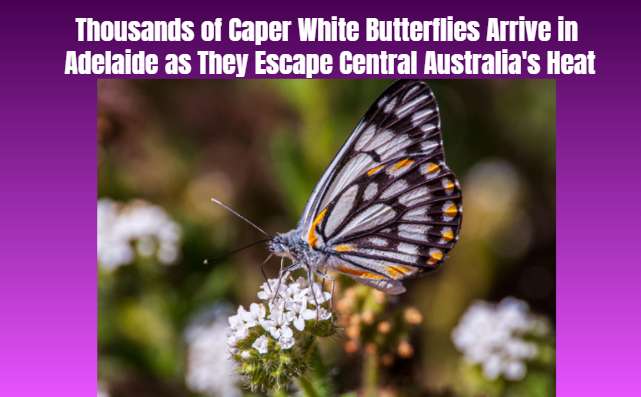
Thousands of caper white butterflies have appeared across Adelaide as part of their seasonal migration from Central Australia, creating an unusual sight in gardens and green spaces throughout the South Australian capital.
The butterflies, recognised by their white wings with distinctive dark tips, are moving south to escape the extreme heat and limited food supplies that develop in Central Australia during summer. Their arrival has attracted the attention of residents, gardeners and insect enthusiasts, who say butterfly numbers are particularly high this year. ABC News
According to ABC News, the migration has been encouraged by favourable weather conditions further north. Heavy rainfall has helped plants grow and provided suitable conditions for caper white butterflies to reproduce. The resulting increase in their numbers has contributed to the large groups now being observed in Adelaide.
Kris Messenger, who operates the invertebrate education service Bugs and Slugs in Adelaide, explained that the butterflies regularly undertake this seasonal movement. However, the migration is not always noticeable because the number of insects travelling south varies from year to year.
This season has been particularly productive because Central Australia's wet conditions have supported butterfly populations. The abundance of insects has also attracted attention to other species, including dragonflies and grasshoppers, which can benefit when environmental conditions provide sufficient food and suitable breeding habitats. ABC News Why are the butterflies travelling south? Caper white butterflies are adapted to changing environmental conditions. As temperatures rise and food becomes harder to find in Central Australia, successive generations move towards cooler southern regions where suitable plants are available.
Interestingly, the butterflies arriving in Adelaide are not necessarily the same individuals that began the journey from Central Australia. The migration can involve several generations, meaning the butterflies seen in South Australia may be descendants of those that started moving south earlier in the season.
This makes the migration a fascinating example of how insects respond to seasonal changes over large distances. What does their arrival mean for gardens? The good news for Adelaide gardeners is that caper white butterflies are not expected to damage ordinary vegetable gardens.
Adult butterflies feed on nectar from flowers, while their caterpillars primarily feed on caper plants. This means that tomatoes, lettuce and many other common garden vegetables are not their preferred food.
Kate Grigg, a conservation-minded horticulturist in Adelaide, has noticed large numbers of the butterflies gathering around a caper bush in her garden. She has encouraged residents to consider planting suitable caper varieties to attract butterflies and other wildlife.
Caper plants can also support local biodiversity by providing food and habitat for insects. Establishing a garden with a variety of flowering plants can help attract pollinators and other beneficial species. More insects may appear this season Experts expect other insects to become more noticeable as well. Dragonflies, grasshoppers and several butterfly species may benefit from the favourable conditions experienced across parts of Central Australia.
However, not every butterfly seen in Adelaide is native. Some introduced species, including monarch butterflies, can also be present. Learning to distinguish native species from introduced ones helps residents better understand their local ecosystems.
The increased butterfly activity is a reminder that weather conditions can influence wildlife far beyond the areas where rain actually falls. When rainfall improves plant growth and food availability, insect populations can respond quickly. What happens next? The caper white butterflies are expected to remain in southern areas while conditions in Central Australia stay hot. As Adelaide's weather cools later in the season, their distribution may change again.
For now, residents can enjoy the spectacle while helping support biodiversity by maintaining flowering gardens and suitable host plants.
Scientists and insect enthusiasts will continue watching how butterfly populations respond to this year's unusual weather. Their observations may provide useful information about seasonal migration, changing environmental conditions and the health of local insect populations.
ButterfliesCaperAdelaideConditionsCentral
Thousands of caper white butterflies have appeared across Adelaide as part of their seasonal migration from Central Australia, creating an unusual sight in gardens and green spaces throughout the South Australian capital.
The butterflies, recognised by their white wings with distinctive dark tips, are moving south to escape the extreme heat and limited food supplies that develop in Central Australia during summer. Their arrival has attracted the attention of residents, gardeners and insect enthusiasts, who say butterfly numbers are particularly high this year. ABC News
According to ABC News, the migration has been encouraged by favourable weather conditions further north. Heavy rainfall has helped plants grow and provided suitable conditions for caper white butterflies to reproduce. The resulting increase in their numbers has contributed to the large groups now being observed in Adelaide.
Kris Messenger, who operates the invertebrate education service Bugs and Slugs in Adelaide, explained that the butterflies regularly undertake this seasonal movement. However, the migration is not always noticeable because the number of insects travelling south varies from year to year.
This season has been particularly productive because Central Australia's wet conditions have supported butterfly populations. The abundance of insects has also attracted attention to other species, including dragonflies and grasshoppers, which can benefit when environmental conditions provide sufficient food and suitable breeding habitats. ABC News Why are the butterflies travelling south? Caper white butterflies are adapted to changing environmental conditions. As temperatures rise and food becomes harder to find in Central Australia, successive generations move towards cooler southern regions where suitable plants are available.
Interestingly, the butterflies arriving in Adelaide are not necessarily the same individuals that began the journey from Central Australia. The migration can involve several generations, meaning the butterflies seen in South Australia may be descendants of those that started moving south earlier in the season.
This makes the migration a fascinating example of how insects respond to seasonal changes over large distances. What does their arrival mean for gardens? The good news for Adelaide gardeners is that caper white butterflies are not expected to damage ordinary vegetable gardens.
Adult butterflies feed on nectar from flowers, while their caterpillars primarily feed on caper plants. This means that tomatoes, lettuce and many other common garden vegetables are not their preferred food.
Kate Grigg, a conservation-minded horticulturist in Adelaide, has noticed large numbers of the butterflies gathering around a caper bush in her garden. She has encouraged residents to consider planting suitable caper varieties to attract butterflies and other wildlife.
Caper plants can also support local biodiversity by providing food and habitat for insects. Establishing a garden with a variety of flowering plants can help attract pollinators and other beneficial species. More insects may appear this season Experts expect other insects to become more noticeable as well. Dragonflies, grasshoppers and several butterfly species may benefit from the favourable conditions experienced across parts of Central Australia.
However, not every butterfly seen in Adelaide is native. Some introduced species, including monarch butterflies, can also be present. Learning to distinguish native species from introduced ones helps residents better understand their local ecosystems.
The increased butterfly activity is a reminder that weather conditions can influence wildlife far beyond the areas where rain actually falls. When rainfall improves plant growth and food availability, insect populations can respond quickly. What happens next? The caper white butterflies are expected to remain in southern areas while conditions in Central Australia stay hot. As Adelaide's weather cools later in the season, their distribution may change again.
For now, residents can enjoy the spectacle while helping support biodiversity by maintaining flowering gardens and suitable host plants.
Scientists and insect enthusiasts will continue watching how butterfly populations respond to this year's unusual weather. Their observations may provide useful information about seasonal migration, changing environmental conditions and the health of local insect populations.
A kindness campaign founder, a long-serving community volunteer, a young hip-hop artist and a wildlife conservationist have been recognised for their co...
Australians across the country pause for a minute of silence to remember military personnel who lost their lives in wars and conflicts, as newly identif...
Residents of Hermannsburg in the Northern Territory can once again access free-to-air television, restoring an important source of news, entertainment a...
South Australia Police arrest five teenagers following investigations into multiple alleged robberies and attempted vehicle robberies in Adelaide's cent...
Three men from South Australia have been charged following a five-month investigation into alleged ATM thefts, vehicle stealing, property damage, break-...
South Australian Police are investigating a suspected deliberately lit fire at a business on Grand Junction Road in Rosewater after emergency crews resp...
A psychiatric report presented to South Australia's Supreme Court has raised questions about Tamika Chesser's mental competence in the case involving th...
A digital examination platform failure disrupted final assessments in Melbourne, leaving hundreds of students unable to access their exams and forcing u...
Australia fell three points short at Murrayfield after a late comeback attempt, with Scotland holding on to secure an important home victory in the inte...
Prime Minister Anthony Albanese is meeting Philippine President Ferdinand Marcos Jr in Manila following a new defence cooperation agreement focused on m...
New government figures show a decline in the country's illicit tobacco market following record seizures and increased enforcement by Australian Border F...