Threats Against Australian Politicians Rise Fourfold Since 2020, AFP Warns
By Chloe · Published 21 Oct 2026 · Updated 21 Oct 2026
Canberra, ACT · ACT News
Safety note: Admin approval is an initial review, not a guarantee that every detail is correct. Check important or urgent claims with official sources and report anything inaccurate or unsafe.
Source and credit: Contributor's own report
Threats Against Australian Politicians Rise Fourfold Since 2020, AFP Warns - Canberra, ACT
Smart summary
The Australian Federal Police says threats and harassment targeting federal politicians and senior public officials have increased sharply, raising fresh concerns about political violence and public safety.
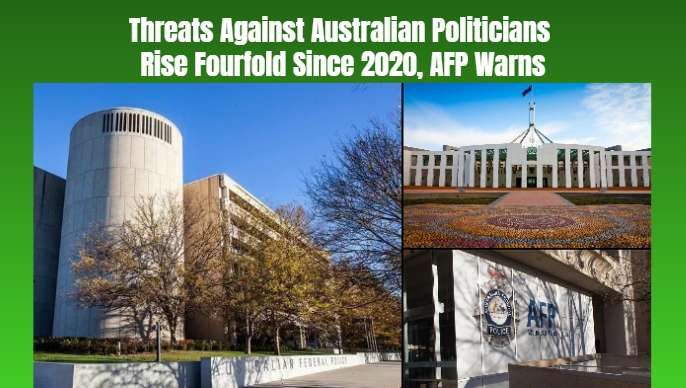
The Australian Federal Police (AFP) has raised concerns about a significant increase in threats against politicians and senior public officials, warning that hostility towards elected representatives is creating a more dangerous environment for Australian democracy.
According to figures reported by ABC News on Wednesday, threats against parliamentarians have increased approximately fourfold since 2020. AFP Commissioner Krissy Barrett said authorities were charging almost one person each week for offences targeting Commonwealth parliamentarians or other high-ranking officeholders.
The issue has attracted renewed attention following the serious attack on independent federal MP Helen Haines in Wangaratta, Victoria. The incident has shocked political leaders and communities across the country and intensified discussion about the safety of elected representatives.
The AFP reported that 41 people were charged during the previous year with offences relating to threats against parliamentarians. Threats directed at candidates during the 2025 federal election were also 17 per cent higher than during the previous campaign. These figures indicate that intimidation is an ongoing challenge rather than a problem limited to a single incident.
Experts have pointed to several possible contributing factors, including misinformation, increasingly hostile online discussions and declining trust in political institutions. Social media can allow threatening messages to spread quickly, while public figures may be targeted because of their decisions, statements or political affiliations.
Researchers have warned that repeated dehumanisation of politicians can make aggressive behaviour appear more acceptable to some individuals. Political disagreement is a normal part of democracy, but threats, harassment and physical attacks can prevent representatives from carrying out their work safely.
The consequences extend beyond politicians themselves. Staff members, families, local communities and members of the public can also be affected when threats escalate into violence. Constituency offices, public meetings and election events may require additional security measures when risks increase.
The AFP and other authorities must assess threats, investigate suspected offences and determine when intervention is necessary. At the same time, law enforcement agencies face the challenge of protecting public figures without restricting legitimate political debate or peaceful criticism.
The rise in threats has also prompted questions about the responsibility of political leaders, media organisations and online platforms to reduce inflammatory rhetoric and respond to misinformation. Experts say that restoring trust and encouraging respectful public discussion are important parts of addressing the problem.
For Australian democracy, the issue is significant because elected representatives must be able to meet constituents, debate public policy and perform their duties without fear of violence. Threats can discourage people from entering politics or serving in public office, potentially narrowing the range of voices represented in government.
The AFP's warning underscores the need for continued cooperation between law enforcement agencies, parliamentarians and communities. Authorities will need to monitor emerging risks, investigate credible threats and ensure that those responsible for criminal intimidation are held accountable.
While strong security measures can help protect politicians, experts argue that improving the tone of public debate and rebuilding trust in institutions are also essential. The challenge is to preserve Australia's tradition of open democratic discussion while making clear that threats and violence are unacceptable.
ThreatsPoliticalPoliticiansAlsoFigures
The Australian Federal Police (AFP) has raised concerns about a significant increase in threats against politicians and senior public officials, warning that hostility towards elected representatives is creating a more dangerous environment for Australian democracy.
According to figures reported by ABC News on Wednesday, threats against parliamentarians have increased approximately fourfold since 2020. AFP Commissioner Krissy Barrett said authorities were charging almost one person each week for offences targeting Commonwealth parliamentarians or other high-ranking officeholders.
The issue has attracted renewed attention following the serious attack on independent federal MP Helen Haines in Wangaratta, Victoria. The incident has shocked political leaders and communities across the country and intensified discussion about the safety of elected representatives.
The AFP reported that 41 people were charged during the previous year with offences relating to threats against parliamentarians. Threats directed at candidates during the 2025 federal election were also 17 per cent higher than during the previous campaign. These figures indicate that intimidation is an ongoing challenge rather than a problem limited to a single incident.
Experts have pointed to several possible contributing factors, including misinformation, increasingly hostile online discussions and declining trust in political institutions. Social media can allow threatening messages to spread quickly, while public figures may be targeted because of their decisions, statements or political affiliations.
Researchers have warned that repeated dehumanisation of politicians can make aggressive behaviour appear more acceptable to some individuals. Political disagreement is a normal part of democracy, but threats, harassment and physical attacks can prevent representatives from carrying out their work safely.
The consequences extend beyond politicians themselves. Staff members, families, local communities and members of the public can also be affected when threats escalate into violence. Constituency offices, public meetings and election events may require additional security measures when risks increase.
The AFP and other authorities must assess threats, investigate suspected offences and determine when intervention is necessary. At the same time, law enforcement agencies face the challenge of protecting public figures without restricting legitimate political debate or peaceful criticism.
The rise in threats has also prompted questions about the responsibility of political leaders, media organisations and online platforms to reduce inflammatory rhetoric and respond to misinformation. Experts say that restoring trust and encouraging respectful public discussion are important parts of addressing the problem.
For Australian democracy, the issue is significant because elected representatives must be able to meet constituents, debate public policy and perform their duties without fear of violence. Threats can discourage people from entering politics or serving in public office, potentially narrowing the range of voices represented in government.
The AFP's warning underscores the need for continued cooperation between law enforcement agencies, parliamentarians and communities. Authorities will need to monitor emerging risks, investigate credible threats and ensure that those responsible for criminal intimidation are held accountable.
While strong security measures can help protect politicians, experts argue that improving the tone of public debate and rebuilding trust in institutions are also essential. The challenge is to preserve Australia's tradition of open democratic discussion while making clear that threats and violence are unacceptable.
One Nation leader Pauline Hanson has apologised after a controversial political cartoon mocked independent senator Jacqui Lambie’s medical condition, sa...
A New South Wales parliamentary inquiry has recommended stopping two proposed waste-to-energy projects near Parkes and Goulburn, citing community opposi...
Australian Greens leader David Shoebridge says Senator Jordon Steele-John should take personal leave while an independent investigation examines allegat...
A Commonwealth Ombudsman report identifies an Australian citizen who spent more than two and a half years in immigration detention because citizenship l...
One Nation leader Pauline Hanson has apologised after a controversial political cartoon mocked independent senator Jacqui Lambie’s medical condition, sa...
Australian biofuel producers are urging the federal government to require fuel companies to purchase more locally produced ethanol and biodiesel, after...
A new Australian Human Rights Commission report calls for stronger workplace protections after workers reported losing jobs, shifts and promotion opport...
A 22-year-old woman has been charged after police alleged she groomed a teenage boy known to her and committed several offences between May and July 2026.
Victorian police have charged seven people in connection with an alleged group attack that resulted in a death in Melbourne’s western suburbs. The case...
Northern Territory Police have charged an 18-year-old man following a five-month investigation into a fatal hit-and-run that killed a 57-year-old man in...
New South Wales Police are continuing to search for a shotgun allegedly used during an incident in Sydney’s inner west, after a 32-year-old man was char...