Safety note: Admin approval is an initial review, not a guarantee that every detail is correct. Check important or urgent claims with official sources and report anything inaccurate or unsafe.
Source and credit: Contributor's own report
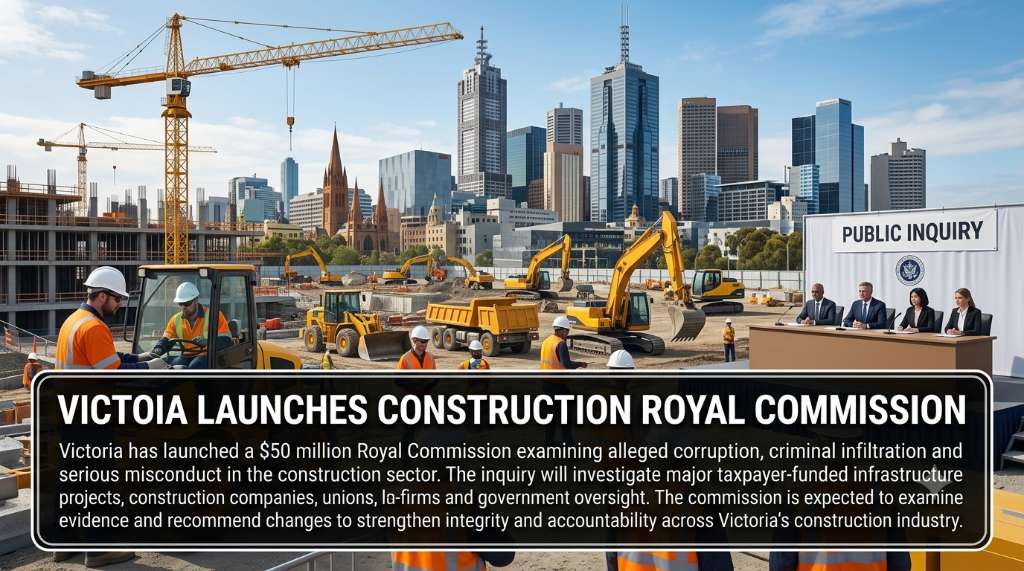
Victoria Launches $50 Million Royal Commission Into Construction Sector Corruption - Melbourne, VIC
Smart summary
Premier Ben Carroll has launched a broad inquiry into alleged criminal infiltration, corruption and serious misconduct across Victoria’s major construction and taxpayer-funded infrastructure projects.
Victoria has formally launched a $50 million Royal Commission into the integrity of major public and civil infrastructure construction projects, following allegations of corruption, criminal infiltration and serious misconduct within the state's construction sector. Victorian Premier Ben Carroll announced the commission's terms of reference on Thursday, August 20, saying the inquiry would examine how organised crime and other alleged misconduct were able to enter major building projects.
Former South Australian Supreme Court Chief Justice Christopher Kourakis has been appointed to lead the inquiry. Kourakis retired as chief justice in 2025 after 13 years in the role and will now oversee the investigation into Victoria's construction industry. The commission has been given a $50 million budget and must report to the Victorian Government no later than August 20, 2027.
The inquiry has been established in response to serious allegations involving Victoria's construction sector, including the state's taxpayer-funded Big Build infrastructure program. The Big Build includes major transport and infrastructure projects that have involved substantial public investment. The commission will investigate whether criminal actors, unions, construction companies or other participants were involved in corruption or serious misconduct.
The terms of reference are deliberately broad. They cover the conduct of the CFMEU, construction companies, labour-hire firms, consortia and alleged criminal actors, as well as the role played by the Victorian Government, government departments and infrastructure delivery agencies in overseeing major projects.
The commission will also examine whether corruption or misconduct contributed to inflated, misdirected or wasted public funding and whether money can potentially be recovered. Previous estimates by anti-corruption barrister Geoffrey Watson suggested that misconduct associated with the CFMEU could have resulted in up to $15 billion in unnecessary taxpayer expenditure, although those figures are allegations and will be subject to scrutiny through the inquiry.
Another important part of the investigation will be determining whether government oversight systems worked properly. The commission will look at the actions of senior government officials, departments and delivery agencies and whether existing rules, procurement arrangements and regulatory systems were sufficient to prevent misconduct.
Premier Carroll has said the commissioner will have the power to call ministers, former ministers, senior government officials, union leaders and company executives if they are considered relevant to the investigation. The inquiry is therefore not limited to one organisation or group.
The CFMEU has said it will fully cooperate with the Royal Commission. Its administrator, Michael Crosby, has also argued that any investigation should examine the entire construction industry rather than focusing only on the union. He said developers, major contractors, subcontractors, labour-hire businesses and others should also face scrutiny where the evidence leads.
The Victorian Government has also announced plans to appoint a Special Prosecutor who can pursue criminal conduct identified through the process. Additional legislation is planned to strengthen the powers of Victoria's anti-corruption body, IBAC, with the government intending to fast-track those changes through parliament.
The Royal Commission comes during a politically significant period for Victoria, with the state election approaching in November. Opposition figures have questioned the government's motives and criticised aspects of the inquiry, while the government says the investigation is necessary to establish the truth and strengthen integrity in major public projects.
For Victorians, the inquiry could have significant consequences beyond the construction industry. Its findings could lead to changes in procurement rules, government oversight, construction contracts, workplace practices and anti-corruption laws. It could also determine whether taxpayers can recover money if wrongdoing is established.
Commissioner Christopher Kourakis has said the inquiry will work independently and rigorously, following the evidence and ensuring the process is fair, thorough and transparent. Hearings are expected to begin as soon as possible.
At this stage, the allegations being investigated have not been established as findings of the Royal Commission. The purpose of the inquiry is to examine the evidence, determine what occurred and make recommendations about accountability and future safeguards.
GovernmentCommissionConstructionInquiryWill
Victoria has formally launched a $50 million Royal Commission into the integrity of major public and civil infrastructure construction projects, following allegations of corruption, criminal infiltration and serious misconduct within the state's construction sector. Victorian Premier Ben Carroll announced the commission's terms of reference on Thursday, August 20, saying the inquiry would examine how organised crime and other alleged misconduct were able to enter major building projects.
Former South Australian Supreme Court Chief Justice Christopher Kourakis has been appointed to lead the inquiry. Kourakis retired as chief justice in 2025 after 13 years in the role and will now oversee the investigation into Victoria's construction industry. The commission has been given a $50 million budget and must report to the Victorian Government no later than August 20, 2027.
The inquiry has been established in response to serious allegations involving Victoria's construction sector, including the state's taxpayer-funded Big Build infrastructure program. The Big Build includes major transport and infrastructure projects that have involved substantial public investment. The commission will investigate whether criminal actors, unions, construction companies or other participants were involved in corruption or serious misconduct.
The terms of reference are deliberately broad. They cover the conduct of the CFMEU, construction companies, labour-hire firms, consortia and alleged criminal actors, as well as the role played by the Victorian Government, government departments and infrastructure delivery agencies in overseeing major projects.
The commission will also examine whether corruption or misconduct contributed to inflated, misdirected or wasted public funding and whether money can potentially be recovered. Previous estimates by anti-corruption barrister Geoffrey Watson suggested that misconduct associated with the CFMEU could have resulted in up to $15 billion in unnecessary taxpayer expenditure, although those figures are allegations and will be subject to scrutiny through the inquiry.
Another important part of the investigation will be determining whether government oversight systems worked properly. The commission will look at the actions of senior government officials, departments and delivery agencies and whether existing rules, procurement arrangements and regulatory systems were sufficient to prevent misconduct.
Premier Carroll has said the commissioner will have the power to call ministers, former ministers, senior government officials, union leaders and company executives if they are considered relevant to the investigation. The inquiry is therefore not limited to one organisation or group.
The CFMEU has said it will fully cooperate with the Royal Commission. Its administrator, Michael Crosby, has also argued that any investigation should examine the entire construction industry rather than focusing only on the union. He said developers, major contractors, subcontractors, labour-hire businesses and others should also face scrutiny where the evidence leads.
The Victorian Government has also announced plans to appoint a Special Prosecutor who can pursue criminal conduct identified through the process. Additional legislation is planned to strengthen the powers of Victoria's anti-corruption body, IBAC, with the government intending to fast-track those changes through parliament.
The Royal Commission comes during a politically significant period for Victoria, with the state election approaching in November. Opposition figures have questioned the government's motives and criticised aspects of the inquiry, while the government says the investigation is necessary to establish the truth and strengthen integrity in major public projects.
For Victorians, the inquiry could have significant consequences beyond the construction industry. Its findings could lead to changes in procurement rules, government oversight, construction contracts, workplace practices and anti-corruption laws. It could also determine whether taxpayers can recover money if wrongdoing is established.
Commissioner Christopher Kourakis has said the inquiry will work independently and rigorously, following the evidence and ensuring the process is fair, thorough and transparent. Hearings are expected to begin as soon as possible.
At this stage, the allegations being investigated have not been established as findings of the Royal Commission. The purpose of the inquiry is to examine the evidence, determine what occurred and make recommendations about accountability and future safeguards.
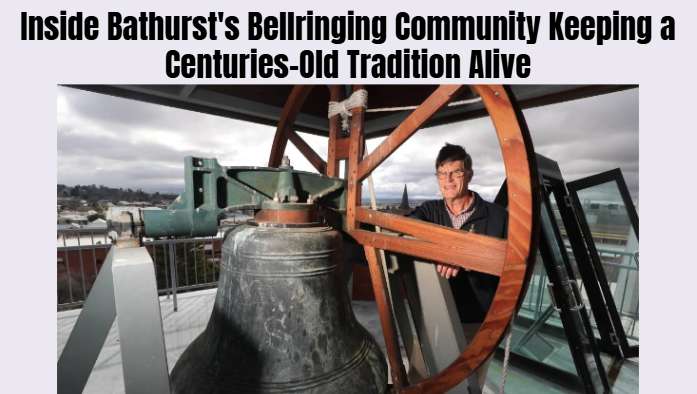
Bathurst bellringers are preparing to gather to celebrate a historic tradition dating back to 17th-century England, bringing together a community dedica...
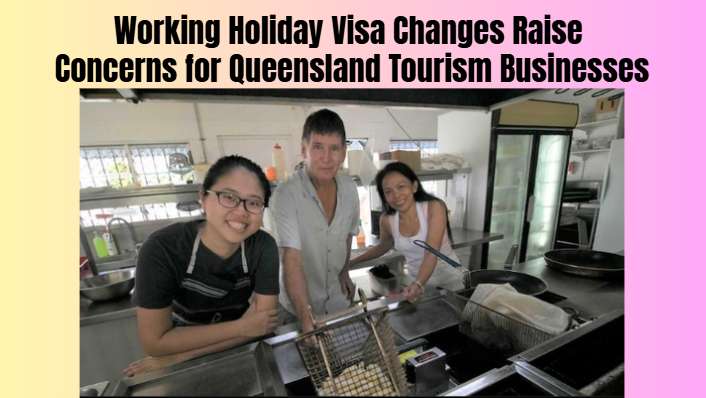
Changes to Australia’s working holiday visa program have raised concerns among tourism and hospitality businesses in Far North Queensland, where backpac...
Bluebottles measuring up to three times the usual size have been washing onto Gold Coast beaches earlier than expected, prompting questions from scienti...
A high-tech greenhouse at Pacific Pines State High School is giving students hands-on experience in growing fresh produce, learning science and developi...
A man has died after being hit by a car on the Midland Highway near Magpie, south of Ballarat. Police are investigating the circumstances of the collisi...
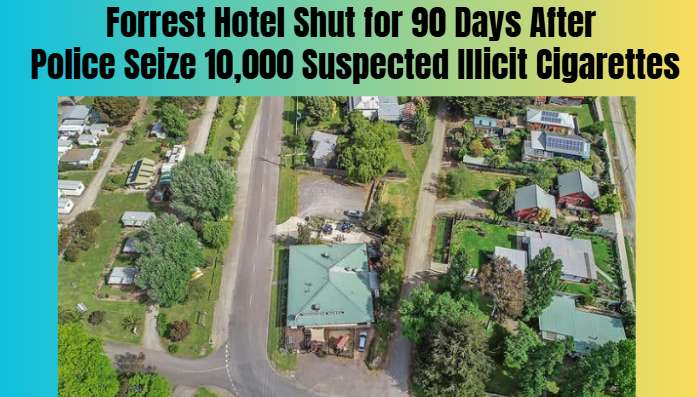
Police have closed a hotel in Forrest, Victoria, for 90 days after seizing approximately 10,000 suspected illicit cigarettes, loose tobacco and cash dur...
Victoria Police seized nine weapons and arrested four people during a targeted operation involving more than 300 searches at Stockland Plaza in Ballarat.
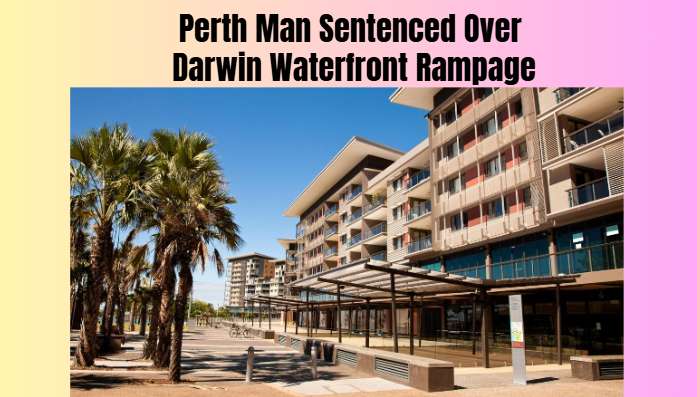
A 36-year-old man extradited from Perth has received a suspended prison sentence after being convicted over a violent incident involving four people at...
Darwin's Frontier Bar and Grill manager Aston Bell has received two industry awards, recognising her leadership, customer service and contribution to th...
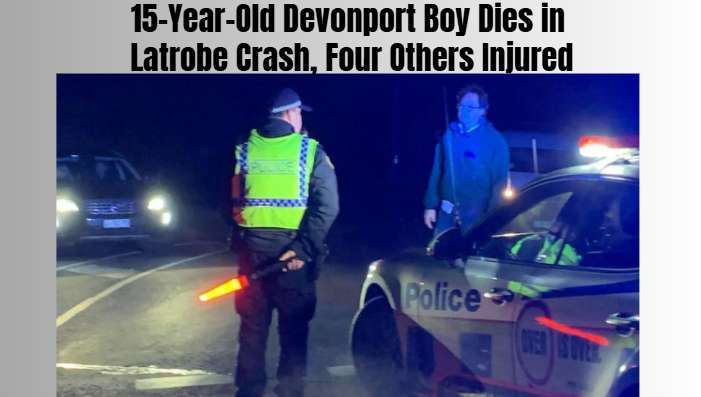
A teenager from Devonport has died and four other people were injured after a serious crash involving a ute on Mersey Main Road near Latrobe, Tasmania.