Safety note: Admin approval is an initial review, not a guarantee that every detail is correct. Check important or urgent claims with official sources and report anything inaccurate or unsafe.
Source and credit: Contributor's own report
Ambulance Crews Face Long Delays Outside Bairnsdale Hospital, Union Warns of Emergency Coverage Risks - Bairnsdale, VIC
Smart summary
Ambulance crews in Bairnsdale have reportedly spent several hours waiting to transfer patients into hospital care, prompting concerns from the Victorian Ambulance Union about emergency response coverage across East Gi...
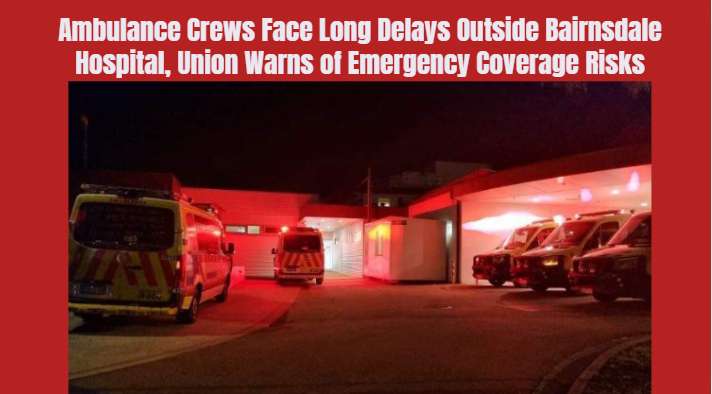
Ambulance crews have faced extended delays outside Bairnsdale Regional Health Service this week, raising concerns about the availability of emergency services for residents across East Gippsland.
The Victorian Ambulance Union has reported that paramedics spent several hours waiting outside Bairnsdale Hospital while seeking to transfer patients into the care of hospital staff. The union says the delays are affecting the ability of ambulance crews to return to service and respond to other emergencies in the region.
Union secretary Danny Hill said crews were unable to attend other patients while waiting to offload at the hospital on Monday night. He also said the situation was becoming more common, raising concerns about the potential impact on ambulance availability across the wider area. ABC News
Ambulance ramping occurs when paramedics arrive at a hospital with a patient but cannot immediately transfer responsibility to hospital staff. While the patient remains under ambulance care, the crew and vehicle may be unavailable for other emergency callouts. Extended delays can therefore place additional pressure on emergency response resources, particularly in regional areas where ambulance coverage may be spread over large distances.
Bairnsdale is an important healthcare centre for East Gippsland, serving residents from surrounding towns and rural communities. Access to timely emergency care is particularly important for people who live far from major hospitals, where ambulance travel times can already be significant.
The union has warned that prolonged hospital handover delays can affect the ability of paramedics to respond to new incidents. If multiple crews are tied up outside the hospital at the same time, fewer ambulances may be available to attend road accidents, medical emergencies and other urgent calls.
A spokesperson for Bairnsdale Regional Health Service said hospital staff and paramedics were working together to provide immediate emergency care. The health service's response highlights the cooperation between hospital teams and ambulance personnel as they manage patient needs and pressure on services. ABC News
The latest concerns come amid wider pressures on healthcare services, including emergency department demand, staffing requirements and the need to coordinate patient transfers. However, the available report does not provide detailed figures on the number of ambulance crews affected, the total duration of delays or the hospital's current bed capacity.
The union's concerns underline the importance of efficient patient handovers to ensure ambulances can return to the community as quickly as possible. The issue also raises questions about how regional healthcare services can maintain emergency coverage while continuing to provide care to patients arriving at hospital.
Ambulance crews and hospital staff continue to work together to manage emergency demand in Bairnsdale. Further information from the health service or ambulance authorities may clarify the scale of the delays and any measures being considered to address them.
AmbulanceHospitalEmergencyCrewsDelays
Ambulance crews have faced extended delays outside Bairnsdale Regional Health Service this week, raising concerns about the availability of emergency services for residents across East Gippsland.
The Victorian Ambulance Union has reported that paramedics spent several hours waiting outside Bairnsdale Hospital while seeking to transfer patients into the care of hospital staff. The union says the delays are affecting the ability of ambulance crews to return to service and respond to other emergencies in the region.
Union secretary Danny Hill said crews were unable to attend other patients while waiting to offload at the hospital on Monday night. He also said the situation was becoming more common, raising concerns about the potential impact on ambulance availability across the wider area. ABC News
Ambulance ramping occurs when paramedics arrive at a hospital with a patient but cannot immediately transfer responsibility to hospital staff. While the patient remains under ambulance care, the crew and vehicle may be unavailable for other emergency callouts. Extended delays can therefore place additional pressure on emergency response resources, particularly in regional areas where ambulance coverage may be spread over large distances.
Bairnsdale is an important healthcare centre for East Gippsland, serving residents from surrounding towns and rural communities. Access to timely emergency care is particularly important for people who live far from major hospitals, where ambulance travel times can already be significant.
The union has warned that prolonged hospital handover delays can affect the ability of paramedics to respond to new incidents. If multiple crews are tied up outside the hospital at the same time, fewer ambulances may be available to attend road accidents, medical emergencies and other urgent calls.
A spokesperson for Bairnsdale Regional Health Service said hospital staff and paramedics were working together to provide immediate emergency care. The health service's response highlights the cooperation between hospital teams and ambulance personnel as they manage patient needs and pressure on services. ABC News
The latest concerns come amid wider pressures on healthcare services, including emergency department demand, staffing requirements and the need to coordinate patient transfers. However, the available report does not provide detailed figures on the number of ambulance crews affected, the total duration of delays or the hospital's current bed capacity.
The union's concerns underline the importance of efficient patient handovers to ensure ambulances can return to the community as quickly as possible. The issue also raises questions about how regional healthcare services can maintain emergency coverage while continuing to provide care to patients arriving at hospital.
Ambulance crews and hospital staff continue to work together to manage emergency demand in Bairnsdale. Further information from the health service or ambulance authorities may clarify the scale of the delays and any measures being considered to address them.
Central Coast New South Wales · Health News · 30 Sep 2026
Central Coast communities are set to receive more than $1.8 million in funding for health facility upgrades, with the money allocated to the Central Coast Local Health District...
A South Australian soccer player with two broken bones in his lower leg travelled about 70 kilometres by private car after waiting at a regional hospita...
Geraldton is set to receive the Midwest region's first four-wheel-drive ambulance in October after concerns about emergency access to remote beaches, sa...
Regional councils are calling on the Australian Government to establish a $200 million funding program to help maintain regional airports, after a surve...
A man convicted of supplying the firearm used in a fatal 2021 brawl in North Booval, Ipswich, has received a longer prison sentence than the gunman, fol...
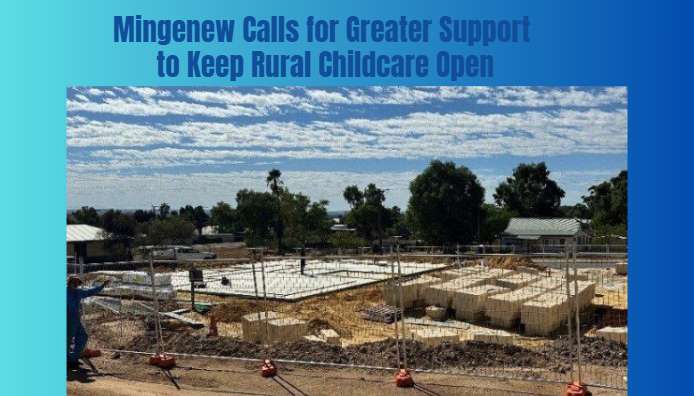
A rural Western Australian shire has asked the federal government to recognise the challenges of operating childcare services in small communities, wher...
Regional councils are calling on the Australian Government to establish a $200 million funding program to help maintain regional airports, after a surve...
A man convicted of supplying the firearm used in a fatal 2021 brawl in North Booval, Ipswich, has received a longer prison sentence than the gunman, fol...
A Queensland government department has lost approximately $800,000 in a cyberattack, prompting a review that found no government data or sensitive infor...
Brisbane is transforming plain walls and graffiti-prone public spaces into colourful murals by local artists, with a Newstead tunnel artwork and a Toowo...