Safety note: Admin approval is an initial review, not a guarantee that every detail is correct. Check important or urgent claims with official sources and report anything inaccurate or unsafe.
Source and credit: Contributor's own report
Ambulance Tasmania Meets Just 17 Per Cent of National Safety Actions in Mock Assessment - Hobart, TAS
Smart summary
A mock assessment of Ambulance Tasmania found that only 23 of 138 relevant national safety and quality actions were fully met, while the service says improvements have already been made.
Ambulance Tasmania is facing renewed scrutiny after a mock assessment found that the service fully met only 17 per cent of the relevant actions in Australia's national safety and quality standards.
The assessment was conducted by the Australian Council on Healthcare Standards after Ambulance Tasmania requested a review of its readiness against the National Safety and Quality Health Service standards. The report examined 138 relevant actions across areas including clinical governance, infection control, medication safety, communication and the recognition of deteriorating patients.
The assessment found that Ambulance Tasmania fully met 23 of the 138 actions. Another 66 actions were assessed as being met with recommendations, while 49 actions were not met.
The report was finalised in June 2025 but was obtained by the ABC through right-to-information provisions and reported on September 28, 2026. The assessment was a mock readiness assessment rather than a formal accreditation assessment.
Among the concerns identified by assessors were delays in responding to serious clinical incidents and coronial recommendations. The report also raised concerns about incident reporting, with staff reportedly lacking confidence in the system and indicating that some incidents were not being reported.
Assessors also found that many policies and procedures were out of date and that some risks were not being managed transparently or effectively. The report noted that addressing the identified issues could require substantial time and resources.
National Safety and Quality Health Service standards are designed to promote consistent and high-quality care across Australian health services. Accreditation for ambulance services is currently voluntary. South Australia's ambulance service is currently the only state-based ambulance service accredited under the standards, according to the ABC report.
The Health and Community Services Union described the assessment results as alarming and called for additional resources to address the issues identified.
Ambulance Tasmania and the Tasmanian Department of Health have pointed to improvements made since the assessment. The department said Ambulance Tasmania had proactively requested mock assessments in 2024 and 2025 as part of its continuous-improvement program.
According to the department, several changes have since been made, including a review and update of policies and procedures, development of a credentialing framework, changes to clinical governance arrangements and the creation of dedicated safety and quality capacity within existing positions.
The department also said work was continuing on implementing coronial recommendations and improving oversight of reported incidents.
The assessment therefore provides a snapshot of Ambulance Tasmania's readiness at the time of the review rather than a current formal accreditation result. The service says many of the identified actions have since been addressed.
The report nevertheless places attention on the systems and processes used by Tasmania's ambulance service and the work still required to meet national safety and quality expectations.
AmbulanceAssessmentTasmaniaActionsSafety
Ambulance Tasmania is facing renewed scrutiny after a mock assessment found that the service fully met only 17 per cent of the relevant actions in Australia's national safety and quality standards.
The assessment was conducted by the Australian Council on Healthcare Standards after Ambulance Tasmania requested a review of its readiness against the National Safety and Quality Health Service standards. The report examined 138 relevant actions across areas including clinical governance, infection control, medication safety, communication and the recognition of deteriorating patients.
The assessment found that Ambulance Tasmania fully met 23 of the 138 actions. Another 66 actions were assessed as being met with recommendations, while 49 actions were not met.
The report was finalised in June 2025 but was obtained by the ABC through right-to-information provisions and reported on September 28, 2026. The assessment was a mock readiness assessment rather than a formal accreditation assessment.
Among the concerns identified by assessors were delays in responding to serious clinical incidents and coronial recommendations. The report also raised concerns about incident reporting, with staff reportedly lacking confidence in the system and indicating that some incidents were not being reported.
Assessors also found that many policies and procedures were out of date and that some risks were not being managed transparently or effectively. The report noted that addressing the identified issues could require substantial time and resources.
National Safety and Quality Health Service standards are designed to promote consistent and high-quality care across Australian health services. Accreditation for ambulance services is currently voluntary. South Australia's ambulance service is currently the only state-based ambulance service accredited under the standards, according to the ABC report.
The Health and Community Services Union described the assessment results as alarming and called for additional resources to address the issues identified.
Ambulance Tasmania and the Tasmanian Department of Health have pointed to improvements made since the assessment. The department said Ambulance Tasmania had proactively requested mock assessments in 2024 and 2025 as part of its continuous-improvement program.
According to the department, several changes have since been made, including a review and update of policies and procedures, development of a credentialing framework, changes to clinical governance arrangements and the creation of dedicated safety and quality capacity within existing positions.
The department also said work was continuing on implementing coronial recommendations and improving oversight of reported incidents.
The assessment therefore provides a snapshot of Ambulance Tasmania's readiness at the time of the review rather than a current formal accreditation result. The service says many of the identified actions have since been addressed.
The report nevertheless places attention on the systems and processes used by Tasmania's ambulance service and the work still required to meet national safety and quality expectations.
A Sydney patient says he spent 23 hours waiting on a chair at Westmead Hospital's emergency department, while new figures show continuing pressure on th...
Australian health experts are warning that cat bites and scratches can cause severe infections, with hospitalisations from cat-related injuries nearly t...
A parliamentary petition calling for specialist endometriosis education in NSW public high schools has attracted more than 1,700 signatures, as health a...
Seven Australian health startups will share $15.6 million in equity-free funding to develop new dementia treatments, early-detection tools, gene therapi...
A new Tasmanian sports academy is creating education and career pathways as the state’s professional sporting sector expands with the Tasmania Devils, J...
Former Tasmanian GP Michael Anthony Welch has pleaded not guilty to three indecent assault charges relating to allegations made by a former patient abou...
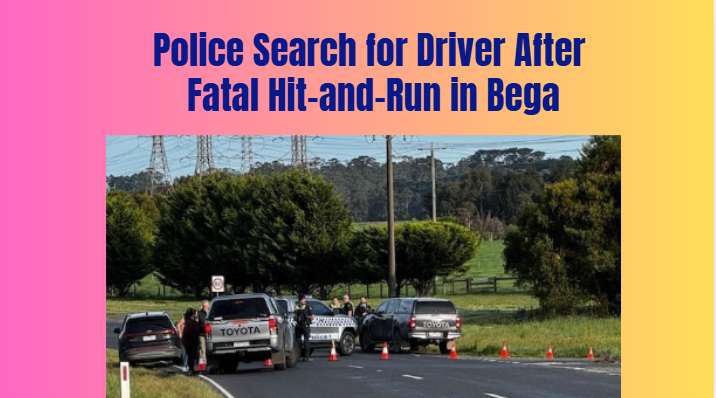
NSW Police are appealing for information to identify a woman wanted in connection with the death of a 73-year-old man following an alleged hit-and-run i...
A 48-hour burst of heavy rain has brought almost 100 millimetres to parts of Western Australia, damaging some crops while providing welcome moisture bef...
The Victorian Government has announced an $80 million study into duplicating Melbourne's Upfield railway line while delaying eight planned level-crossin...