Safety note: Admin approval is an initial review, not a guarantee that every detail is correct. Check important or urgent claims with official sources and report anything inaccurate or unsafe.
Source and credit: Contributor's own report
Australia rules out Russian fuel imports as global supply concerns continue - Canberra, ACT
Smart summary
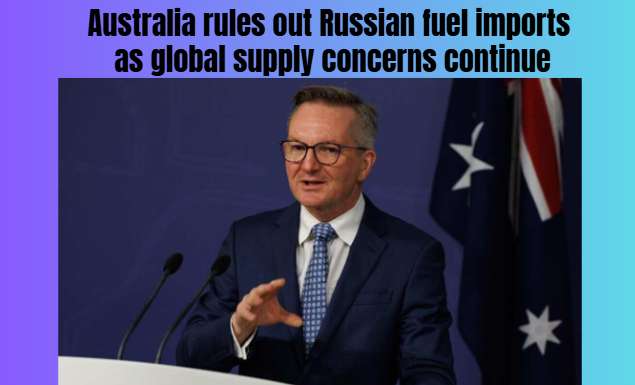
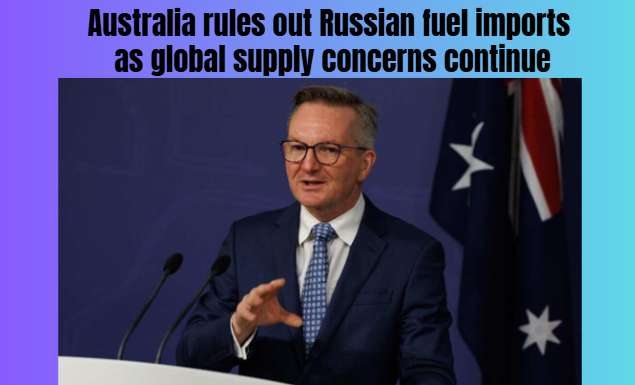
Energy Minister Chris Bowen says Australia will maintain its approach of preventing Russian fuel from entering the country, while reporting that 51 fuel shipments are on their way to Australia.
Australia has reaffirmed its position against importing Russian fuel as international energy markets face uncertainty linked to conflict in the Middle East and changes in global fuel supply arrangements.
On Saturday, Energy and Climate Change Minister Chris Bowen provided an update on Australia's fuel reserves and the government's approach to securing supplies. His comments followed an announcement by United States President Donald Trump that Russia had agreed to supply diesel to the US and global markets.
Bowen said Australia did not need or want Russian fuel and indicated that the government would continue working with international trading partners to prevent Russian fuel from flowing into the country. He said Australia's position on Russia's invasion of Ukraine would not change because of the wider energy crisis.
The US announcement described an initial diesel supply of 300,000 tonnes, followed by further deliveries planned for November and beyond, subject to the condition of Russian refineries. The proposal has prompted debate internationally about energy security, fuel prices and the implications of purchasing Russian petroleum products.
In Australia, the government is focusing on maintaining existing supply arrangements, working with overseas partners and keeping domestic refineries operating. Bowen said the country was continuing to cooperate with partners in South-East Asia, India and Saudi Arabia, among others, to support the flow of fuel.
The minister reported that Australia had approximately 43 days of petrol supplies and 31 days of diesel supplies. He also said 51 fuel ships were on their way to Australia, with approximately 3.2 billion litres of different fuel products contracted for delivery over the following four weeks.
These figures represent the government's reported supply position at the time of the update. They should not be interpreted as a guarantee that every region will experience identical availability or that prices will remain unchanged. Actual supply and retail prices can be affected by shipping schedules, refining capacity, distribution and movements in international markets.
One Nation leader Pauline Hanson offered a different perspective during a conference in Brisbane, arguing that countries should consider working with suppliers if doing so helps secure essential resources. She also called for Australia to increase domestic fuel production. Her comments highlighted the policy debate about balancing energy security, international relationships and the cost of fuel for households and businesses.
The government, meanwhile, says it intends to maintain its existing approach and continue coordinating with trading partners and Australian refiners. The international situation remains uncertain, and officials are monitoring supply conditions.
For motorists and businesses, the central issue is whether contracted shipments arrive as scheduled and whether fuel can be distributed reliably across the country. The latest update provides figures on reserves and incoming shipments, but it does not establish what future prices will be.
FuelSupplyRussianEnergyGovernment
Australia has reaffirmed its position against importing Russian fuel as international energy markets face uncertainty linked to conflict in the Middle East and changes in global fuel supply arrangements.
On Saturday, Energy and Climate Change Minister Chris Bowen provided an update on Australia's fuel reserves and the government's approach to securing supplies. His comments followed an announcement by United States President Donald Trump that Russia had agreed to supply diesel to the US and global markets.
Bowen said Australia did not need or want Russian fuel and indicated that the government would continue working with international trading partners to prevent Russian fuel from flowing into the country. He said Australia's position on Russia's invasion of Ukraine would not change because of the wider energy crisis.
The US announcement described an initial diesel supply of 300,000 tonnes, followed by further deliveries planned for November and beyond, subject to the condition of Russian refineries. The proposal has prompted debate internationally about energy security, fuel prices and the implications of purchasing Russian petroleum products.
In Australia, the government is focusing on maintaining existing supply arrangements, working with overseas partners and keeping domestic refineries operating. Bowen said the country was continuing to cooperate with partners in South-East Asia, India and Saudi Arabia, among others, to support the flow of fuel.
The minister reported that Australia had approximately 43 days of petrol supplies and 31 days of diesel supplies. He also said 51 fuel ships were on their way to Australia, with approximately 3.2 billion litres of different fuel products contracted for delivery over the following four weeks.
These figures represent the government's reported supply position at the time of the update. They should not be interpreted as a guarantee that every region will experience identical availability or that prices will remain unchanged. Actual supply and retail prices can be affected by shipping schedules, refining capacity, distribution and movements in international markets.
One Nation leader Pauline Hanson offered a different perspective during a conference in Brisbane, arguing that countries should consider working with suppliers if doing so helps secure essential resources. She also called for Australia to increase domestic fuel production. Her comments highlighted the policy debate about balancing energy security, international relationships and the cost of fuel for households and businesses.
The government, meanwhile, says it intends to maintain its existing approach and continue coordinating with trading partners and Australian refiners. The international situation remains uncertain, and officials are monitoring supply conditions.
For motorists and businesses, the central issue is whether contracted shipments arrive as scheduled and whether fuel can be distributed reliably across the country. The latest update provides figures on reserves and incoming shipments, but it does not establish what future prices will be.
Energy Minister Chris Bowen says Australia will maintain its approach of preventing Russian fuel from entering the country, while reporting that 51 fuel...
A 60-year-old man has been arrested after a person was found dead inside an apartment complex on Cardigan Street in Carlton. Police say the investigatio...
The Sydney Olympic Park apartment complex has been officially declared defect-free following years of repairs, legal disputes and compensation efforts a...
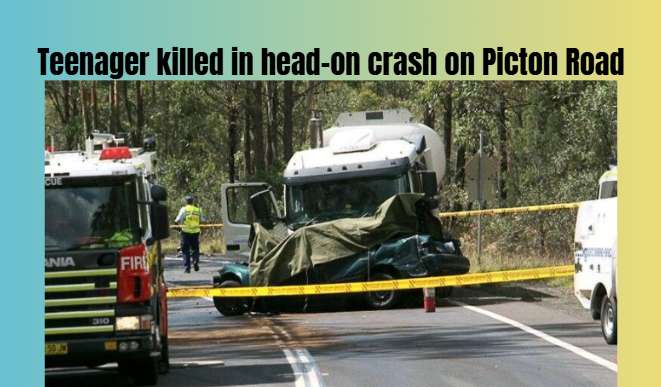
A driver believed to be in his late teens died after two vehicles collided head-on near Wilton, south-west of Sydney. The other driver was taken to hosp...
Energy Minister Chris Bowen says Australia will maintain its approach of preventing Russian fuel from entering the country, while reporting that 51 fuel...
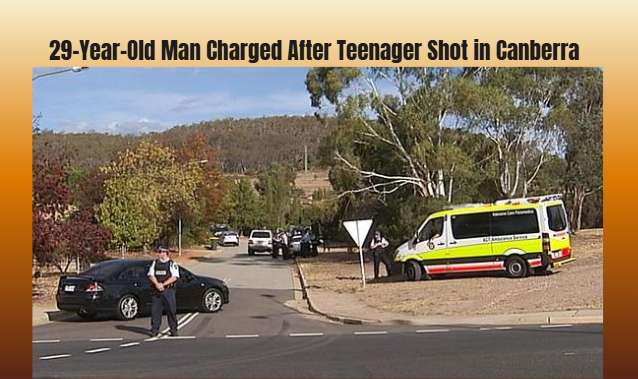
A teenager suffered serious injuries after a passenger in a car was allegedly shot at in Canberra’s south. A 29-year-old man has been charged, police say.
Two men have been charged following an alleged armed robbery at a business in Hughes, Canberra. The investigation also involved a dangerous police pursu...
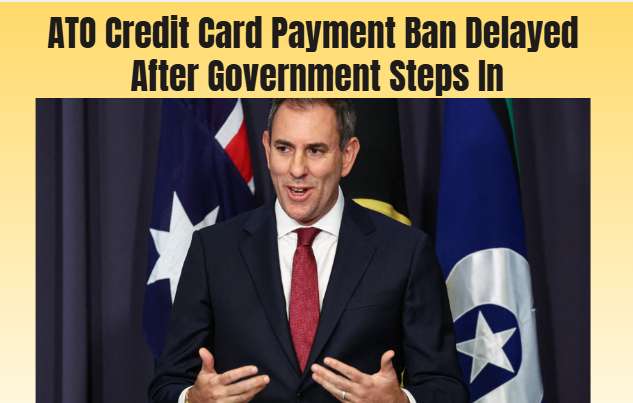
The federal government will fund a temporary extension of credit card payments to the Australian Taxation Office, giving small businesses and taxpayers...
Darwin City Council plans to lead a business delegation to China and Vietnam in December, with approximately $18,000 in ratepayer funding drawing critic...
St Kilda defeated Collingwood by two points in a tense AFLW contest, giving departing coach Nick Dal Santo a winning farewell after a difficult season.
Defending champion South Australia began its Sheffield Shield campaign with a commanding innings-and-40-run victory over Victoria, with debutant Noah Mc...
Energy Minister Chris Bowen says Australia will maintain its approach of preventing Russian fuel from entering the country, while reporting that 51 fuel...