Australian Company Develops Nuclear Microreactor Small Enough to Fit in a Utility Vehicle
By Chloe · Published 24 Nov 2026 · Updated 24 Nov 2026
Rockhampton, QLD · Queensland News
Safety note: Admin approval is an initial review, not a guarantee that every detail is correct. Check important or urgent claims with official sources and report anything inaccurate or unsafe.
Source and credit: Contributor's own report
Australian Company Develops Nuclear Microreactor Small Enough to Fit in a Utility Vehicle - Rockhampton, QLD
Smart summary
An Australian-owned energy company has developed a compact nuclear microreactor that reached a major testing milestone in just 155 days in the United States. The breakthrough has reignited debate about whether Austral...
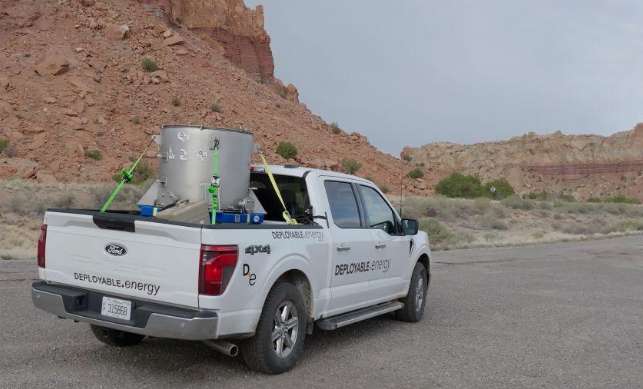
An Australian-owned energy company has attracted international attention after successfully developing a compact nuclear microreactor that is small enough to be transported in the back of a utility vehicle.
The development has renewed discussions about Australia's future energy strategy, particularly whether nuclear technology could provide reliable electricity to remote communities, industrial facilities and large data centres.
According to ABC News reporting published on November 24, 2026, Deployable Energy developed the microreactor under a United States government pilot program designed to accelerate the development of advanced nuclear technologies.
The company is owned by Brisbane-raised entrepreneur Bobby Gallagher. Its latest reactor reached a major technical milestone known as criticality in just 155 days.
Criticality is an important stage in nuclear reactor development because it means the reactor has achieved a self-sustaining nuclear chain reaction. It is a significant technical achievement, although further testing and regulatory approvals are necessary before commercial operation.
The microreactor is designed to produce approximately 3.5 megawatts of thermal power. According to Gallagher, the technology could provide electricity for up to 1,000 homes for five years without requiring refuelling.
After the five-year operating period, the reactor module could be replaced rather than requiring conventional refuelling at the site.
The company believes the technology could offer an alternative energy solution for locations where connecting to traditional electricity infrastructure is difficult or expensive.
Potential applications include remote Australian communities, mining operations, manufacturing facilities, islands and artificial intelligence data centres.
Australia has vast geographical distances and several remote communities that face challenges accessing reliable electricity. Mining operations and industrial facilities also require substantial amounts of energy to maintain their operations.
A compact nuclear reactor could potentially provide continuous electricity without depending entirely on conventional electricity networks.
Deployable Energy is currently conducting safety testing at the Idaho National Laboratory in the United States. The company has also outlined plans to manufacture up to 1,000 reactor units annually at a facility in Texas by 2030.
The announcement has attracted attention from federal politicians, including Liberal National Party member for Flynn Colin Boyce.
Boyce has called on the Australian Government to reconsider its nuclear energy moratorium, arguing that emerging technologies should be included in discussions about the country's future electricity supply.
However, the proposal has attracted criticism from renewable energy advocates.
Emma Smith from the Gladstone Conservation Council expressed concerns about the environmental and community implications of establishing nuclear facilities in Central Queensland.
Representatives of Rewiring Australia have also questioned whether nuclear electricity could be delivered affordably compared with renewable energy supported by battery storage.
Federal Energy Minister Chris Bowen has previously rejected nuclear power as a practical solution for Australia's immediate energy requirements.
Australia currently maintains a legal prohibition on commercial nuclear power generation under federal legislation.
The latest development therefore does not mean that nuclear electricity will immediately become available in Australia. Any domestic deployment would require changes to existing laws, regulatory approvals, infrastructure investment and community consultation.
Nevertheless, the successful development of the compact reactor has added a new dimension to Australia's national energy debate.
As electricity demand increases through artificial intelligence, mining and industrial expansion, policymakers face growing pressure to identify reliable and affordable energy sources.
The coming years will determine whether technologies such as microreactors can become commercially viable and whether Australia will reconsider its position on nuclear energy.
EnergyNuclearElectricityReactorCould
An Australian-owned energy company has attracted international attention after successfully developing a compact nuclear microreactor that is small enough to be transported in the back of a utility vehicle.
The development has renewed discussions about Australia's future energy strategy, particularly whether nuclear technology could provide reliable electricity to remote communities, industrial facilities and large data centres.
According to ABC News reporting published on November 24, 2026, Deployable Energy developed the microreactor under a United States government pilot program designed to accelerate the development of advanced nuclear technologies.
The company is owned by Brisbane-raised entrepreneur Bobby Gallagher. Its latest reactor reached a major technical milestone known as criticality in just 155 days.
Criticality is an important stage in nuclear reactor development because it means the reactor has achieved a self-sustaining nuclear chain reaction. It is a significant technical achievement, although further testing and regulatory approvals are necessary before commercial operation.
The microreactor is designed to produce approximately 3.5 megawatts of thermal power. According to Gallagher, the technology could provide electricity for up to 1,000 homes for five years without requiring refuelling.
After the five-year operating period, the reactor module could be replaced rather than requiring conventional refuelling at the site.
The company believes the technology could offer an alternative energy solution for locations where connecting to traditional electricity infrastructure is difficult or expensive.
Potential applications include remote Australian communities, mining operations, manufacturing facilities, islands and artificial intelligence data centres.
Australia has vast geographical distances and several remote communities that face challenges accessing reliable electricity. Mining operations and industrial facilities also require substantial amounts of energy to maintain their operations.
A compact nuclear reactor could potentially provide continuous electricity without depending entirely on conventional electricity networks.
Deployable Energy is currently conducting safety testing at the Idaho National Laboratory in the United States. The company has also outlined plans to manufacture up to 1,000 reactor units annually at a facility in Texas by 2030.
The announcement has attracted attention from federal politicians, including Liberal National Party member for Flynn Colin Boyce.
Boyce has called on the Australian Government to reconsider its nuclear energy moratorium, arguing that emerging technologies should be included in discussions about the country's future electricity supply.
However, the proposal has attracted criticism from renewable energy advocates.
Emma Smith from the Gladstone Conservation Council expressed concerns about the environmental and community implications of establishing nuclear facilities in Central Queensland.
Representatives of Rewiring Australia have also questioned whether nuclear electricity could be delivered affordably compared with renewable energy supported by battery storage.
Federal Energy Minister Chris Bowen has previously rejected nuclear power as a practical solution for Australia's immediate energy requirements.
Australia currently maintains a legal prohibition on commercial nuclear power generation under federal legislation.
The latest development therefore does not mean that nuclear electricity will immediately become available in Australia. Any domestic deployment would require changes to existing laws, regulatory approvals, infrastructure investment and community consultation.
Nevertheless, the successful development of the compact reactor has added a new dimension to Australia's national energy debate.
As electricity demand increases through artificial intelligence, mining and industrial expansion, policymakers face growing pressure to identify reliable and affordable energy sources.
The coming years will determine whether technologies such as microreactors can become commercially viable and whether Australia will reconsider its position on nuclear energy.
Uncovered an Iran-based influence operation that allegedly used artificial intelligence to create a fake journalist and publish misleading articles and...
Education experts warn that miniature cameras, wireless earpieces and artificial intelligence are creating new challenges for universities trying to pro...
Prime Minister Anthony Albanese secures an agreement with Chinese Premier Li Qiang to establish discussions on artificial intelligence, technology coope...
A new Climate Council report warns that Australia's growing data centre industry could generate up to 39 million tonnes of additional greenhouse gas emi...
Australia's two biggest airline groups are not participating in Brisbane Airport's voluntary overnight flight noise reduction trial, raising concerns am...
A teenage girl has died days after a vehicle allegedly stolen by a teenager crashed into another car and a power pole in Brisbane's south-east. Two othe...
Two separate alleged assaults have left two people seriously injured on Queensland's Gold Coast, with eight teenagers taken into custody during the busy...
Thousands of school leavers have arrived on Queensland's Gold Coast for Schoolies Week, but changing interests and declining attendance are reshaping th...
A woman aged 46 and a man in his 60s died after an SUV and a van collided near Ulmarra on the NSW North Coast. Police have established a critical incide...
Two Australians are facing legal proceedings in Thailand over an alleged multimillion-dollar investment fraud involving approximately $1.9 million, rais...
Uncovered an Iran-based influence operation that allegedly used artificial intelligence to create a fake journalist and publish misleading articles and...
The Albanese government and the Greens have reached an agreement on stronger digital duty-of-care laws. Major technology companies could face penalties...