Qantas and Virgin Refuse to Join Brisbane Airport's Flight Noise Reduction Trial
By Chloe · Published 24 Nov 2026 · Updated 24 Nov 2026
Brisbane, QLD · Queensland News
Safety note: Admin approval is an initial review, not a guarantee that every detail is correct. Check important or urgent claims with official sources and report anything inaccurate or unsafe.
Source and credit: Contributor's own report
Qantas and Virgin Refuse to Join Brisbane Airport's Flight Noise Reduction Trial - Brisbane, QLD
Smart summary
Australia's two biggest airline groups are not participating in Brisbane Airport's voluntary overnight flight noise reduction trial, raising concerns among residents who say aircraft noise continues to disrupt their s...
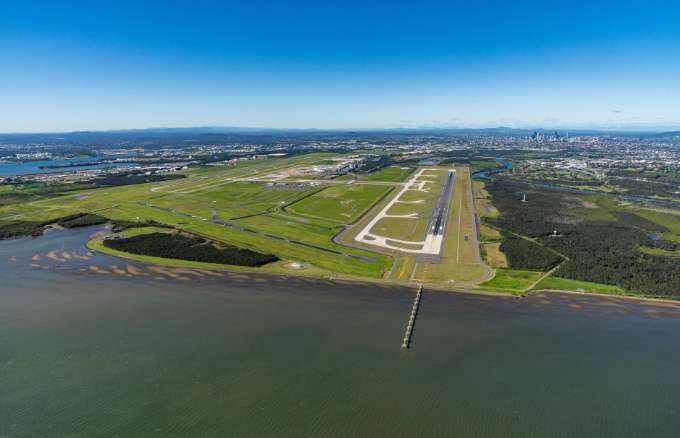
Brisbane Airport's efforts to reduce aircraft noise affecting nearby residential communities have come under renewed scrutiny after it emerged that Australia's two major airline groups, Qantas Group and Virgin Australia, are not participating in the airport's voluntary Tailwind Trial.
The development was reported by ABC News Brisbane on Tuesday, November 24, 2026. The trial aims to reduce overnight aircraft noise by encouraging airlines to direct departing flights over Moreton Bay whenever weather and operating conditions allow.
The voluntary program began in December 2025 and is expected to run for 18 months. Its primary objective is to provide relief to residents living beneath busy aircraft flight paths, particularly during overnight hours when aircraft noise can disturb sleep.
However, the absence of Qantas Group and Virgin Airlines has raised questions about how effective the program can be if major domestic carriers do not participate.
Brisbane Airport's head of airspace management, Tim Boyl, said international and freight airlines were leading participation in the ongoing program. He explained that the airport continued working with airlines operating overnight to maximise departures over the bay whenever it was safe to do so.
The airport believes that every aircraft departing over water during nighttime operations can provide a positive outcome for nearby communities.
However, aviation professionals have raised concerns about the operational requirements of the trial.
Steve Cornell, vice-president of the Australian and International Pilots Association and a Brisbane-based pilot, said he was not surprised that the two major airline groups were not participating.
He explained that routinely taking off or landing with increased tailwind conditions can reduce aircraft safety margins. Although operating with a tailwind within approved limits is not necessarily unsafe, pilots must consider aircraft performance, weather conditions and operational requirements before making decisions.
Cornell also questioned whether the voluntary trial would deliver meaningful improvements for residents.
The Brisbane Flight Path Community Alliance has similarly expressed disappointment about the limited participation. Its spokesman, Matt Loveday, said that while every flight avoiding residential areas was beneficial, a program with limited airline involvement could not solve the broader aircraft noise problem.
Residents living beneath Brisbane's flight paths have repeatedly raised concerns about interrupted sleep, particularly during overnight aircraft movements.
The opening of Brisbane Airport's second runway in July 2020 increased attention on flight path arrangements and their impact on surrounding communities. Since then, residents have continued calling for practical measures that distribute aircraft noise more fairly.
The airport's Tailwind Trial operates within the existing aviation regulatory framework. It does not change international aviation standards or require an exemption from the Civil Aviation Safety Authority. Pilots retain the ability to choose tailwind operations when conditions remain within approved safety limits.
The debate highlights the challenge of balancing aviation safety, airport efficiency and the wellbeing of people living near major transport infrastructure.
For Brisbane residents, the central concern remains whether the voluntary program can deliver noticeable improvements in everyday living conditions.
The airport continues to work with participating airlines, while residents' representatives are calling for stronger and more effective measures to address overnight aircraft noise.
AircraftAirportBrisbaneNoiseFlight
Brisbane Airport's efforts to reduce aircraft noise affecting nearby residential communities have come under renewed scrutiny after it emerged that Australia's two major airline groups, Qantas Group and Virgin Australia, are not participating in the airport's voluntary Tailwind Trial.
The development was reported by ABC News Brisbane on Tuesday, November 24, 2026. The trial aims to reduce overnight aircraft noise by encouraging airlines to direct departing flights over Moreton Bay whenever weather and operating conditions allow.
The voluntary program began in December 2025 and is expected to run for 18 months. Its primary objective is to provide relief to residents living beneath busy aircraft flight paths, particularly during overnight hours when aircraft noise can disturb sleep.
However, the absence of Qantas Group and Virgin Airlines has raised questions about how effective the program can be if major domestic carriers do not participate.
Brisbane Airport's head of airspace management, Tim Boyl, said international and freight airlines were leading participation in the ongoing program. He explained that the airport continued working with airlines operating overnight to maximise departures over the bay whenever it was safe to do so.
The airport believes that every aircraft departing over water during nighttime operations can provide a positive outcome for nearby communities.
However, aviation professionals have raised concerns about the operational requirements of the trial.
Steve Cornell, vice-president of the Australian and International Pilots Association and a Brisbane-based pilot, said he was not surprised that the two major airline groups were not participating.
He explained that routinely taking off or landing with increased tailwind conditions can reduce aircraft safety margins. Although operating with a tailwind within approved limits is not necessarily unsafe, pilots must consider aircraft performance, weather conditions and operational requirements before making decisions.
Cornell also questioned whether the voluntary trial would deliver meaningful improvements for residents.
The Brisbane Flight Path Community Alliance has similarly expressed disappointment about the limited participation. Its spokesman, Matt Loveday, said that while every flight avoiding residential areas was beneficial, a program with limited airline involvement could not solve the broader aircraft noise problem.
Residents living beneath Brisbane's flight paths have repeatedly raised concerns about interrupted sleep, particularly during overnight aircraft movements.
The opening of Brisbane Airport's second runway in July 2020 increased attention on flight path arrangements and their impact on surrounding communities. Since then, residents have continued calling for practical measures that distribute aircraft noise more fairly.
The airport's Tailwind Trial operates within the existing aviation regulatory framework. It does not change international aviation standards or require an exemption from the Civil Aviation Safety Authority. Pilots retain the ability to choose tailwind operations when conditions remain within approved safety limits.
The debate highlights the challenge of balancing aviation safety, airport efficiency and the wellbeing of people living near major transport infrastructure.
For Brisbane residents, the central concern remains whether the voluntary program can deliver noticeable improvements in everyday living conditions.
The airport continues to work with participating airlines, while residents' representatives are calling for stronger and more effective measures to address overnight aircraft noise.
The Australian Government is considering moving the major Great Barrier Reef aquarium to Townsville's Strand after an engineering report raised concerns...
Qantas will introduce direct flights between Sydney and Cape Town from October 2027, creating a new international travel connection between Australia an...
Australia's aviation safety investigators have found that a light aircraft experienced repeated engine-start difficulties before crashing near Logan, ki...
An Australian-owned energy company has developed a compact nuclear microreactor that reached a major testing milestone in just 155 days in the United St...
A teenage girl has died days after a vehicle allegedly stolen by a teenager crashed into another car and a power pole in Brisbane's south-east. Two othe...
Two separate alleged assaults have left two people seriously injured on Queensland's Gold Coast, with eight teenagers taken into custody during the busy...
Thousands of school leavers have arrived on Queensland's Gold Coast for Schoolies Week, but changing interests and declining attendance are reshaping th...
A woman aged 46 and a man in his 60s died after an SUV and a van collided near Ulmarra on the NSW North Coast. Police have established a critical incide...
Two Australians are facing legal proceedings in Thailand over an alleged multimillion-dollar investment fraud involving approximately $1.9 million, rais...
An Australian-owned energy company has developed a compact nuclear microreactor that reached a major testing milestone in just 155 days in the United St...
Uncovered an Iran-based influence operation that allegedly used artificial intelligence to create a fake journalist and publish misleading articles and...