US Flight Disruption Causes Delays for Australian Travellers at Major Airports
By Chloe · Published 14 Nov 2026 · Updated 14 Nov 2026
Sydney, NSW · New South Wales News
Safety note: Admin approval is an initial review, not a guarantee that every detail is correct. Check important or urgent claims with official sources and report anything inaccurate or unsafe.
Source and credit: Contributor's own report
US Flight Disruption Causes Delays for Australian Travellers at Major Airports - Sydney, NSW
Smart summary
Telecommunications outage affecting American aviation operations disrupts US-bound flights from Sydney, Melbourne and Brisbane, leaving passengers facing unexpected travel delays.
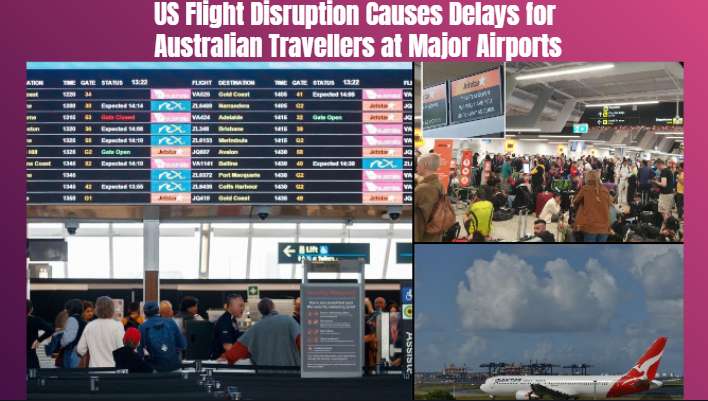
Australian travellers heading to the United States experienced unexpected flight disruptions on Saturday, 14 November 2026, after a telecommunications outage affected aviation operations across the United States. The incident prompted the Federal Aviation Administration (FAA) to temporarily halt departing flights and restrict some arriving aircraft, creating delays for passengers travelling from major Australian airports.
The disruption affected international travel connections involving Sydney, Melbourne and Brisbane. Passengers preparing to travel to American destinations faced changes to departure schedules as airlines and airport authorities monitored developments overseas.
Sydney Airport confirmed that some flights travelling to the United States were affected by the American aviation restrictions. Airport officials said they were monitoring the situation and advised passengers travelling to or through the United States to contact their airlines for the latest flight information.
Melbourne Airport also experienced disruptions, with some passengers facing delays of almost three hours. Travellers scheduled to depart for Los Angeles during the morning were among those affected. A flight to Dallas, originally scheduled to leave at approximately 10 am, eventually departed at around 1 pm after the American restrictions were lifted.
Brisbane Airport reported delays involving four flights travelling to the United States. Airport officials said that no cancellations had been reported among those affected flights as of approximately 2 pm on Saturday.
The disruption originated in the United States, where the Federal Aviation Administration introduced a nationwide ground stop following communications problems affecting aviation operations. The temporary telecommunications outage raised concerns about the ability of air traffic controllers to coordinate aircraft movements safely.
The FAA's decision was taken as a precautionary measure to protect passengers, airline crews and aviation personnel. Aircraft that were already airborne were permitted to land, while restrictions affected departing flights. Authorities subsequently lifted the grounding order while investigations into the telecommunications problem continued.
The incident demonstrated how problems within one country's aviation infrastructure can affect international travel networks. Flights connecting Australia with American destinations depend on coordinated airport operations, airline schedules and air traffic management systems. When restrictions are introduced at major international destinations, the consequences can extend beyond the airports directly experiencing technical problems.
Qantas and airport authorities encouraged passengers with upcoming travel plans to check their flight status before leaving for the airport. Travellers were also advised to monitor airline notifications because departure times and connecting arrangements could change as aircraft schedules returned to normal.
Passengers with connecting international journeys may also need to confirm their onward arrangements directly with their airlines. Even after an operational restriction is removed, aircraft and crew scheduling can take additional time to recover.
The FAA has lifted the nationwide grounding order, but the full impact on airline schedules remained unclear in the latest Australian reporting. Investigations into the telecommunications outage are continuing.
For Australian travellers, the key priority is to obtain accurate information directly from airlines and allow additional time for international travel arrangements while affected services return to their scheduled operations.
AirportAffectedAviationPassengersWere
Australian travellers heading to the United States experienced unexpected flight disruptions on Saturday, 14 November 2026, after a telecommunications outage affected aviation operations across the United States. The incident prompted the Federal Aviation Administration (FAA) to temporarily halt departing flights and restrict some arriving aircraft, creating delays for passengers travelling from major Australian airports.
The disruption affected international travel connections involving Sydney, Melbourne and Brisbane. Passengers preparing to travel to American destinations faced changes to departure schedules as airlines and airport authorities monitored developments overseas.
Sydney Airport confirmed that some flights travelling to the United States were affected by the American aviation restrictions. Airport officials said they were monitoring the situation and advised passengers travelling to or through the United States to contact their airlines for the latest flight information.
Melbourne Airport also experienced disruptions, with some passengers facing delays of almost three hours. Travellers scheduled to depart for Los Angeles during the morning were among those affected. A flight to Dallas, originally scheduled to leave at approximately 10 am, eventually departed at around 1 pm after the American restrictions were lifted.
Brisbane Airport reported delays involving four flights travelling to the United States. Airport officials said that no cancellations had been reported among those affected flights as of approximately 2 pm on Saturday.
The disruption originated in the United States, where the Federal Aviation Administration introduced a nationwide ground stop following communications problems affecting aviation operations. The temporary telecommunications outage raised concerns about the ability of air traffic controllers to coordinate aircraft movements safely.
The FAA's decision was taken as a precautionary measure to protect passengers, airline crews and aviation personnel. Aircraft that were already airborne were permitted to land, while restrictions affected departing flights. Authorities subsequently lifted the grounding order while investigations into the telecommunications problem continued.
The incident demonstrated how problems within one country's aviation infrastructure can affect international travel networks. Flights connecting Australia with American destinations depend on coordinated airport operations, airline schedules and air traffic management systems. When restrictions are introduced at major international destinations, the consequences can extend beyond the airports directly experiencing technical problems.
Qantas and airport authorities encouraged passengers with upcoming travel plans to check their flight status before leaving for the airport. Travellers were also advised to monitor airline notifications because departure times and connecting arrangements could change as aircraft schedules returned to normal.
Passengers with connecting international journeys may also need to confirm their onward arrangements directly with their airlines. Even after an operational restriction is removed, aircraft and crew scheduling can take additional time to recover.
The FAA has lifted the nationwide grounding order, but the full impact on airline schedules remained unclear in the latest Australian reporting. Investigations into the telecommunications outage are continuing.
For Australian travellers, the key priority is to obtain accurate information directly from airlines and allow additional time for international travel arrangements while affected services return to their scheduled operations.
The Australian Government is considering moving the major Great Barrier Reef aquarium to Townsville's Strand after an engineering report raised concerns...
Qantas will introduce direct flights between Sydney and Cape Town from October 2027, creating a new international travel connection between Australia an...
Australia's aviation safety investigators have found that a light aircraft experienced repeated engine-start difficulties before crashing near Logan, ki...
Fremantle's new bridge will open to the public on Sunday, 1 November, replacing the ageing crossing and providing wider shared paths for pedestrians and...
NSW patient survey findings highlight safety concerns in several major hospitals, as the state government commits additional security staff to emergency...
New government figures show a decline in the country's illicit tobacco market following record seizures and increased enforcement by Australian Border F...
A major Microsoft service disruption affected millions of users worldwide, interrupting email, workplace communication, healthcare administration and bu...
New battery-powered trailer technology is attracting attention in Australia's transport industry, with the potential to reduce fuel consumption, operati...
NSW patient survey findings highlight safety concerns in several major hospitals, as the state government commits additional security staff to emergency...
Police are investigating a daylight theft after three valuable trophies belonging to Australia's legendary racehorse were taken from an exhibition displ...
Operation Amarok 15 resulted in 1,594 charges, hundreds of apprehended domestic violence order breaches identified and dozens of firearms seized across...