Australia's Data Centre Expansion Could Add 39 Million Tonnes of Greenhouse Gas Emissions
By Chloe · Published 19 Nov 2026 · Updated 19 Nov 2026
National, ACT
Safety note: Admin approval is an initial review, not a guarantee that every detail is correct. Check important or urgent claims with official sources and report anything inaccurate or unsafe.
Source and credit: Contributor's own report
Australia's Data Centre Expansion Could Add 39 Million Tonnes of Greenhouse Gas Emissions - National, ACT
Smart summary
A new Climate Council report warns that Australia's growing data centre industry could generate up to 39 million tonnes of additional greenhouse gas emissions over the next decade if major facilities rely heavily on f...
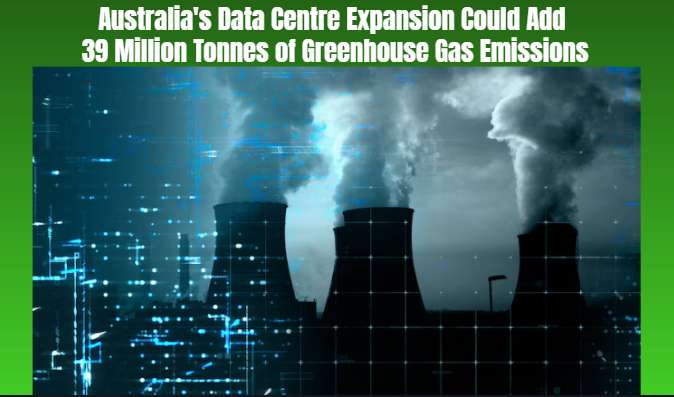
Australia's rapidly expanding data centre industry is facing growing environmental concerns after a new report warned that nine proposed large-scale facilities could produce an additional 39 million tonnes of greenhouse gas emissions over the next decade.
The warning comes from the Climate Council, which examined the potential environmental impact of nine proposed data centres with particularly high electricity requirements. According to the report, if these facilities are powered primarily by fossil fuels, their emissions could become comparable to the annual greenhouse gas output of an entire country such as Sweden.
The expansion of data centres is closely connected to the growing demand for artificial intelligence, cloud computing and online services. These facilities require enormous amounts of electricity to operate computer servers, store information and maintain the cooling systems needed to prevent equipment from overheating.
Australia already has approximately 165 operational data centres, making it one of the world's leading locations for this infrastructure. However, the development of additional hyperscale facilities could significantly increase national electricity consumption.
The Australian Energy Market Operator forecasts that data centres could eventually consume as much electricity as nearly all households in New South Wales and Victoria combined.
Climate Council chief executive Amanda McKenzie warned that increased electricity demand could slow Australia's transition towards cleaner energy if developers rely heavily on existing coal-fired power stations and new gas generation.
The report has also raised concerns about household electricity prices. If large facilities increase demand on the existing electricity grid without bringing additional renewable energy capacity online, consumers could face further pressure on energy costs.
The Climate Council is calling for mandatory national standards requiring large data centre projects to develop additional renewable energy and storage capacity within three years of receiving approval.
However, representatives of the data centre industry have challenged aspects of the report. Data Centres Australia chief executive Belinda Dennett said the projections were based on speculative future electricity demand. She also stated that operational facilities were already offsetting approximately 70 per cent of their electricity consumption through renewable energy agreements.
The debate is particularly significant in Queensland's Western Downs region, where a proposed hyperscale digital park near Dalby has attracted considerable community attention. A petition opposing the development has received more than 24,000 signatures.
Residents have also raised concerns about water consumption and the possible impact of large facilities on local resources.
In Victoria, the Latrobe Valley is another area being considered for future data centre developments. Local residents have expressed concerns about additional pressure on water resources, including the Latrobe River, which supports agriculture and other industries.
The federal government is expected to introduce a national framework for large data centres and AI infrastructure in the coming months, with legislation anticipated early in 2027.
The issue presents Australia with an important challenge: supporting technological development while protecting the environment and maintaining affordable electricity.
The decisions made over the next few years could influence how Australia's digital infrastructure develops and whether its growing electricity requirements contribute to cleaner energy production or increased dependence on fossil fuels.
DataElectricityCouldEnergyFacilities
Australia's rapidly expanding data centre industry is facing growing environmental concerns after a new report warned that nine proposed large-scale facilities could produce an additional 39 million tonnes of greenhouse gas emissions over the next decade.
The warning comes from the Climate Council, which examined the potential environmental impact of nine proposed data centres with particularly high electricity requirements. According to the report, if these facilities are powered primarily by fossil fuels, their emissions could become comparable to the annual greenhouse gas output of an entire country such as Sweden.
The expansion of data centres is closely connected to the growing demand for artificial intelligence, cloud computing and online services. These facilities require enormous amounts of electricity to operate computer servers, store information and maintain the cooling systems needed to prevent equipment from overheating.
Australia already has approximately 165 operational data centres, making it one of the world's leading locations for this infrastructure. However, the development of additional hyperscale facilities could significantly increase national electricity consumption.
The Australian Energy Market Operator forecasts that data centres could eventually consume as much electricity as nearly all households in New South Wales and Victoria combined.
Climate Council chief executive Amanda McKenzie warned that increased electricity demand could slow Australia's transition towards cleaner energy if developers rely heavily on existing coal-fired power stations and new gas generation.
The report has also raised concerns about household electricity prices. If large facilities increase demand on the existing electricity grid without bringing additional renewable energy capacity online, consumers could face further pressure on energy costs.
The Climate Council is calling for mandatory national standards requiring large data centre projects to develop additional renewable energy and storage capacity within three years of receiving approval.
However, representatives of the data centre industry have challenged aspects of the report. Data Centres Australia chief executive Belinda Dennett said the projections were based on speculative future electricity demand. She also stated that operational facilities were already offsetting approximately 70 per cent of their electricity consumption through renewable energy agreements.
The debate is particularly significant in Queensland's Western Downs region, where a proposed hyperscale digital park near Dalby has attracted considerable community attention. A petition opposing the development has received more than 24,000 signatures.
Residents have also raised concerns about water consumption and the possible impact of large facilities on local resources.
In Victoria, the Latrobe Valley is another area being considered for future data centre developments. Local residents have expressed concerns about additional pressure on water resources, including the Latrobe River, which supports agriculture and other industries.
The federal government is expected to introduce a national framework for large data centres and AI infrastructure in the coming months, with legislation anticipated early in 2027.
The issue presents Australia with an important challenge: supporting technological development while protecting the environment and maintaining affordable electricity.
The decisions made over the next few years could influence how Australia's digital infrastructure develops and whether its growing electricity requirements contribute to cleaner energy production or increased dependence on fossil fuels.
A digital examination platform failure disrupted final assessments in Melbourne, leaving hundreds of students unable to access their exams and forcing u...
A major Microsoft service disruption affected millions of users worldwide, interrupting email, workplace communication, healthcare administration and bu...
A new national online threat centre has opened to help identify dangerous extremist content, tackle online radicalisation and strengthen Australia's res...
New battery-powered trailer technology is attracting attention in Australia's transport industry, with the potential to reduce fuel consumption, operati...
A 15-year-old boy has been left in critical condition after being shot with an arrow in Kempsey, while police investigate reports involving people alleg...
Two teenage boys have suffered stab wounds during a violent confrontation at Castle Towers Shopping Centre in Sydney's north-west, prompting an emergenc...
Rising operating costs and uncertainty over regulations are putting pressure on Australia’s cruise tourism industry, with fewer ships visiting the count...
A South Australian farmer is facing an estimated $100,000 loss after a fire destroyed harvesting equipment near Sedan. Firefighters prevented the blaze...
Victorian detectives have arrested a teenager following an investigation into alleged organised crime attacks targeting bars, clubs and restaurants acro...
South Australian police have arrested a man and a woman after allegedly discovering 910 alkaloid poppy plants growing at a residential property in Brahm...
A 15-year-old boy has been left in critical condition after being shot with an arrow in Kempsey, while police investigate reports involving people alleg...
Two teenage boys have suffered stab wounds during a violent confrontation at Castle Towers Shopping Centre in Sydney's north-west, prompting an emergenc...