Safety note: Admin approval is an initial review, not a guarantee that every detail is correct. Check important or urgent claims with official sources and report anything inaccurate or unsafe.
Source and credit: Contributor's own report
Australia and China Agree to Launch Talks on Artificial Intelligence - National, ACT
Smart summary
Prime Minister Anthony Albanese secures an agreement with Chinese Premier Li Qiang to establish discussions on artificial intelligence, technology cooperation and the future of AI regulation.
Australia and China have agreed to begin discussions on artificial intelligence as both countries explore opportunities to cooperate on one of the world's fastest-growing areas of technology.
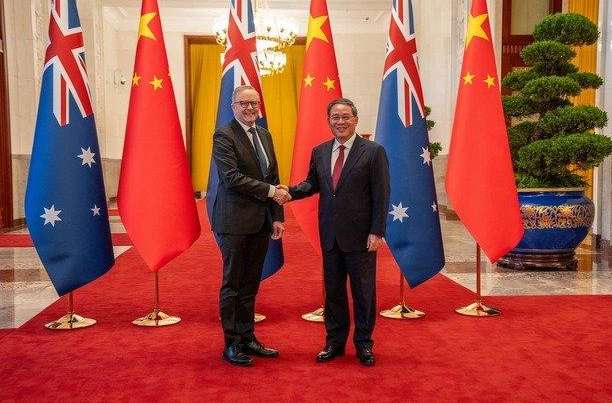
The agreement was reached during a high-level meeting between Australian Prime Minister Anthony Albanese and Chinese Premier Li Qiang in Beijing on Friday night. The discussions formed part of Mr Albanese's wider international diplomatic visit, which included participation in major international summits and meetings with world leaders.
The proposed artificial intelligence dialogue is intended to give both governments an opportunity to exchange experiences, discuss emerging technologies and explore areas where cooperation may be possible.
Artificial intelligence is increasingly influencing important parts of modern life, including healthcare, education, manufacturing, financial services, transportation and government operations. Both Australia and China are examining how the technology can improve productivity while addressing concerns about safety, security and responsible development.
Speaking during discussions with business representatives in Beijing, Mr Albanese highlighted the potential for AI to transform productivity and improve living standards. He also emphasised Australia's interest in developing standards that help shape how artificial intelligence is introduced and used.
The agreement comes at a time when countries around the world are competing to develop advanced AI systems and secure access to essential technology infrastructure.
Australia is also strengthening its technology relationships with other international partners. During the same broader diplomatic trip, the Australian Government signed a technology declaration with the United States aimed at protecting critical artificial intelligence supply chains.
The declaration focuses on identifying vulnerabilities in technology supply networks, protecting sensitive technologies and reducing the risks associated with dependence on potentially unreliable suppliers.
These developments demonstrate Australia's effort to balance international technology cooperation while protecting its economic and national security interests.
Relations between Australia and China have experienced significant challenges in recent years, particularly over trade, security and diplomatic disagreements. However, both governments have been working to stabilise their relationship and identify areas where cooperation can deliver practical benefits.
During the Beijing meeting, Mr Albanese and Mr Li also discussed trade, climate change, healthcare and tourism. Their discussions reflected the importance of maintaining communication despite differences between the two countries.
Chinese President Xi Jinping had also met Mr Albanese earlier during the international visit in Shenzhen, where the leaders discussed the broader relationship between their countries.
The new AI dialogue could provide an additional channel for communication as governments develop policies governing artificial intelligence.
For Australian businesses, researchers and technology developers, international cooperation may create opportunities to exchange knowledge and improve understanding of rapidly developing technologies.
However, questions surrounding cybersecurity, data protection, intellectual property and technology dependence are likely to remain important considerations.
The agreement represents another step in Australia's diplomatic engagement with China as both countries seek to manage disagreements while exploring opportunities in emerging industries.
Education experts warn that miniature cameras, wireless earpieces and artificial intelligence are creating new challenges for universities trying to pro...
A new Climate Council report warns that Australia's growing data centre industry could generate up to 39 million tonnes of additional greenhouse gas emi...
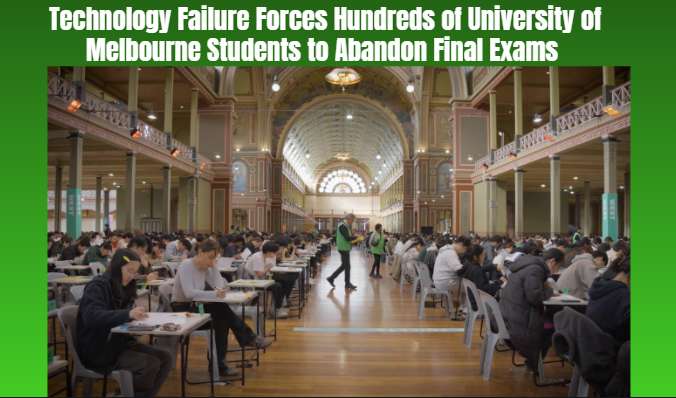
A digital examination platform failure disrupted final assessments in Melbourne, leaving hundreds of students unable to access their exams and forcing u...
A major Microsoft service disruption affected millions of users worldwide, interrupting email, workplace communication, healthcare administration and bu...
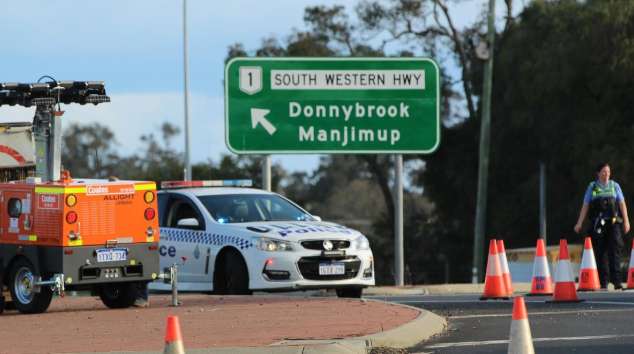
Police are investigating a fatal road accident in Kirup, south of Perth, after an 11-year-old boy was struck by a utility vehicle while crossing a major...
Education experts warn that miniature cameras, wireless earpieces and artificial intelligence are creating new challenges for universities trying to pro...
Farmers opposing the controversial VNI West electricity transmission project face escalating penalties, including possible licence suspensions and vehic...
Political experts believe Victoria's Labor government could face a major electoral defeat as voter dissatisfaction, regional concerns and the growing po...
North Melbourne survived a strong challenge from Sydney to secure a place in their fourth consecutive AFLW grand final, extending their remarkable run i...
Cricket Australia has unanimously backed Pat Cummins to remain national captain following renewed controversy surrounding Australia's 2018 ball-tamperin...
Thousands of school leavers have arrived on Queensland's Gold Coast for Schoolies Week, but changing interests and declining attendance are reshaping th...