Safety note: Admin approval is an initial review, not a guarantee that every detail is correct. Check important or urgent claims with official sources and report anything inaccurate or unsafe.
Source and credit: Contributor's own report
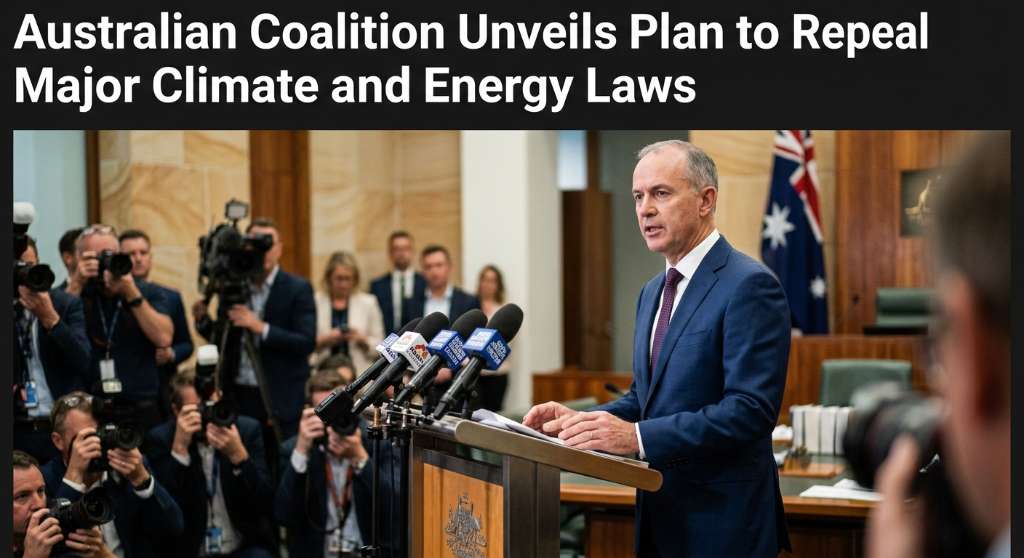
Australian Coalition Unveils Plan to Repeal Major Climate and Energy Laws - Canberra, ACT
Smart summary
The federal Coalition has released an eight-point energy policy proposing changes to Australia's climate legislation, offshore wind zones, vehicle efficiency rules and nuclear energy restrictions.
Australia's federal Coalition has announced a new eight-point energy policy that would significantly change several existing climate and energy laws if the Coalition forms government. The policy was released on 23 September 2026 as the opposition outlined its approach to energy affordability, reliability and future electricity supply.
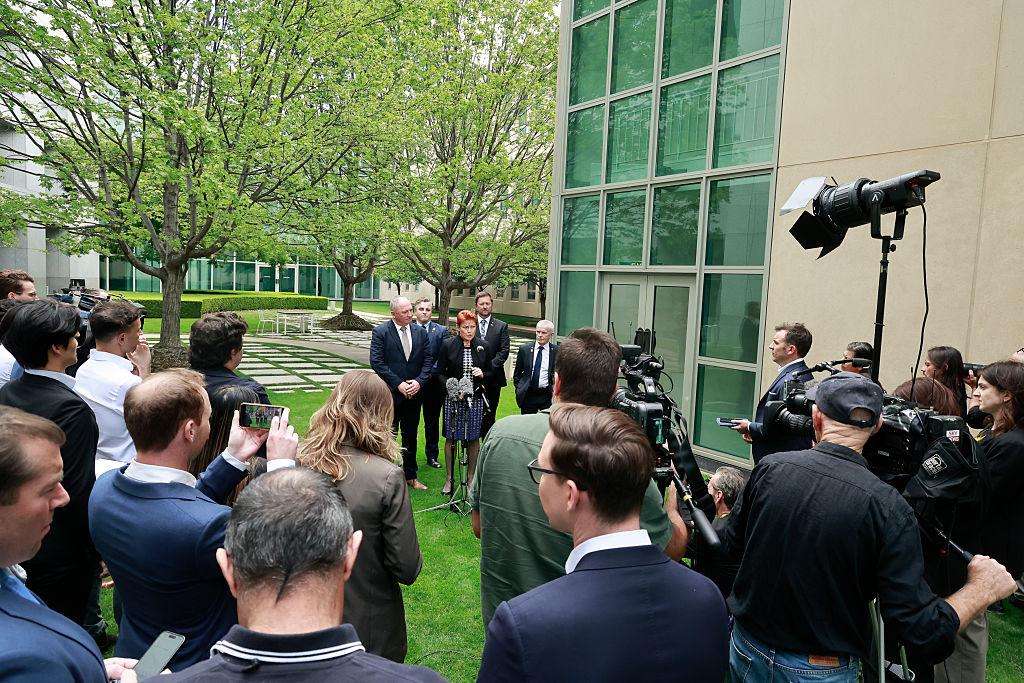
The Coalition says its proposed changes are intended to prioritise energy affordability, reliability and security. Shadow Energy Minister Dan Tehan and Opposition Leader Angus Taylor outlined the plan, which includes repealing several laws introduced or amended under the current federal government.
One proposal is to repeal the Climate Change Act 2022. That legislation established Australia's legislated target of reaching net-zero emissions by 2050. The Coalition's proposed legislation would remove that statutory framework.
The plan would also repeal the Safeguard Mechanism. The mechanism applies to Australia's largest industrial facilities and establishes emissions baselines intended to reduce emissions from covered facilities over time.
Another proposed change concerns Australia's New Vehicle Efficiency Standard. The Coalition says it would repeal the legislation requiring vehicle manufacturers and suppliers to meet progressively stronger efficiency requirements for new vehicles.
The Coalition has also proposed cancelling four offshore renewable-energy zones. The affected areas are the Hunter and Illawarra regions in New South Wales, the Southern Ocean region in Victoria and South Australia, and the Bunbury region in Western Australia. The Gippsland and Bass Strait zones would remain under the proposal.
The policy also proposes repealing federal legislative prohibitions on nuclear power. Nuclear electricity generation is currently prohibited under federal law, while additional restrictions operate under some state and territory laws. The Coalition says states should reconsider their own restrictions as Australia considers future electricity demand, including demand associated with data centres and artificial intelligence.
The Coalition has proposed introducing a renewable-energy code of conduct for developers. It would also make some federal energy funding to states and territories conditional on prioritising energy affordability and reliability.
Another proposed change would alter the role of the Australian Energy Regulator so that affordability and reliability receive greater emphasis in regulatory decision-making.
The Coalition says it would introduce its proposed "Scrap Net Zero" legislation within 30 days if it forms government. These proposals are therefore policy commitments rather than changes that have already taken effect.
The federal government has criticised the Coalition's plan. Energy Minister Chris Bowen said the proposed changes would affect Australia's energy transition and argued that reducing support for renewable energy could have economic consequences. These are the government's political arguments about the proposal rather than an established assessment of its future effects.
The Coalition says its approach would allow a broader mix of energy sources and place greater emphasis on affordability and reliability. Its nuclear proposal would also require parliamentary support to change federal restrictions, while state-level laws would remain a separate issue.
The announcement comes as Australia's electricity system continues to undergo changes involving renewable generation, transmission infrastructure, storage and new sources of electricity demand.
The policy has therefore opened a new political debate over the future direction of Australia's energy system, including the respective roles of renewable energy, gas, coal, nuclear power, electric vehicles and emissions-reduction policies.
EnergyCoalitionWouldProposedFederal
Australia's federal Coalition has announced a new eight-point energy policy that would significantly change several existing climate and energy laws if the Coalition forms government. The policy was released on 23 September 2026 as the opposition outlined its approach to energy affordability, reliability and future electricity supply.
The Coalition says its proposed changes are intended to prioritise energy affordability, reliability and security. Shadow Energy Minister Dan Tehan and Opposition Leader Angus Taylor outlined the plan, which includes repealing several laws introduced or amended under the current federal government.
One proposal is to repeal the Climate Change Act 2022. That legislation established Australia's legislated target of reaching net-zero emissions by 2050. The Coalition's proposed legislation would remove that statutory framework.
The plan would also repeal the Safeguard Mechanism. The mechanism applies to Australia's largest industrial facilities and establishes emissions baselines intended to reduce emissions from covered facilities over time.
Another proposed change concerns Australia's New Vehicle Efficiency Standard. The Coalition says it would repeal the legislation requiring vehicle manufacturers and suppliers to meet progressively stronger efficiency requirements for new vehicles.
The Coalition has also proposed cancelling four offshore renewable-energy zones. The affected areas are the Hunter and Illawarra regions in New South Wales, the Southern Ocean region in Victoria and South Australia, and the Bunbury region in Western Australia. The Gippsland and Bass Strait zones would remain under the proposal.
The policy also proposes repealing federal legislative prohibitions on nuclear power. Nuclear electricity generation is currently prohibited under federal law, while additional restrictions operate under some state and territory laws. The Coalition says states should reconsider their own restrictions as Australia considers future electricity demand, including demand associated with data centres and artificial intelligence.
The Coalition has proposed introducing a renewable-energy code of conduct for developers. It would also make some federal energy funding to states and territories conditional on prioritising energy affordability and reliability.
Another proposed change would alter the role of the Australian Energy Regulator so that affordability and reliability receive greater emphasis in regulatory decision-making.
The Coalition says it would introduce its proposed "Scrap Net Zero" legislation within 30 days if it forms government. These proposals are therefore policy commitments rather than changes that have already taken effect.
The federal government has criticised the Coalition's plan. Energy Minister Chris Bowen said the proposed changes would affect Australia's energy transition and argued that reducing support for renewable energy could have economic consequences. These are the government's political arguments about the proposal rather than an established assessment of its future effects.
The Coalition says its approach would allow a broader mix of energy sources and place greater emphasis on affordability and reliability. Its nuclear proposal would also require parliamentary support to change federal restrictions, while state-level laws would remain a separate issue.
The announcement comes as Australia's electricity system continues to undergo changes involving renewable generation, transmission infrastructure, storage and new sources of electricity demand.
The policy has therefore opened a new political debate over the future direction of Australia's energy system, including the respective roles of renewable energy, gas, coal, nuclear power, electric vehicles and emissions-reduction policies.
The Federal Government is preparing new measures targeting temporary visas, visa overstayers, international students and visa-hopping, while maintaining...
One Nation’s proposed major reduction in migration has triggered warnings that a sharp cut to population growth could weaken Australia’s economy and cre...
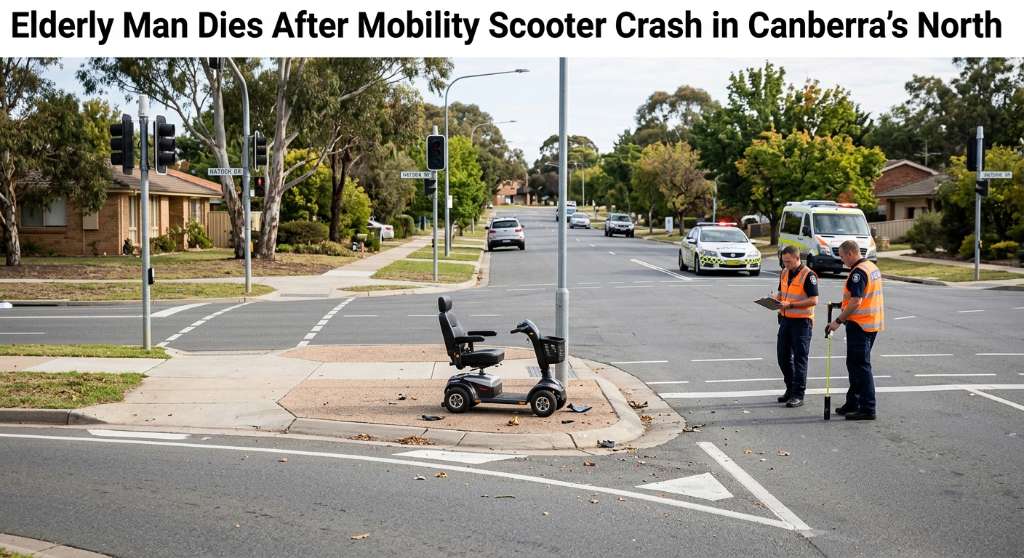
A 95-year-old man has died after a vehicle collided with his mobility scooter at an intersection in Bruce earlier this month, with investigators now exa...
Police are investigating an alleged animal-cruelty incident at a rural property in Tuggeranong after eight sheep were reportedly rounded up and injured,...
A 40-year-old woman is expected to face criminal charges following a fatal collision involving cyclists in Canberra’s north, Police say the woman will face two counts of culpabl...
Seven Australian health startups will share $15.6 million in equity-free funding to develop new dementia treatments, early-detection tools, gene therapi...
The Victorian Department of Education pleaded guilty after a Year 10 student suffered serious hand injuries while using an unguarded metal guillotine du...
A major regional transport forum will return to Orange in November, with Orange and Cabonne councils announcing plans for the 2026 Orange and Cabonne Heavy Vehicle Truck Forum....